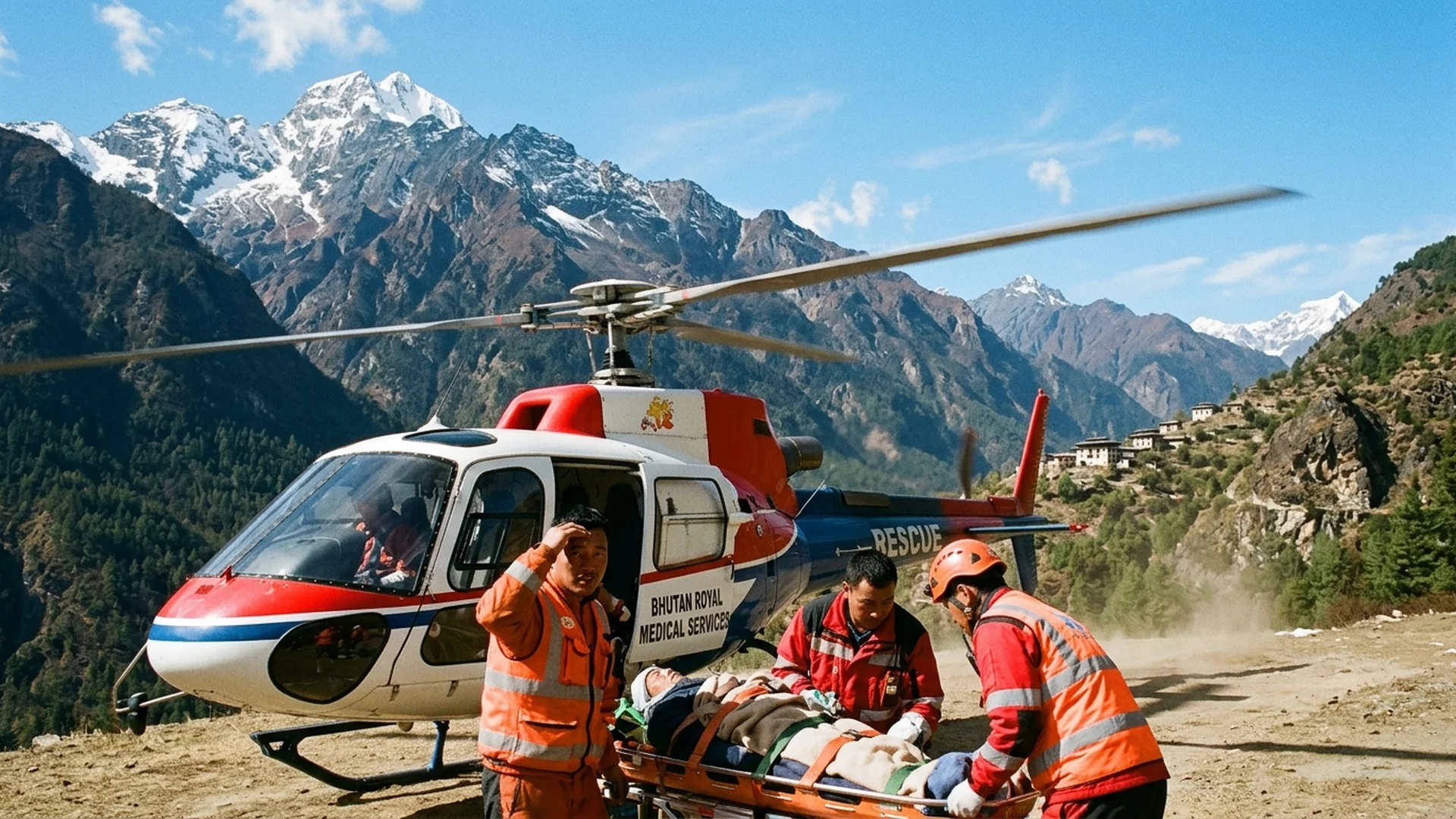
As the morning mists gently brush against the rolling foothills and dense evergreen forests of the Paro Valley, Bhutan endures as an ethereal sanctuary for spiritual seekers. Yet beneath the immaculate beauty of the Himalayas, rugged terrain and alpine altitudes conceal quiet challenges that discerning travelers should never overlook. Although Bhutanese tourism policies have evolved regarding visa entry requirements, seasoned travel designers and safety experts agree that stepping into the Kingdom of the Thunder Dragon without robust health safeguards is an unnecessary vulnerability. In a realm where tertiary medical facilities are concentrated exclusively within the capital of Thimphu, the profound isolation of trekking routes and deep valleys means that when unforeseen circumstances arise—such as acute altitude sickness or wilderness injuries—every single second holds immeasurable value. Understanding the intricate architecture of Bhutan travel insurance, particularly emergency medical evacuation, is not merely an optional add-on; it is the cornerstone of peace of mind that ensures your transcendent journey remains secure in every dimension.
A Geography of Challenge: When Sovereign Heights Meet Human Vulnerability
Bhutan is far more than a destination for cultural immersion; it is a landscape perched upon the roof of the world, where soaring elevations directly influence human physiology. Major settlements like Thimphu and Paro sit at elevations between 2,300 and 2,500 meters, where many visitors begin to notice the thinner mountain air. Should your itinerary venture further into high-altitude alpine trails, such as the legendary Snowman Trek or traverses across the Punakha and Bumthang mountain passes, elevations climb steeply beyond 3,500 to 4,500 meters. At these heights, the risk of severe acute mountain sickness, cerebral edema, or pulmonary edema can impact anyone without exception if acclimatization falls short. In such environments, local primary healthcare facilities offer commendable basic care, but critical medical emergencies requiring specialized instrumentation or urgent surgical intervention demand immediate remote evacuation to ensure survival.
The Reality of Aerial Evacuation and Regional Medical Constraints
A common misconception among global travelers is that medical emergencies abroad can be seamlessly resolved through local hospital admissions backed by standard credit card insurance. However, within Bhutan’s deeply folded network of valleys, the pinnacle of tertiary care is concentrated at the National Referral Hospital in Thimphu. Should a traveler suffer a compound fracture during a remote trek or experience cardiac distress in an isolated village, vehicular transit could take many hours or even days—an unacceptable delay in critical care. This distinct operational reality is precisely why dedicated helicopter rescue and emergency evacuation coverage becomes paramount. Executing rotor-wing operations amidst rapidly shifting Himalayan weather demands specialized piloting expertise and careful coordination with local rescue authorities and military frameworks. Without explicit policy provisions for aerial extraction, unexpected costs running into hundreds of thousands of dollars can instantly become the traveler’s personal liability.
Curating Your Policy: Deciphering Tourist Versus Trekking Plans
For the high-net-worth traveler, selecting insurance for Bhutan cannot rely on the standardized metrics applied to metropolitan European or Japanese itineraries. You must meticulously review your policy wording to confirm whether high-risk activities are fully endorsed, as conventional insurers frequently exclude extreme sports, high-altitude trekking, or ascents exceeding 3,000 meters. If your journey involves wilderness exploration on foot, securing a specialized trekking insurance plan that explicitly covers high-altitude thresholds is vital. Furthermore, policies should include provisions for medical repatriation back to your home country alongside round-the-clock international assistance desks staffed by multilingual coordinators and medical professionals, guaranteeing that emergency response networks mobilize instantly the moment a crisis occurs.