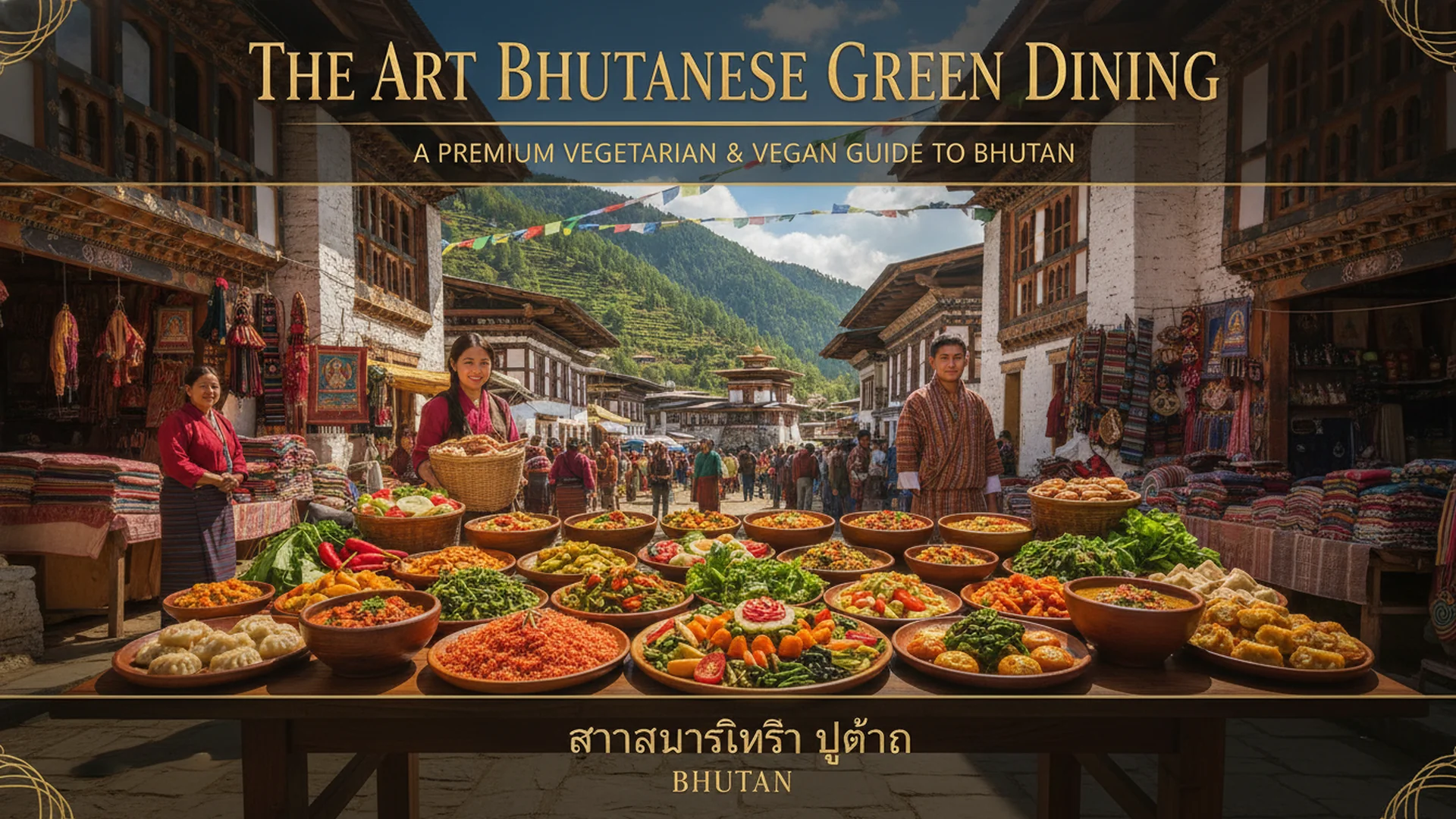
As the crisp mountain wind sweeps across ancient pine forests and snow-dusted peaks in the tranquil Himalayan valleys, a delicate aroma of indigenous spices and warm yak butter drifts through the air. This fragrance accompanies one of the world’s most enduring and profound philosophies of living. This is Bhutan, the Kingdom of Gross National Happiness (GNH), where the harmonious relationship among humanity, nature, and the spirit is quietly bound together upon the dining table.
Journeying into the world of vegetarian dining in Bhutan is far more than a mere dietary preference; it is an initiation into a cultural ritual driven by deep reverence for all sentient beings. Rooted in non-harming Vajrayana Buddhist traditions amidst pristine organic farmlands untouched by industrial chemicals, this simple yet captivating culinary heritage has now been elevated into a new dimension. It has blossomed into a high-end fine dining and farm-to-table experience that redefines green gastronomy for the discerning traveler.
Roots of Faith and Sustainability: The Philosophy Behind Bhutanese Cuisine
Beneath the apparent simplicity of a Bhutanese meal lies a profound philosophy shaped by Buddhist tenets. The deliberate slaughter of animals for consumption is traditionally absent from daily life, and the rugged alpine terrain demands an intimate understanding of natural cycles. Consequently, Bhutanese food has remained inherently organic long before sustainability became a global buzzword.
Most ingredients flourish under pristine sunlight, glacial meltwater from snow-capped summits, and mineral-rich mountain soil. Farming practices are strictly calibrated to preserve ecological equilibrium, imbuing every harvest with vibrant life force. When these pure ingredients are shaped by local chefs preserving ancestral recipes, the resulting flavors reflect a genuine, humble devotion to the natural world.
A Legacy of Flavor: Essential Vegetarian Classics and Artisanal Cheeses
The beating heart of Bhutanese vegetarian cuisine is the masterful use of artisanal cheese (Datshi) and chilies (Ema), which serve as both primary vegetables and complex spices. Foremost among these is Ema Datshi, the national dish featuring plump chili peppers gently simmered with rich, homemade cheese. The interplay of fiery warmth and velvety smoothness generates an enveloping comfort amidst the chilly mountain air.
For those seeking a milder palate, Kewa Datshi (simmered potatoes with cheese) or Shamu Datshi (wild mushrooms with cheese) offer exceptional comfort. Foraged fresh from Bhutan’s untouched woodlands, wild mushrooms provide a delightful crunch and earthy aroma when married with local dairy. These dishes are traditionally accompanied by Bhutanese red rice, an indigenous heirloom grain cultivated with natural mineral spring water in the fertile valleys of Paro and Punakha, prized for its nutty texture and exceptional nutritional profile.
A New Dimension of Pleasures: Farm-to-Table Fine Dining in the Valleys
In recent years, Bhutan has emerged as a premier destination for luxury travelers by transforming ancestral peasant fare into world-class fine dining. Leading ultra-luxury retreats have established bespoke organic gardens, inviting guests to harvest fresh vegetables by hand before master chefs transform them into exquisite tasting menus.
The seamless integration of contemporary culinary techniques with indigenous organic produce—such as seasonal wild flower salads, slow-simmered wild lotus root soup, or artisanal herbal tea ice creams—awakens the five senses. Diners are invited to savor pristine, clean flavors while framing views of majestic fortress-monasteries (Dzong) and sweeping emerald valleys.