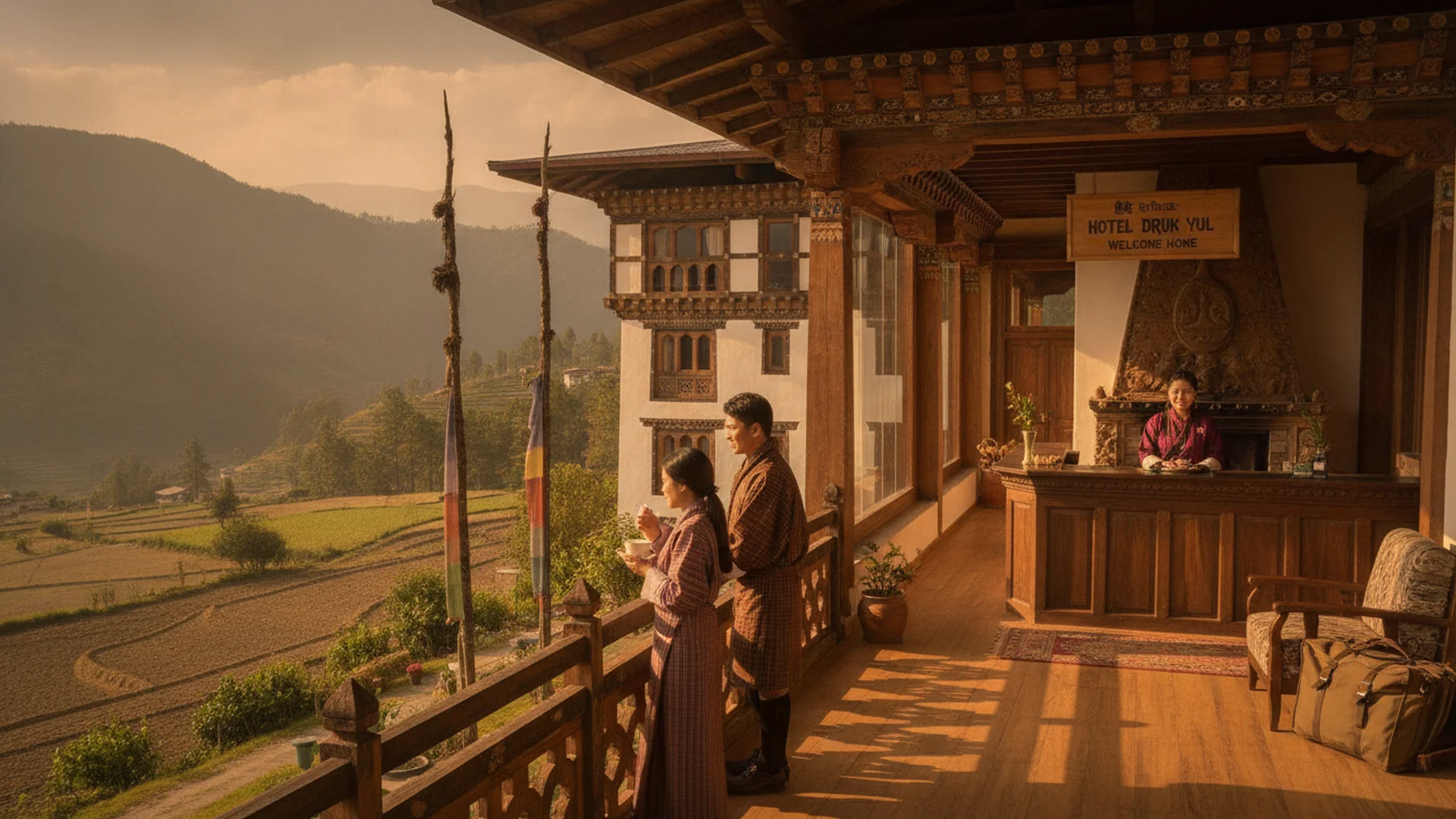
When conjuring visions of three-star lodgings in the Land of the Thunder Dragon, the worldly traveler’s mind is often conditioned by international conventions of minimalist utility and standardized corporate design. Yet, this vernacular definition dissolves entirely upon entering the Kingdom of Bhutan, where every facet of tourism is meticulously guided by the philosophy of High Value, Low Volume. Crossing the threshold of intricately carved wooden doors styled after ancient monastic architecture reveals a quiet revelation: a three-star retreat here is never merely a sterile berth for the night, but an immersive sanctuary of spirit, localized warmth, and unhurried culture.
This distinct character begins at the source, forged through rigorous governmental oversight by the Department of Tourism. Every property must meet exacting benchmarks for structural integrity, pristine hygiene, and profound architectural harmony with the surrounding sacred geography. Discerning travelers can rest assured that each night spent slumbering beneath the shadow of the mighty Himalayas will be cradled in comfort, elevated by the sincere hospitality of hosts whose grace is as boundless as the valleys they call home.
Architectural Poetry and Timber Craftsmanship: When a Hotel Is a Living Museum
The initial enchantment of a three-star hotel in Bhutan lies in its absolute rejection of souless concrete monoliths in favor of classical Bhutanese architectural forms. Many of these retreats are modeled after ancestral noble homes, featuring hand-carved pine pillars etched with auspicious symbols, brightly painted ceiling beams reflecting Buddhist cosmology, and sweeping, arched window frames designed to catch the crystalline morning light.
The interiors favor tactile, organic materials—polished hardwood floors, hand-knotted woolen carpets featuring regional motifs, and solid pine furnishings that radiate a quiet, grounding warmth. Surrounded by quiet pine forests, terraced rice paddies, or towering mountain ridges, guests are made to feel less like patrons of a commercial enterprise and more like honored guests staying in the private estate of a distinguished local friend.
The Sanctuary of Family-Run Hospitality: Care That Transcends Luxury
What truly endears these three-star properties to travelers seeking deeper meaning is the pervasive culture of family-run hospitality. The majority of these establishments are proudly managed by multi-generational Bhutanese families, where proprietors and staff greet arrivals not with rehearsed corporate coldness, but with the genuine warmth of welcoming a beloved relative home.
As twilight descends and the Himalayan air drops sharply in temperature, this attentiveness manifests in subtle, heartwarming touches: a traditional hot water bottle tucked beneath heavy woolen blankets, a freshly stoked room heater casting a golden glow across the floorboards, or a quiet evening conversation offering invaluable advice for the following day’s pilgrimage—an intimacy wholly absent in monolithic global hotel chains.
Flavors of the High Valleys: Hearth-Cooked Cuisine and Essential Comforts
Culinary offerings within these properties center around intimate dining rooms serving a thoughtful fusion of authentic Bhutanese cuisine—such as comforting bowls of Ema Datshi, steaming vegetable broths, and nutty red rice—alongside international favorites including Indian, Chinese, and continental dishes curated to suit global palates. Ingredients are predominantly sourced from local organic farms, ensuring a freshness that honors the land.
While avoiding excessive ornamentation, certified three-star properties provide every necessary amenity for the refined traveler: plush beds draped in heavy woolen blankets, private en-suite bathrooms equipped with reliable hot water systems, complimentary Wi-Fi in communal lounges, and attentive laundry services designed to support a seamless, unhurried journey.