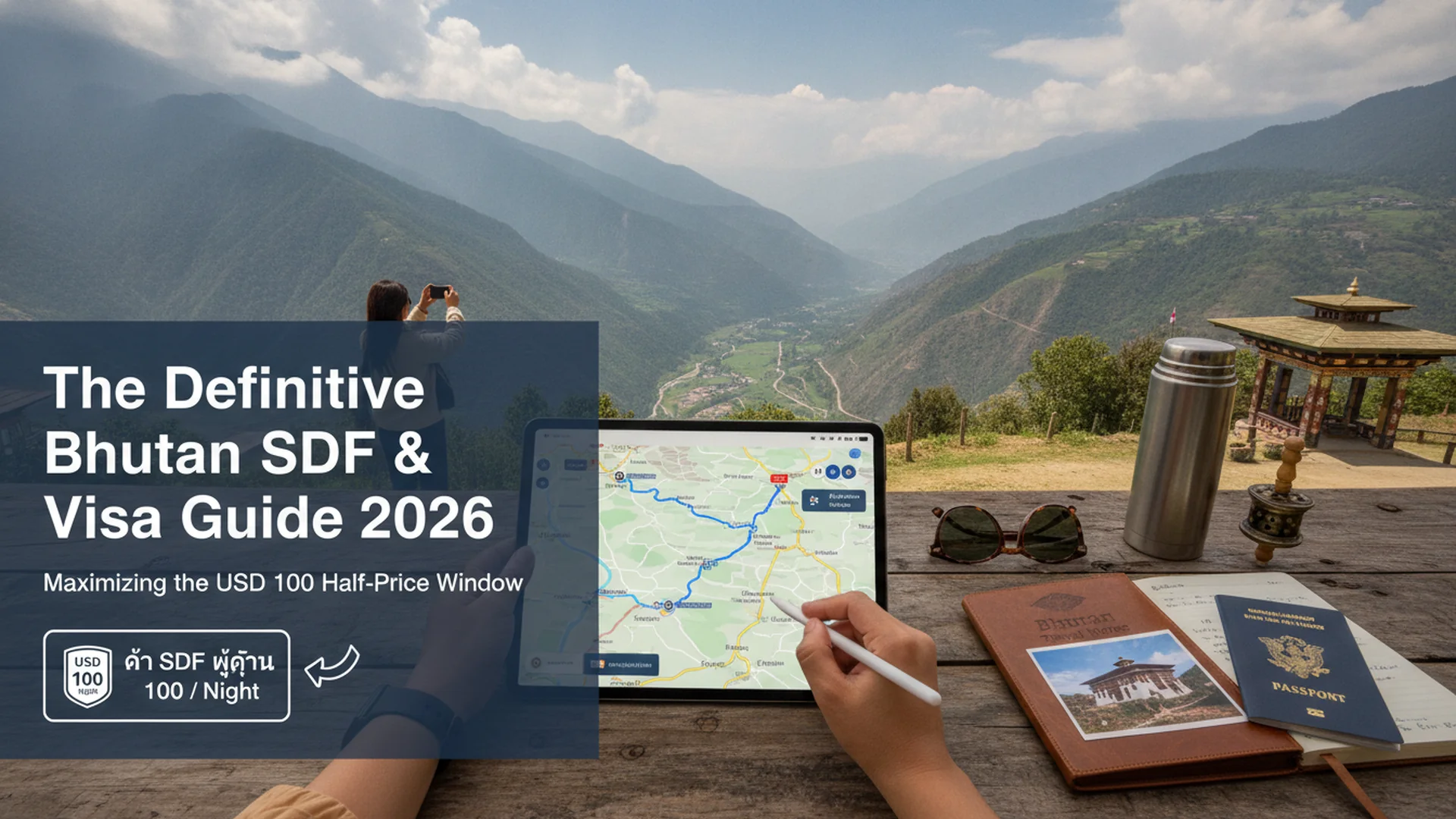
Amid the crisp, pine-scented breezes sweeping down from the snow-crowned summits of the eastern Himalayas, the Kingdom of Bhutan—the last independent Mahayana Buddhist kingdom on Earth—quietly opens a rare, contemplative window for global travelers. In an era where modern travel too often surrenders to haste, the Royal Government of Bhutan’s decision to extend its recalibrated Sustainable Development Fee (SDF) of USD 100 per night through August 31, 2027, marks an extraordinary moment of cultural and financial calibration.
This policy shift is far more than a numerical adjustment or seasonal incentive; it represents a golden sanctuary window for discerning journeys. By lowering the daily tariff from its former peak of USD 200, Bhutan invites culturally reverent travelers to immerse themselves deeper into its sacred valleys, pairing unhurried exploration with the kingdom’s world-renowned ethos of Gross National Happiness.
Understanding the mechanics and noble intent behind the SDF is the essential prologue to any Bhutanese pilgrimage. Beyond the financial mechanics lies a profound truth: your daily contribution directly guards the kingdom’s pristine ecosystems and timeless way of life, ensuring your presence honours the very sanctuary you come to experience.
Deciphering the USD 100 SDF: An Investment in Planetary and Cultural Preservation
Since Bhutan pioneered its visionary ‘High Value, Low Volume’ tourism framework, the Sustainable Development Fee has served as a deliberate custodian of the kingdom’s cultural integrity and ecological purity. Reduced from USD 200 down to USD 100 per night per adult—with a 50 percent concession for children aged 6 to 12—this pricing structure is guaranteed through late August 2027. For the seasoned traveler planning an extended journey through the valleys of Paro, Thimphu, and Punakha, this policy shift dramatically changes the economics of Himalayan exploration.
To view the SDF merely as an entry fee is to misunderstand its fundamental philosophy. In truth, the tariff represents a direct micro-investment into one of the planet’s most carefully safeguarded ecosystems. The capital collected flows straight into maintaining Bhutan’s carbon-negative status—where expansive old-growth forests absorb more carbon than the nation emits—while ensuring public spaces remain pristine and local communities remain vibrant. Paying the revised fee provides unfettered access to an atmosphere of profound stillness and exclusivity that money simply cannot purchase elsewhere.
The Harmonious Fusion of Eco-Consciousness and Ultra-Luxury
The recalibration of the daily SDF creates an exceptional opportunity to reallocate travel capital toward Bhutan’s extraordinary collection of sanctuary lodges. Esteemed architectural masterworks such as Amankora, COMO Uma Paro, and Six Senses Bhutan are thoughtfully sequestered across the country’s central and western valleys, each designed to echo traditional dzong (fortified monastery-fortress) and vernacular farmstead aesthetics.
Reserving suites at these sanctuaries effortlessly fulfills Bhutan’s mandatory guide and private transport regulations under the Sustainable Tourism Policy. Guests enjoy private chauffeured luxury vehicles and deeply knowledgeable native guides who illuminate local customs. Combined with farm-to-table organic gastronomy and therapeutic treatments grounded in Sowa Rigpa—Bhutan’s ancient herbal healing science—the overall journey offers an unparalleled synthesis of physical refinement and spiritual rejuvenation.
Navigating the 2026 Formalities: Visas, Royal Regulations, and Seamless Access
While Bhutan has modernised its entry mechanisms via an efficient digital eVisa platform, its tourism architecture remains purposefully regulated to prevent over-tourism. Independent, unguided backpacking remains strictly prohibited. Every visitor must undertake their journey through a government-licensed Bhutanese tour operator or in direct concert with an accredited luxury resort partner capable of managing all visa clearance documentation alongside the SDF remittance.
The administrative journey begins with finalising an itinerary and settling the mandatory daily fee through the Royal Government’s secure payment gateway. Once verified, the Department of Tourism issues an official Visa Clearance Letter, typically within a few business days. This transparent, meticulously managed process guarantees absolute peace of mind, allowing travelers to land at Paro International Airport ready to step into a tranquil realm.