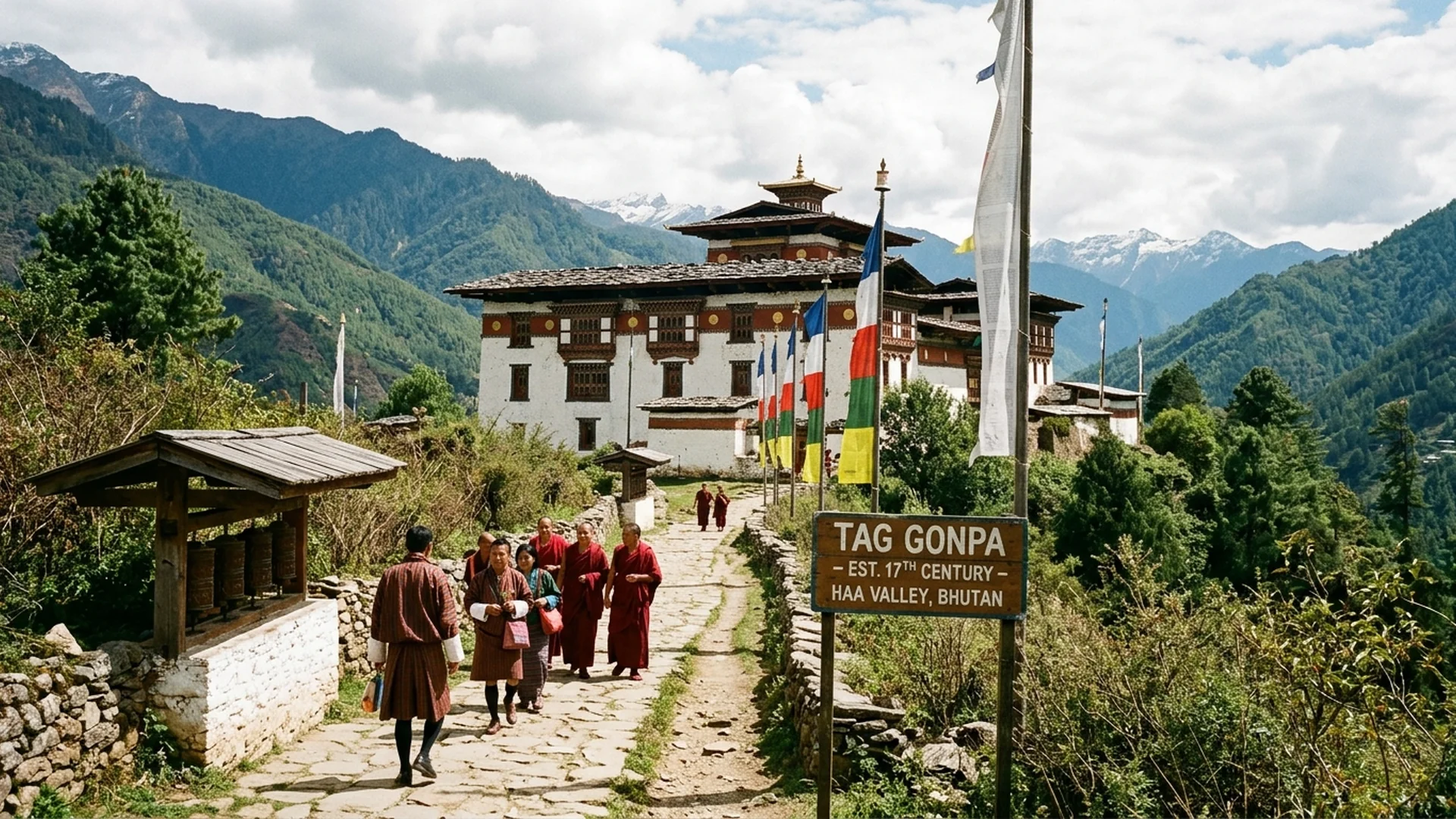
When cliffside sanctuaries in the Land of the Thunder Dragon are mentioned, travelers almost instinctively picture the iconic Tiger’s Nest of Paro. Yet amidst such dramatic grandeur, the remote Haa Valley—a hidden western enclave tucked well away from mainstream itineraries—harbors an equally profound spiritual jewel: Tag Gonpa, an ancient tiger monastery perched in timeless stillness amid drifting mountain mists and centuries-old pine forests.
Crossing into the Haa Valley feels akin to turning back the pages of history to an era where time unspools at a gentler, unhurried pace. Here, the clamor of tour groups is entirely absent, replaced instead by the whispered sighs of cold winds sweeping through Himalayan evernotes, the rising scent of ancient juniper incense, and a pristine energetic stillness that envelops every traveler. Far more than a mere cultural landmark, Tag Gonpa serves as a monumental gateway toward deep inner quietude and authentic spiritual restoration.
The Guardian of the Secret Valley: Legends and Architecture of Tag Gonpa
Clinging tenaciously to a sheer granite cliff high within the Haa Valley—Bhutan’s most intimate and compact enclave—Tag Gonpa’s very name connects it deeply to legendary meditation masters and the fierce protective energies revered in Vajrayana Buddhism. The monastery’s architecture reflects exquisite traditional craftsmanship, featuring finely carved wooden pillars, intricate ornamentation, and venerable murals depicting celestial protectors and lineage masters. Its dramatic isolation against the towering stone face transforms the sanctuary into an impenetrable fortress of peace, where resident monks and solitary pilgrims practice deep inner mastery far from worldly distractions.
Haa Valley: The Final Frontier of Untouched Wilderness
Until opening its doors to international travelers just a few decades ago, the Haa Valley remained largely restricted due to its proximity to the Tibetan border. This historic seclusion allowed local communities to fiercely protect their age-old customs, agricultural rhythms, and sacred traditions. The valley’s landscape is defined by emerald-green pastures, terraced hillside plots of wheat and potato, and distinctive timber farmhouses. Journeying toward Tag Gonpa requires passing through ancient blue pine forests teeming with rare flora and an ethereal mountain atmosphere impossible to find in modern urban centers.
The Art of Mindful Trekking Beneath the Monastery’s Shadow
The pilgrimage path ascending to Tag Gonpa is designed not for racing against the clock, but as an exquisite masterclass in mindfulness. The trail winds upward through fragrant blue pine groves where every step upon the needle-strewn earth and crisp Himalayan air naturally slows the racing heart. Embracing this unhurried pace allows travelers to attune to their own breathing, feel the chill of early morning mist upon their skin, and absorb the vast, humbling scale of the surrounding mountain wilderness.