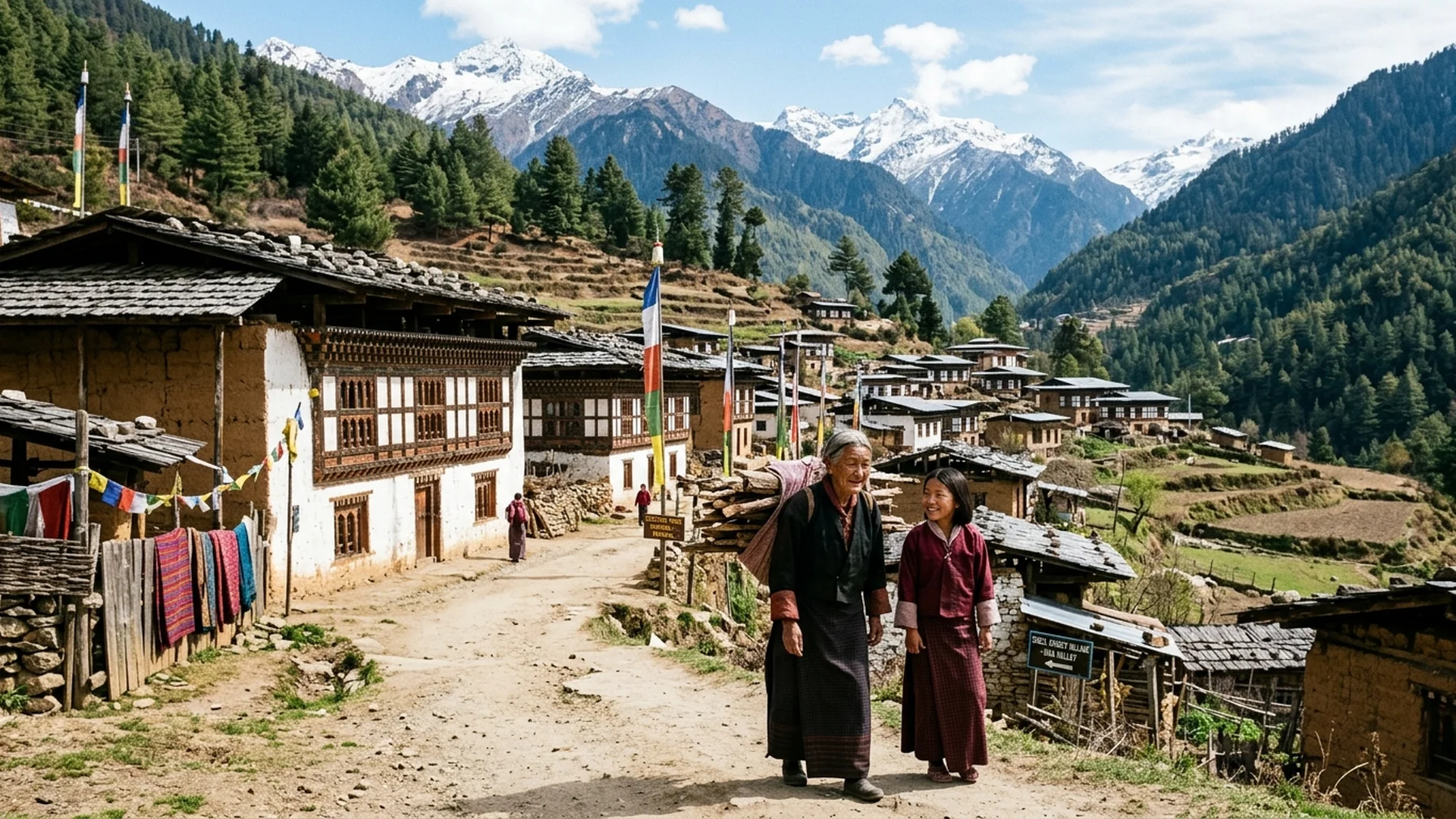
While many travelers flock toward the iconic cliffside monastery of Taktshang or wander the bustling streets of Thimphu, discerning globetrotters seeking the unadulterated soul of the Thunder Dragon Kingdom venture westward. Crossing the soaring, prayer-flag-draped heights of the Chele La Pass reveals the hidden embrace of the Haa Valley and, nestled within it, the timeless sanctuary of Shell Gyagey Village. Here, ethereal morning mists cling softly to terraced buckwheat fields and ancient rammed earth homesteads, offering a luminous glimpse into a Himalayan world untouched by the frantic pace of modernity.
Opened to travelers only in 2002, the remote Haa Valley remains one of the kingdom’s most fiercely guarded geographic and cultural secrets. Shell Gyagey Village acts as its quiet heartbeat—a place where daily existence, ancestral faith, and an intimate reverence for the earth continue in a harmonious rhythm that honors the nation’s guiding philosophy of Gross National Happiness (GNH).
Ancient Rammed Earth Architecture and the Echoes of History
Upon entering Shell Gyagey, the eye is immediately drawn to the masterful vernacular architecture of the homesteads. Built using traditional rammed earth techniques, these sturdy multi-level structures are formed from compacted native clay and stone without a single iron nail, providing natural insulation against Himalayan winters while remaining cool in the summer. Intricately carved wooden window frames, adorned with auspicious Buddhist symbols, reflect craftsmanship passed down through generations. The village is ringed by emerald fields of buckwheat and potatoes—staples that sustain these high-altitude communities—framed against a dramatic backdrop of towering peaks that crown the valley.
The Sacred Spirit of Haa and Syncretic Beliefs
The Haa Valley holds a distinct place in Bhutanese spiritual history, preserving subtle echoes of Bonism, the ancient animist faith that predated the arrival of Tibetan Buddhism. The villagers of Shell Gyagey maintain a profound, living connection with their presiding guardian deity, the sacred mountain peak of Merung Gophu. Ritual offerings, harmonic chanting, and the fluttering of prayer flags are woven seamlessly into the fabric of daily breath. This palpable quietude is not merely emptiness; it is a resonant, consecrated energy capable of stilling the restless mind.
Flavors of the Highlands and the Art of Slow Living
Comprehending the cultural landscape of Haa through its culinary heritage offers an intimate portal into local life. A quintessential local delicacy is ‘Hoentey’, savory buckwheat dumplings generously filled with fermented turnip greens, local herbs, and earthy yak cheese, traditionally prepared during festive seasonal gatherings. Sitting beside a glowing wood-burning bukhari stove, sipping steaming cups of salted butter tea known as suja, and conversing with local hosts illuminates the profound beauty of unpretentious living.