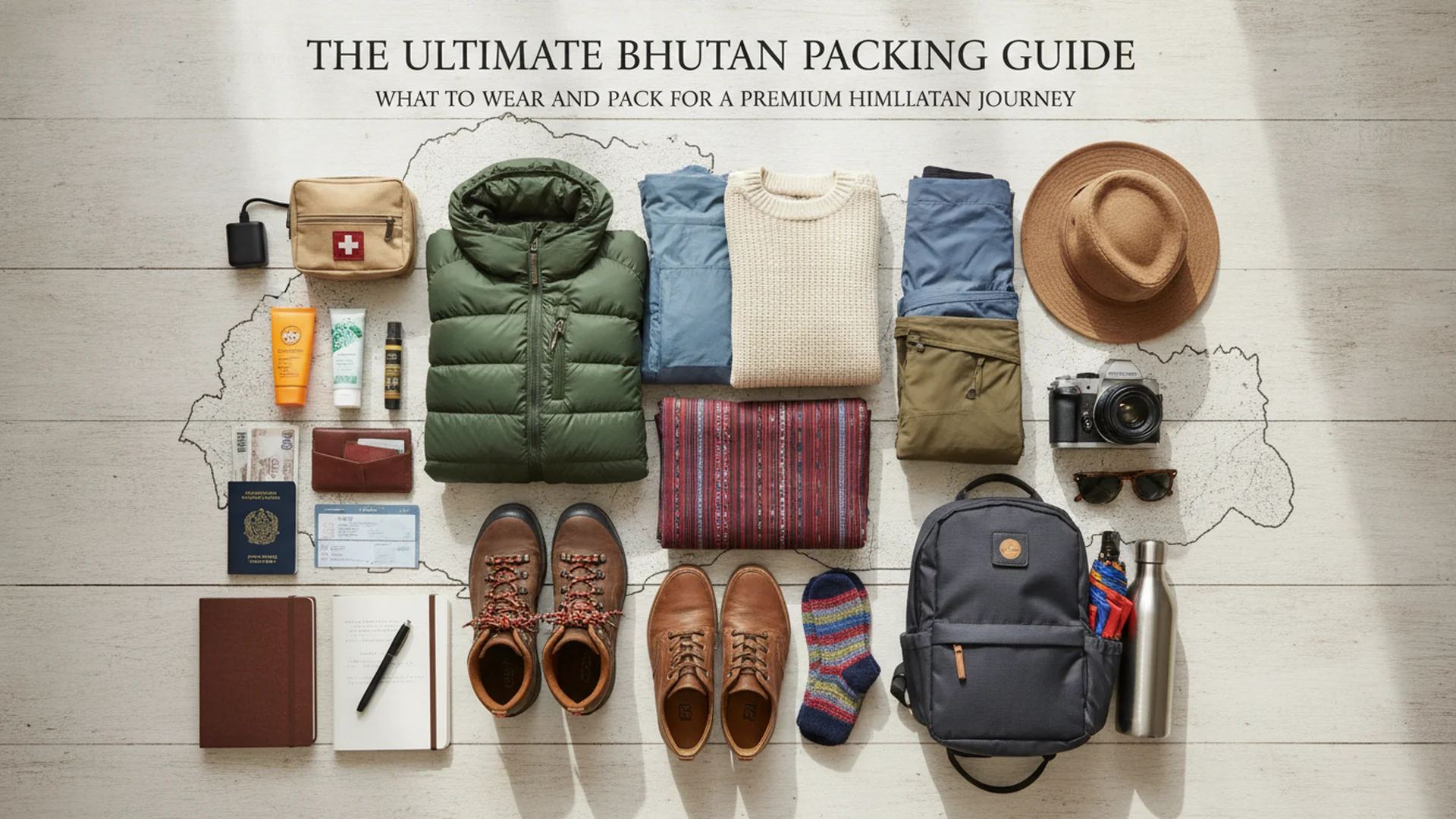
When crisp mountain winds sweep across Himalayan crags and five-colored prayer flags flutter over the kingdom of the Thunder Dragon, Bhutan reveals itself not merely as a location, but as an ethereal spiritual theater. Time here feels curiously suspended. Yet behind this idyllic atmosphere lies a climate defined by sudden shifts and alpine volatility. Midday valley sunshine may offer balmy warmth, only for temperatures to plunge into sharp mountain chill the moment the sun disappears behind high ridge lines.
Preparing your wardrobe for this sacred landscape is far more than a routine packing chore; it is an art of thoughtful balance. It demands marrying high-performance alpine function with quiet sartorial elegance—honoring the strict dress decorum of ancient monastic fortresses while remaining versatile enough for rugged terrain at high altitudes.
The Art of Smart Layering and Earth-Toned Elegance
Navigating Bhutan’s dramatic mountain terrain requires a deep understanding of dynamic layering. The primary layer against the skin should feature fine, moisture-wicking natural fibers such as premium merino wool or high-grade thermal silk. Over this, a mid-layer of lightweight fleece or an ultralight down jacket provides essential insulation without adding unneeded weight. The outer boundary must be a windproof and water-resistant shell capable of blocking sudden mountain drafts.
Beyond technical utility, color choices carry profound aesthetic weight. Selecting refined earth tones—warm terracotta, muted slate, olive, and soft stone—allows your wardrobe to harmonize with the Himalayan backdrop and whitewashed Dzong architecture. These subtle tones ensure your presence feels understated and respectful, yielding timeless photographs that frame the kingdom’s majesty with quiet sophistication.
Decoding Sacred Protocols: Decorum at the Dzong and Lhakhang
At the heart of Bhutanese travel lies deep reverence for its sacred sites: the Dzong (fortified administrative and monastic centers) and the Lhakhang (sacred temples). Visiting these architectural monuments requires adherence to formal dress standards enforced at entry points.
Gentlemen must wear crisp, long-sleeved collared shirts accompanied by tailored full-length trousers; shorts and casual tees are strictly prohibited. Ladies are expected to wear long-sleeved tops paired with floor- or ankle-length skirts, or refined, non-restrictive trousers. Vibrant neon patterns and overly casual leisurewear should be avoided entirely. Before crossing into sanctified inner courtyards, all travelers must remove hats, sunglasses, and footwear. Arriving impeccably prepared demonstrates cultural mindfulness and guarantees seamless entry into Bhutan’s spiritual heritage.
Footwear Strategy: From Valley Cobblestones to Mountain Sanctuaries
Bhutan’s most captivating sights are reached via ancient stone steps, uneven flagstone courtyards, and forest trails. Selecting footwear warrants primary attention in your packing strategy. You will need at least two distinct pairs: soft leather sneakers or supple loafers for city walks through Thimphu and Paro, and dedicated trekking boots engineered for high-altitude ascents.
For the iconic journey to Paro Taktsang (Tiger’s Nest)—perched dramatically on a cliffside over 3,000 meters above sea level—sturdy, ankle-supporting boots with deep rubber treads are indispensable. Proper shock absorption and grip prevent fatigue across loose gravel and steep stone inclines, allowing you to focus entirely on the spiritual journey upward.