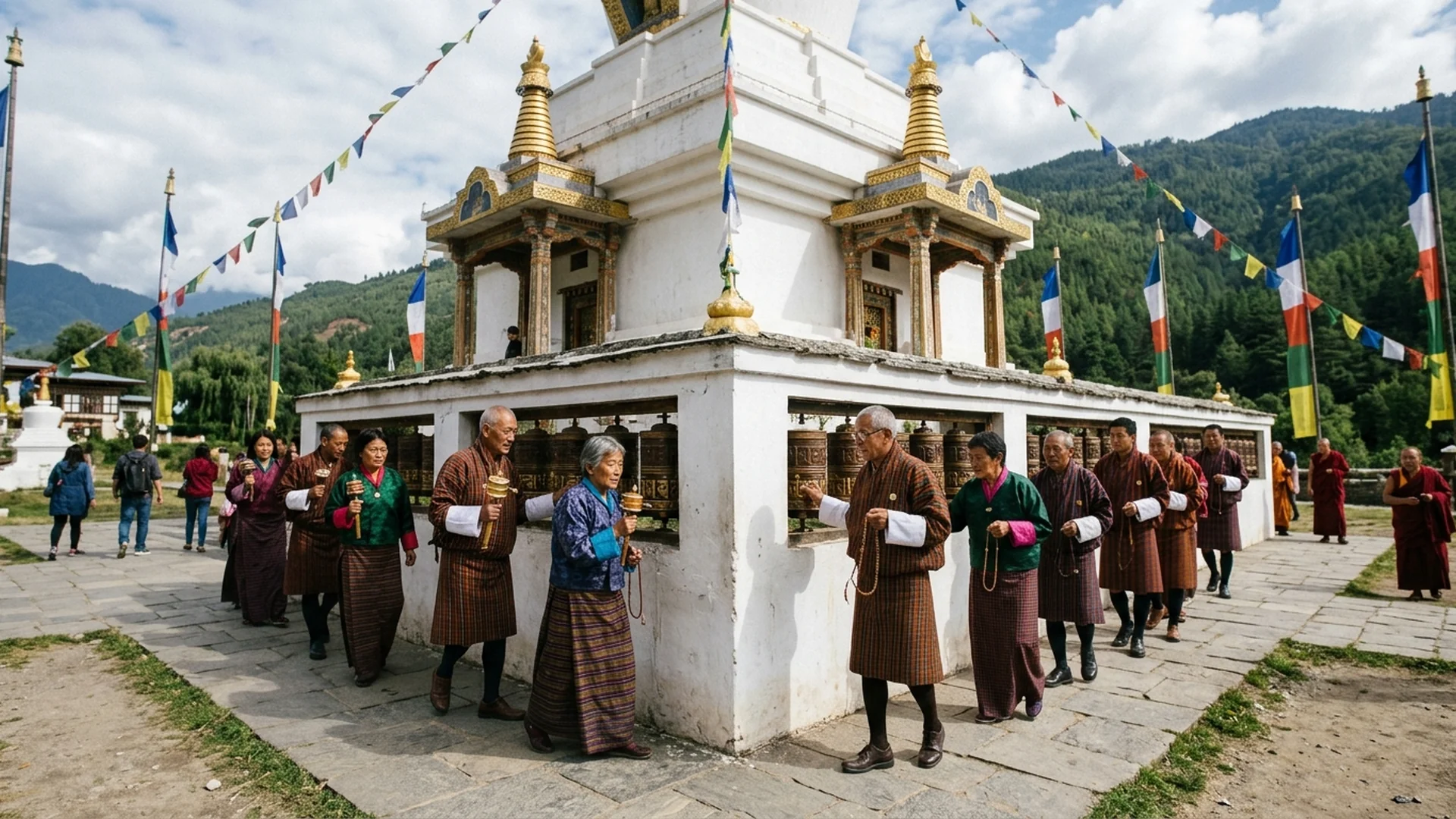
As the first golden rays of dawn touch the peaks above the Thimphu Valley, a delicate mist drifts past the soaring gilded spire of the National Memorial Chorten. Rising with quiet majesty in the heart of Bhutan’s capital, this immaculate Tibetan-style stupa is far more than an architectural masterpiece. It is the living, beating heart of Bhutanese devotion, where the rhythmic hum of prayer wheels turning clockwise and the soft, murmurous chanting of elders in traditional kira and gho weave an immediate spell of serenity over every traveler.
Approaching this revered sanctuary offers an encounter far deeper than standard sightseeing. Conceived as a sacred architectural embodiment of a cosmic mandala, the stupa’s tapering pinnacle symbolizes the speech, body, and enlightened mind of the Buddha. Within its three-tiered structure lie sacred shrines and esoteric treasures, mapping the gradual ascent of spiritual awakening in exquisite detail.
Amidst the drifting scent of burning juniper and an unhurried atmosphere of profound contemplation, discerning global travelers are invited to move beyond passive observation. By joining the morning circumambulation, known locally as kora, visitors partake in a timeless living tradition while uncovering the deep spiritual ties binding the royal houses of Bhutan and Thailand across borders.
The Stupa of Supreme Devotion and the Father of Modern Bhutan
The National Memorial Chorten was commissioned in 1974 under the visionary guidance of Ashi Phuntsho Choden Wangchuck, the Queen Grandmother, as a lasting tribute to her son, King Jigme Dorji Wangchuck. Widely celebrated as the architect of modern Bhutan, the Third King initiated sweeping reforms that guided the Himalayan kingdom into the contemporary era. Though he passed away before construction commenced, the stupa swiftly became the nation’s spiritual anchor, fulfilling his enduring aspiration for universal peace.
Designed according to ancient Nyingma texts by Dungsey Thinley Norbu Rinpoche, the brilliant white structure ascends 108 feet, its gleaming gold finial catching the crisp mountain light of Thimphu. Diverging from traditional funerary stupas, it holds no human mortal remains. Instead, it enshrines a formal portrait of the Third King in full royal regalia alongside countless sacred texts and sacred images, serving as a pristine monument to the enlightened mind.
Mandala Architecture and the Three-Tiered Vajrayana Interior
What elevates the National Memorial Chorten to a masterpiece of sacred design is its accessible interior. Rather than a solid core, the structure houses three distinct levels configured as a three-dimensional mandala of the Vajrayana tradition, each level revealing profound esoteric teachings.
- Ground Floor: Dedicated to Dorje Phurpa (Vajrakilaya), a fierce protective deity who subdues inner defilements and removes obstacles to spiritual realization. Bhutanese tradition holds that quiet circumambulation and prayer here clears away life’s most formidable roadsparks.
- Second Floor: Houses sacred icons representing the Ka-gye, or the Eight Great Sadhana Teachings of the Nyingma lineage, reflecting deep meditative discipline and boundless compassion.
- Top Floor: Devoted to the Lama Gongdu teachings on the awakened mind, adorned with exquisite murals and sculptures of Guru Rinpoche in various manifestations, elucidating the path to ultimate liberation.
A Shared Tapestry of Faith: A Touching Resonance for Thai Travelers
For travelers arriving from Thailand, a pilgrimage to the National Memorial Chorten transcends traditional art appreciation, opening into a profound emotional resonance. Upon ascending to the second tier of the chorten, visitors encounter a reverently maintained portrait of His Majesty King Bhumibol Adulyadej The Great (King Rama IX of Thailand).
This quiet tribute stands as a lasting testament to the deep mutual respect shared between the royal families of Thailand and Bhutan, united by an unwavering devotion to Buddhist values. Local Bhutanese worshippers frequently pause here to offer quiet reverence, honoring the late Thai monarch’s lifelong dedication to his people. Standing in mindful reflection before this portrait within the sanctuary of Thimphu creates an unforgettable moment of cross-cultural harmony and inner stillness.
Morning Rhythms and Moving Meditation: The Ritual of Kora
To truly comprehend the pulse of Thimphu, visit the chorten in the quiet hours of early morning before the valley fully awakens. Stepping onto the expansive stone courtyard, you will encounter the unhurried cadence of local life. Residents of all generations—from elders turning prayer beads to schoolchildren walking to class—gather to participate in kora, the traditional clockwise circumambulation of the sacred monument.
The deep, resonant hum of giant prayer wheels turning against the courtyard walls, the steady cadence of footsteps, and the fragrant smoke of burning juniper invite travelers into a state of moving meditation. Walking mindfully alongside the local community is not only an act of cultural respect, it is an invitation to quiet the mind and attune oneself to the benevolent energy of the capital.