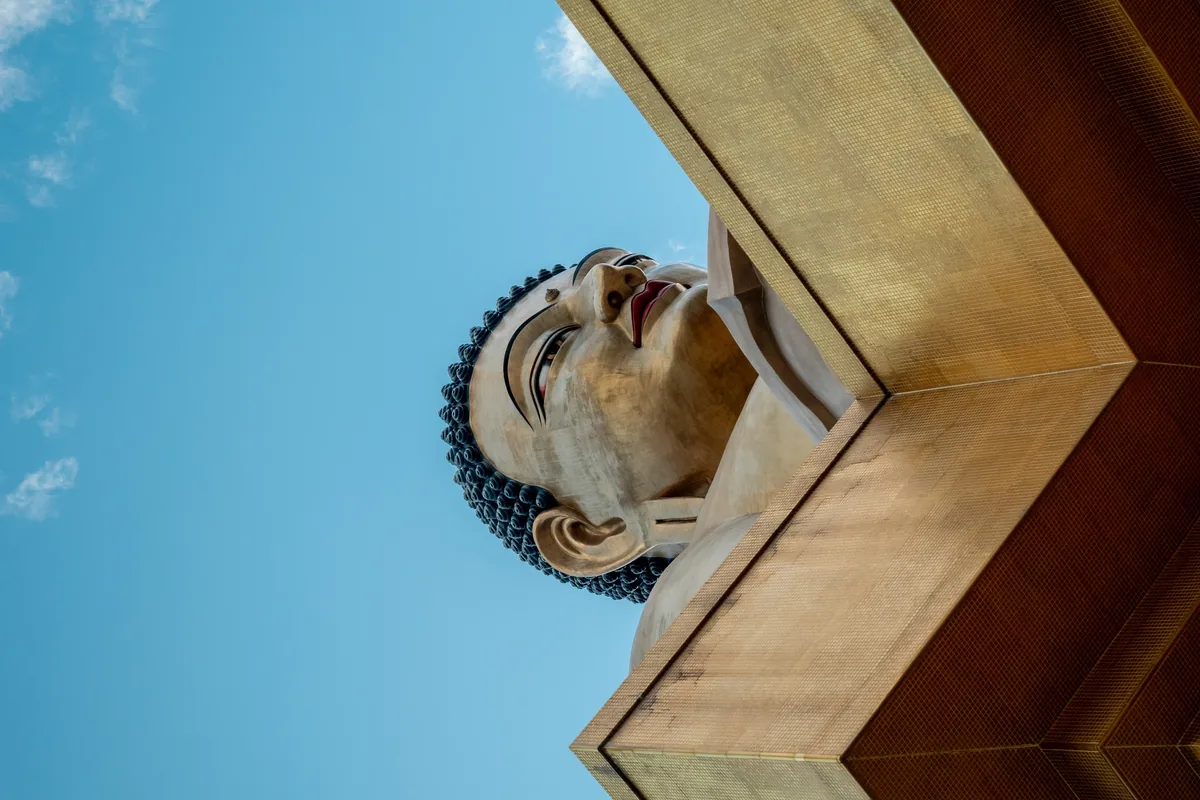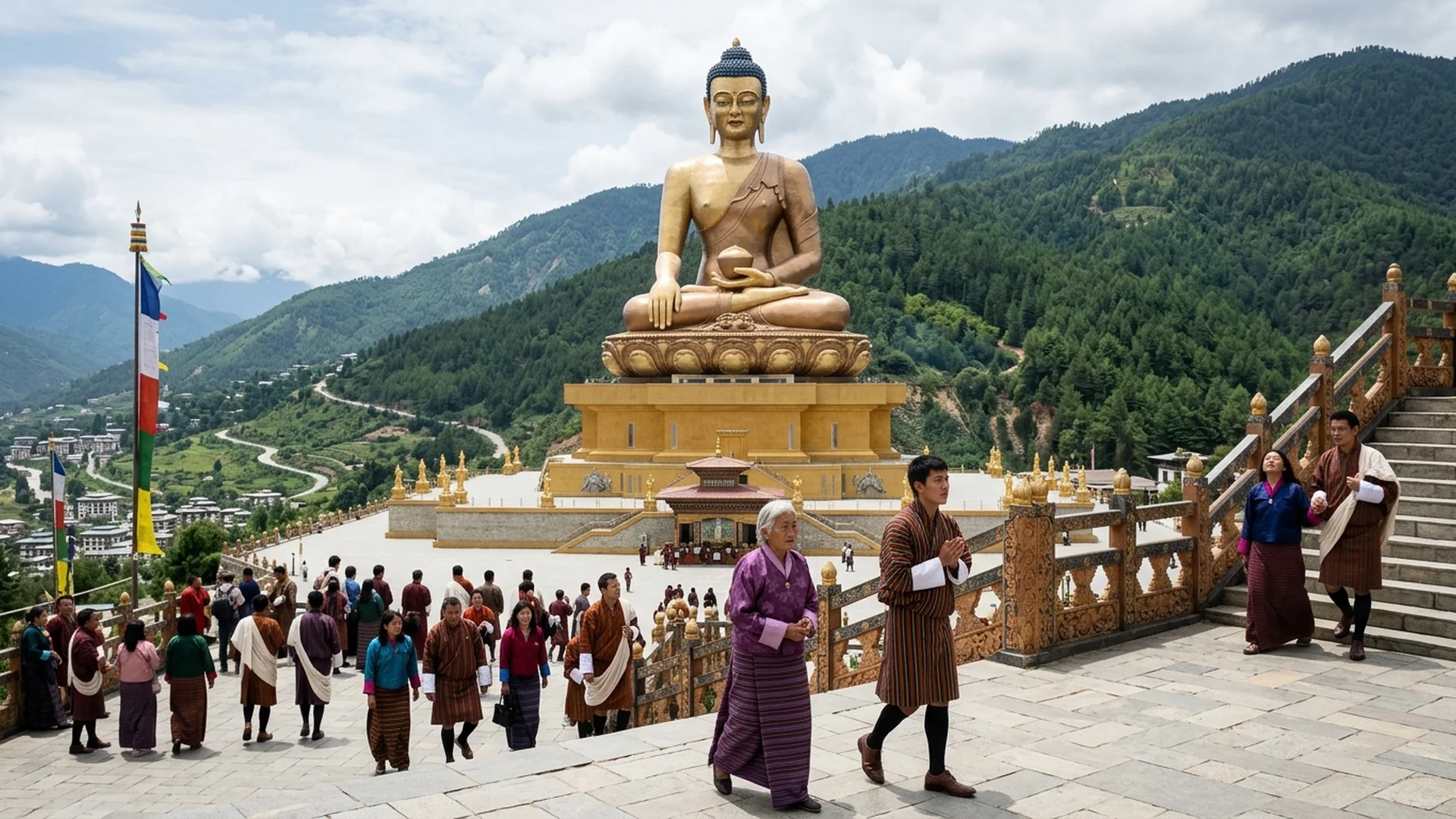
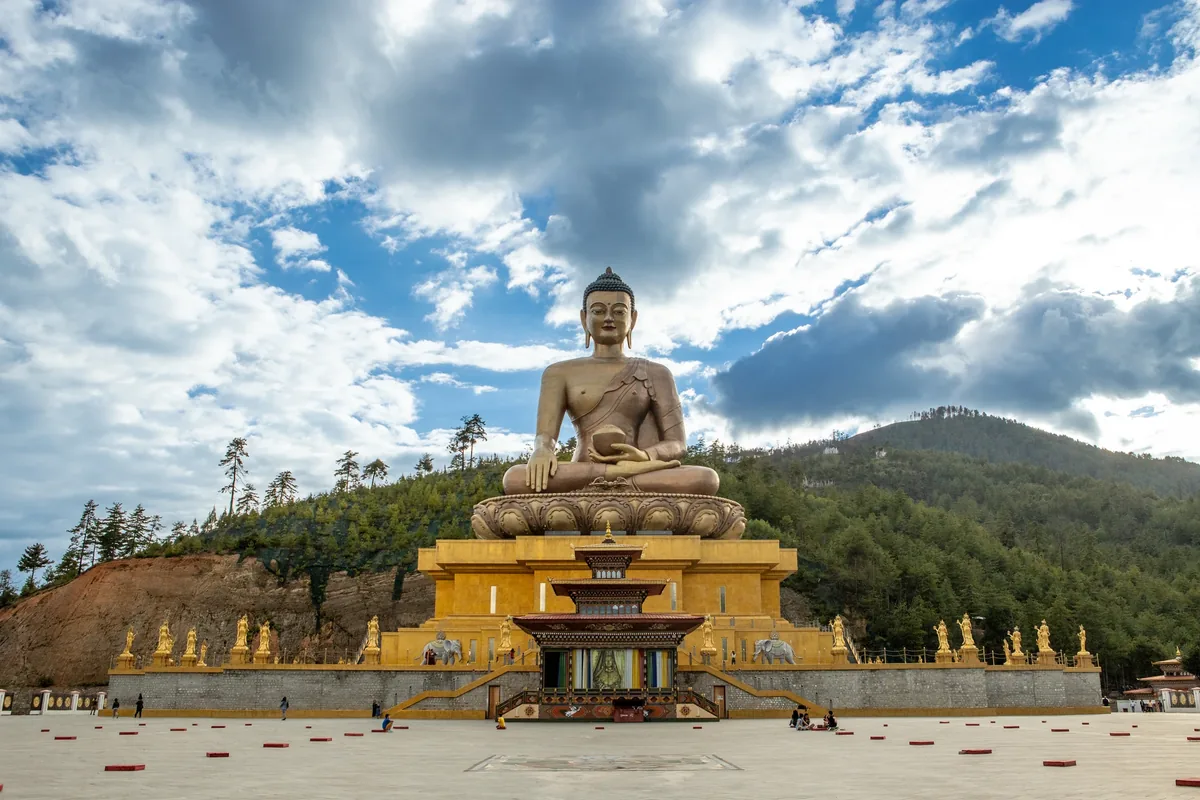
Amidst the brisk mountain winds sweeping across the slopes of Kuenselphodrang Nature Park, some 2,500 meters above sea level, the shimmering silhouette of a colossal seated Buddha catches the first rays of Himalayan dawn, bathing the entire Thimphu valley in a radiant, golden luminescence. This is the revered Buddha Dordenma, universally known as Buddha Point—an architectural marvel of profound spiritual resonance that stands as a majestic guardian over the Kingdom of Bhutan.
Yet, the sublime artistry visible from afar is merely the threshold of a deeper devotion. Housed within the hollow bronze and gilded framework of this 51.5-meter colossus lies a world-class spiritual marvel. Within the multi-tiered sanctum beneath the deity rest more than 125,000 smaller Buddha statues, cast in identical bronze and lavishly finished in pure gold leaf. In a striking juxtaposition, the sacred inner assembly outnumbers the human population of Thimphu itself, creating an oceanic mandala of silent guardians.
To journey to this sacred promontory is to transcend ordinary sightseeing, stepping instead into a vibrant matrix of positive energy and ancient millenary prophecy. Conceived to radiate boundless peace, prosperity, and enduring happiness across the globe in accordance with Mahayana and Vajrayana Buddhist philosophy, the monument fulfills an ancient vision carved deep into the spiritual topography of the Himalayas.
Monumental Metallurgy and the Diamond Eye of the 21st Century
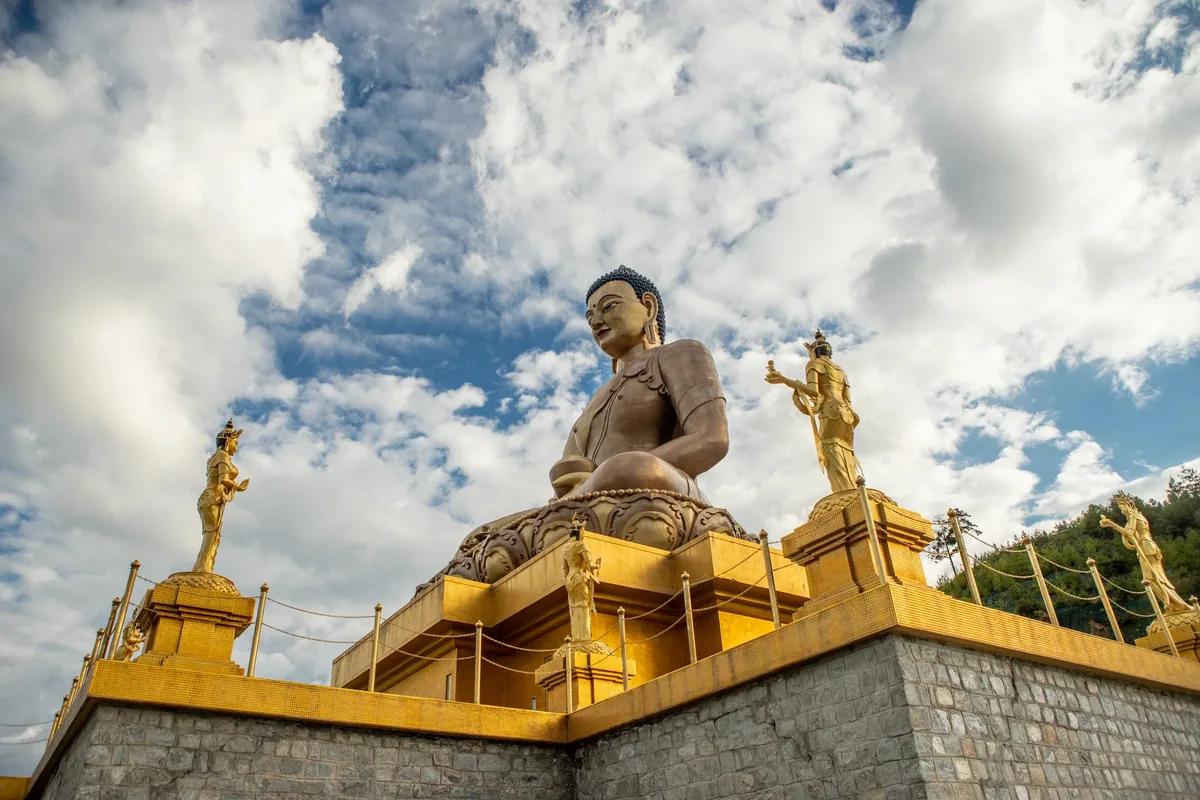
Resting in a posture of sublime meditation upon an expansive lotus throne, Buddha Dordenma is cast from heavy-gauge bronze and meticulously plated in shimmering pure gold leaf. Reaching a staggering height of 51.5 meters (169 feet), the figure commands a prominent place among the largest seated Buddha statues worldwide. The realization of this monumental sanctuary and its surrounding halls required an investment exceeding 100 million USD, galvanized by the devoted contributions of international patrons and practitioners.
The devotion to detail extends far beyond sheer scale. At the center of the deity’s forehead, the urna—traditionally regarded as the eye of wisdom—is adorned with a flawless, high-value diamond that catches the passing mountain light like a beacon of higher consciousness. Yet the true crown jewel of the structure rests within the subterranean throne hall, where neatly arranged glass cabinets display 100,000 eight-inch and 25,000 twelve-inch miniature Buddhas. Each tiny figure is individually cast and gilded, creating an overwhelming sense of sacred geometry and infinite compassion for every visitor who steps inside.
Decoding Ancient Prophecies and the Sacred Earth of Kuensel Phodrang
The siting of this great monument is no mere accident of geography; it is inextricably woven into ancient terma, or hidden treasure texts. In the 8th century, Guru Rinpoche, the revered master who brought Vajrayana Buddhism to the Himalayan realms, prophesied that a monumental sculpture would one day rise upon these heights to disperse waves of tranquility and auspiciousness across the four directions.
Centuries later, in the 20th century, the accomplished Bhutanese yogi Sonam Zangpo experienced a vivid vision and reaffirmed that a great Buddha would be established on this specific ridge to avert calamities and radiate peace to all sentient beings. Construction commenced in 2006 upon the historic ruins of Kuensel Phodrang—once the palace of the 13th Druk Desi—and was completed in 2015 to honor the sixtieth birthday of His Majesty Jigme Singye Wangchuck, the Fourth King of Bhutan. Thus, the completion of Buddha Dordenma brought an ancient Himalayan prophecy to its luminous fruition.
The Mandala Sanctum Beneath the Throne: Meditation and Vajrayana Artistry
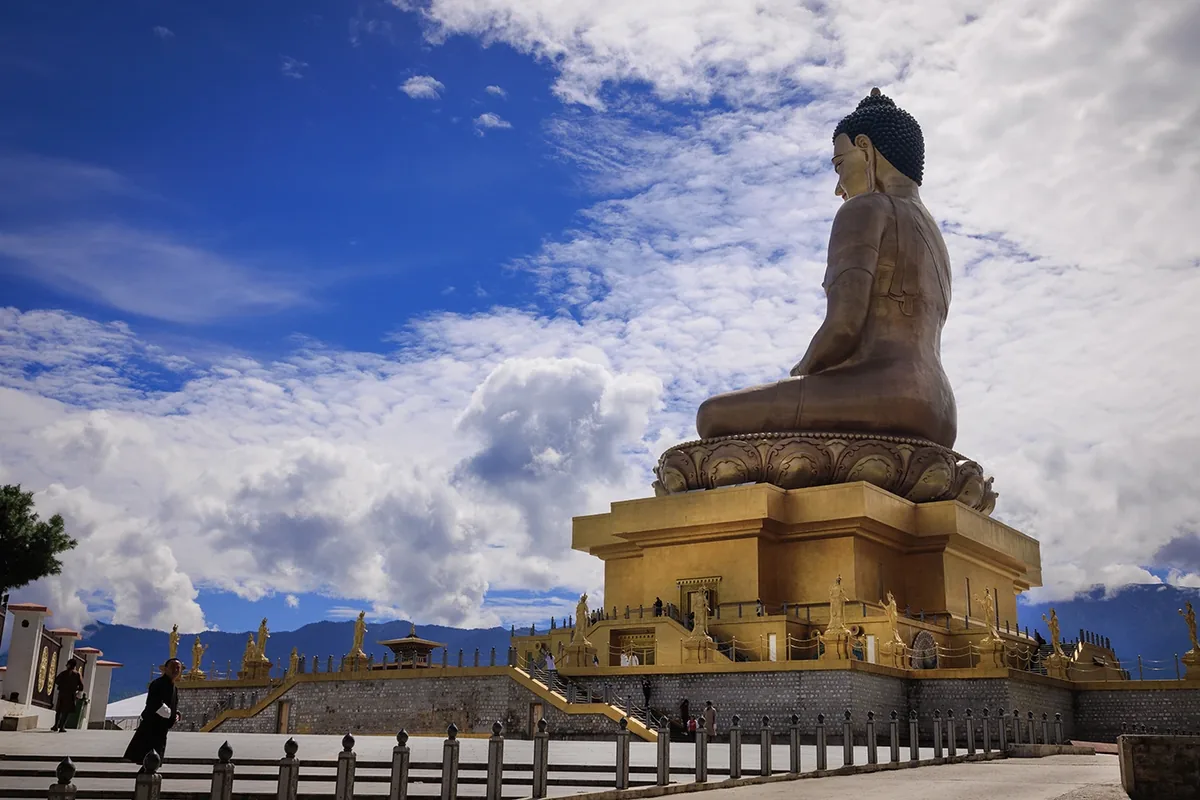
Beneath the inverted and upright lotus petals of the grand lotus throne lies a vast, multi-level sanctuary and meditation hall. Crossing the threshold through heavy, intricately carved wooden doors, visitors are instantly enveloped in a tranquil atmosphere softened by the subtle aroma of natural incense and the low, resonant hum of distant mantras echoing against stone and timber walls.
The interior surfaces are adorned with exquisite mandalas and vibrant frescoes depicting the profound cosmology of Mahayana and Vajrayana traditions, complemented by golden pillars etched with celestial deities and the Ashtamangala, the eight auspicious symbols. The surrounding glass-fronted chambers display the sea of 125,000 golden buddhas, creating shimmering golden corridors that invite deep introspection, meditative stillness, and mindful presence.
Exclusive Timing and Panoramic Vistas: Capturing the Golden Hour in Thimphu
Beyond its profound religious significance, the high-altitude ridge of Kuenselphodrang offers arguably the most breathtaking and expansive vantage point over the Thimphu capital. Arriving during the tranquil hours of early morning yields a singular reward, as the first horizontal rays of sunlight strike the gilded countenance of the Buddha, setting it ablaze against the cerulean sky of the high Himalayas.
For travelers attuned to nature’s quiet rhythms, the surrounding Kuenselphodrang Nature Park offers shaded walking trails winding through pristine Himalayan pine forests. Here, one may wander in contemplation while taking in uninterrupted 360-degree vistas of the Thimphu valley, the winding ribbon of the Wang Chhu river far below, and the timeless vernacular architecture of the surrounding hills, entirely removed from the bustle of the modern world.