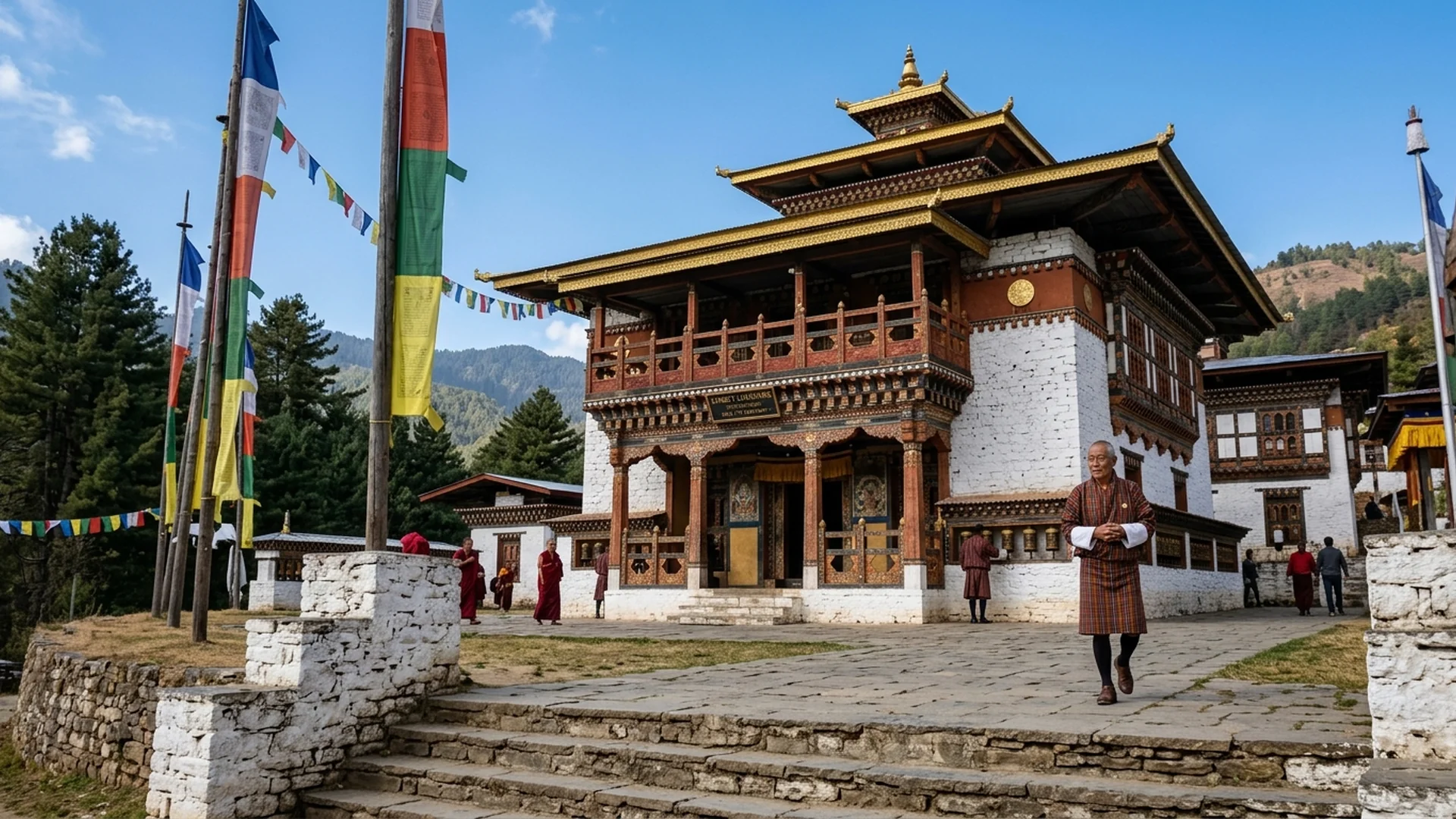
Amidst the serene landscapes and crystalline mountain air of the Bumthang Valley—the spiritual heartland of the Kingdom of Bhutan—the low hum of sacred chants and the lingering aroma of ancient incense drift effortlessly across time. Here stands Jambey Lhakhang, an architectural elder that has weathered the biting Himalayan winds for more than thirteen centuries. This is far more than a mere religious monument; it is a profound touchstone for discerning travelers and global seekers drawn to the subtle intersection of history, myth, and high-altitude contemplation.
Journeying to Bumthang today is akin to turning the opening pages of Buddhism’s arrival in the Land of the Thunder Dragon. Its understated yet potent architecture whispers tales of shifting eras, the divine geomancy required to secure a fragile earth, and an unwavering devotion that refuses to wane with the passing centuries.
The Seventh Century and the Subjugation of the Ogress: The Roots of Buddhism in Bhutan
The chronicle of Jambey Lhakhang begins around 659 CE during the reign of the formidable Tibetan monarch King Songtsen Gampo. According to ancient lore, the Himalayan expanse was once overshadowed by a gigantic ogress whose sprawling limbs stretched from Tibet down into Bhutan, preventing the roots of Buddhism from taking hold. To anchor the earth and pacify this chaotic force, the king ordered the simultaneous construction of 108 temples across the realm in a single day.
Among these, Jambey Lhakhang in Bumthang and Kyichu Lhakhang in Paro were assigned the critical task of pinning down the ogress’s left knee and left ankle, respectively. The temple’s internal architecture bears the hallmarks of ancient master craftsmanship. The main sanctuary faces east to greet the first morning light, its intricately carved timber frame bearing the dignified patina of centuries while maintaining a sacred atmosphere in every breath of crisp mountain air.
The Heart of Bumthang: A Realm Where Time Slows and Energy Runs Pure
Visiting the Bumthang valley offers an experience distinct from the urban pulse of Thimphu or the valley floor of Paro. Bumthang feels unhurried, functioning as a living museum of Bhutan’s oldest monastic foundations, rolling emerald pastures, and traditional agrarian rhythms.
Crossing the threshold of Jambey Lhakhang introduces travelers to a profound stillness rarely found in the modern world. Ancient rammed-earth walls, centuries-old murals faded gently by time yet humming with spiritual gravity, and the presiding deity statues that have miraculously endured fires and earthly trials all stand as living testaments to Bhutanese resilience. For cultural explorers and dedicated historians alike, this sanctuary remains an essential pilgrimage for the soul.
Nocturnal Mystique: The Jambey Lhakhang Drup and Sacred Dances
Each autumn—typically in October or November—this venerable sanctuary erupts into vibrant, sacred life during the Jambey Lhakhang Drup, one of the nation’s oldest and most revered religious festivals.
Among its most mesmerizing spectacles for anthropologists and photographers alike is the Mewang (Fire Dance), held under the shroud of darkness where massive bonfires are ignited for pilgrims to leap across, seeking purification and the warding off of misfortune. This is followed by the nocturnal performance of Tercham, or sacred dance, commemorating historical turning points and foundational myths. Watching the flickering flames reflect upon the deeply devout faces of local villagers amid the biting Himalayan chill is nothing short of a masterclass in living cultural immersion.