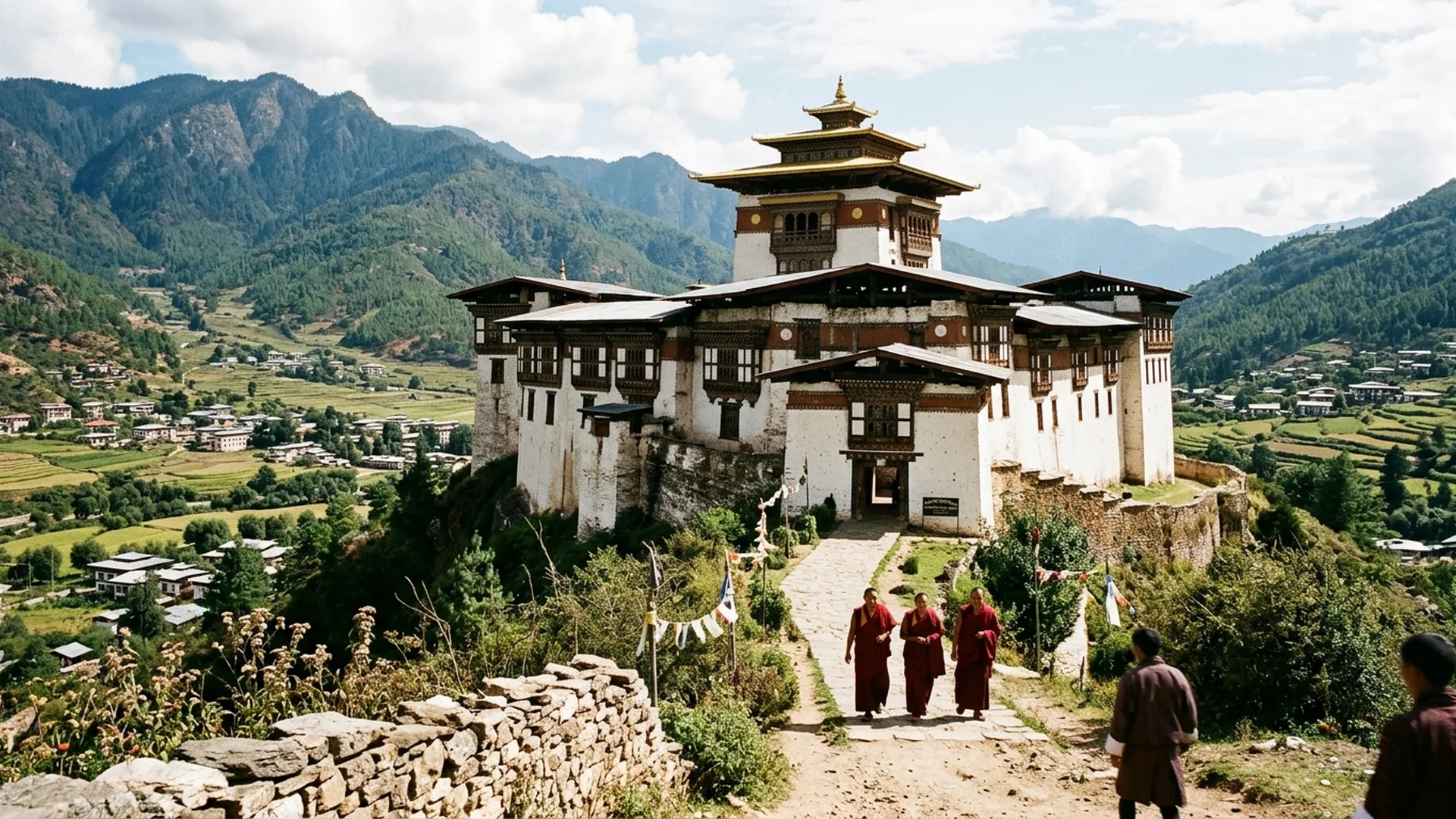
As morning mists slowly lift above the Chamkhar Valley of Bumthang, the immaculate white walls of an ancient fortress emerge along a ridge shaped like a soaring bird. This is Jakar Dzong, reverently known as the Castle of the White Bird. Boasting one of the most expansive circumferences of any fortress-monastery in the Kingdom of Bhutan, this landmark transcends simple administrative or religious categorization. It stands as a monumental chronicle of brilliant military strategy, unyielding faith, and the foundational roots of the Wangchuck dynasty.
For the discerning traveler seeking intellectual depth and elevated cultural immersion, Bumthang represents the undisputed spiritual heart of Bhutan. Ascending to Jakar Dzong is akin to unraveling a historical manuscript originating in the sixteenth century—a testament to an enduring harmony between humanity, nature, and the sacred, preserved in pristine stillness amidst Himalayan peaks.
The Legend of the White Bird and the Genesis of Faith
The roots of Jakar Dzong stretch back to 1549, initiated by Lama Yongzin Ngagi Wangchuk, a visionary noble who journeyed from Ralung Monastery in Tibet to propagate the Drukpa Kagyu teachings. According to oral histories, as the lama sought an auspicious site for a sanctuary, a magnificent white bird—known locally as Bjakhab—rose from the construction grounds and settled peacefully upon the ridge. This auspicious omen was interpreted as a divine sign of enduring prosperity, inspiring the name Jakar Yugyal Dzong, meaning the Fortress of the White Bird That Becomes Victorious.
Beyond its mythological resonance, Jakar Dzong served as a crucial geopolitical bastion for safeguarding the entire eastern territory of the realm. It later functioned as a powerful seat of influence and a vital stepping stone in the unification of Bhutan under the Wangchuck dynasty. The true grandeur of this fortress is measured not by decorative opulence, but by the profound weight of national history etched into every stone.
Distinctive Military Architecture: Where the Watchtower Meets Water Engineering
Among the great dzongs scattered across the kingdom, Jakar Dzong exhibits unique architectural anomalies that consistently fascinate architectural historians and discerning travelers. Most notably, its Utse, or central watchtower, stands approximately fifty meters high directly adjacent to the exterior perimeter wall rather than occupying the traditional center of the inner courtyard. This elevation and strategic placement allowed the tower to function simultaneously as an observation post and a fortified redoubt.
Furthermore, the fortress boasts an advanced pre-modern defensive engineering feat: a sheltered water passage. Constructed as a double-walled, fortified corridor fortified by minor watchtowers, it descends steeply from the main compound to a natural water source down the slope. This ingenious system ensured a reliable water supply for inhabitants during times of military siege. The seamless integration of delicate woodcarvings, whitewashed masonry, and tactical ingenuity reflects the profound wisdom of Bhutan’s ancestors.
The Living Soul of Bumthang and Interior Sanctity
Passing through the monumental timber doors into an interior compound spanning over fifteen hundred meters in circumference, the atmosphere shifts from formidable defense to contemplative sanctuary. Like all major fortress-monasteries across the nation, Jakar Dzong embodies a dual purpose, harmoniously housing both the regional civil administration of Bumthang and the tranquil quarters of the resident monastic community.
The sacred assembly halls and shrines are perpetually redolent with the earthy scent of herbal incense and illuminated by the warm, flickering glow of butter lamps casting light upon venerated statues and intricate guardian deity murals (Gonkhang). The low, resonant chanting of monks and young novices engaged in scriptural studies emphasizes Bumthang’s identity as an inner sacred land where time appears suspended. Here, travelers encounter masterworks of traditional craft and the gentle rhythms of Vajrayana practice, inviting an innate sense of profound stillness.