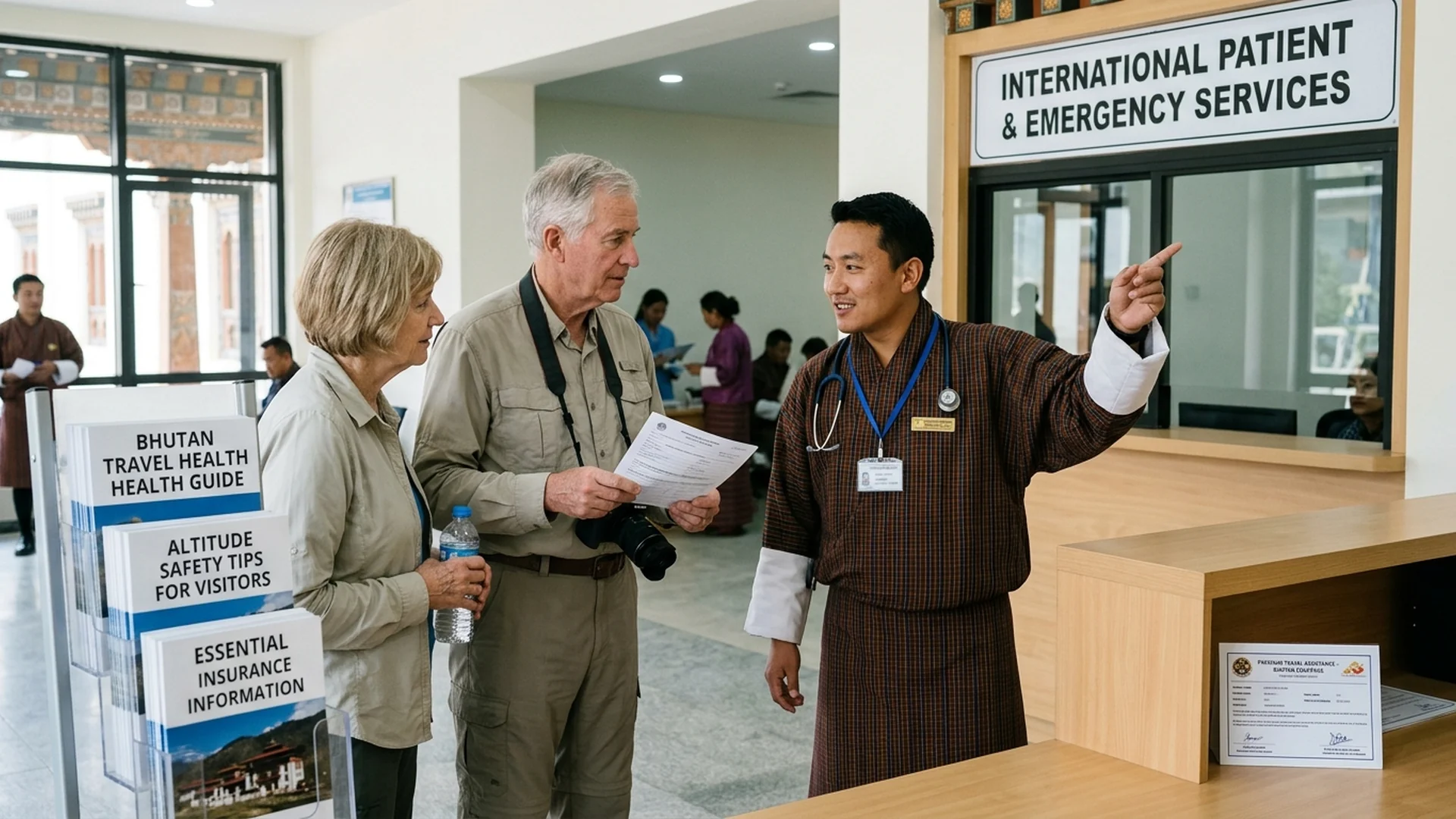
Amidst the picturesque valleys and snow-crowned Himalayan peaks piercing the azure sky, Bhutan is celebrated as a sanctuary of unhurried grace and timeless serenity. Yet, beneath this ethereal calm lies the profound physical reality of the roof of the world. Venturing into high-altitude terrain and rugged topography demands a mindful awareness of local healthcare realities that no discerning global traveler should overlook. Bridging the gap between picturesque isolation and absolute peace of mind requires a refined understanding of medical infrastructure and physiological adaptation.
While Bhutan extends free basic emergency first aid to visitors in public clinics, the nation’s medical infrastructure remains delicate, particularly beyond the capital or along remote trekking routes. Thoughtful preparation—ranging from comprehensive international medical insurance with emergency evacuation coverage to a clear-headed respect for the silent pressures of altitude—forms the cornerstone of responsible, uncompromised global travel.
Decoding JDWNRH and Bhutan’s Public Health Infrastructure
When acute medical situations arise within the Land of the Thunder Dragon, the primary anchor of care is the Jigme Dorji Wangchuck National Referral Hospital, universally known as JDWNRH. Situated in the heart of Thimphu, this tertiary referral hospital represents the pinnacle of national medical capability, housing emergency, surgical, and internal medicine departments alongside essential diagnostic machinery. Nevertheless, due to challenging Himalayan geography and developing healthcare economics, facilities outside Thimphu, Paro, and Punakha—such as Basic Health Units (BHUs) scattered across rural valleys—are strictly optimized for minor ailments and basic first-response triage. Severe trauma or complex conditions invariably necessitate emergency medical transfer back to the capital.
The Silent Challenge of Elevation: Managing Altitude Sickness (AMS)
Bhutan’s topography is overwhelmingly vertical. Thimphu rests at roughly 2,300 meters, while mountain passes like Dochula or pilgrimages to the Tiger’s Nest sanctuary (Taktshang Goempa) and high-altitude trekking routes push elevations past 3,000 to 4,000 meters. The rarified air and diminished oxygen levels frequently trigger Acute Mountain Sickness (AMS). Initial symptoms range from persistent headaches and mild dizziness to nausea and sudden fatigue. Gradual acclimatization is paramount. Travelers are advised to refrain from strenuous exertion upon arrival, hydrate generously, and monitor their physical condition closely. Most experienced local guides are thoroughly trained in first-aid protocols and carry portable oxygen canisters for emergency stabilization.
Pharmaceutical Preparedness and Regional Supply Constraints
For travelers managing pre-existing medical conditions, pharmaceutical foresight is indispensable. While Thimphu hosts well-stocked pharmacies staffed by English-fluent professionals, sourcing specialized or brand-name prescription drugs outside major urban centers is virtually impossible. Medical specialists universally recommend carrying a personal supply of essential medications sufficient for the entire itinerary plus an extra seven-day buffer. Furthermore, carrying an official medical certificate in English detailing your diagnosis and generic drug formulations ensures seamless customs clearance and facilitates rapid coordination with local practitioners if the unexpected occurs.