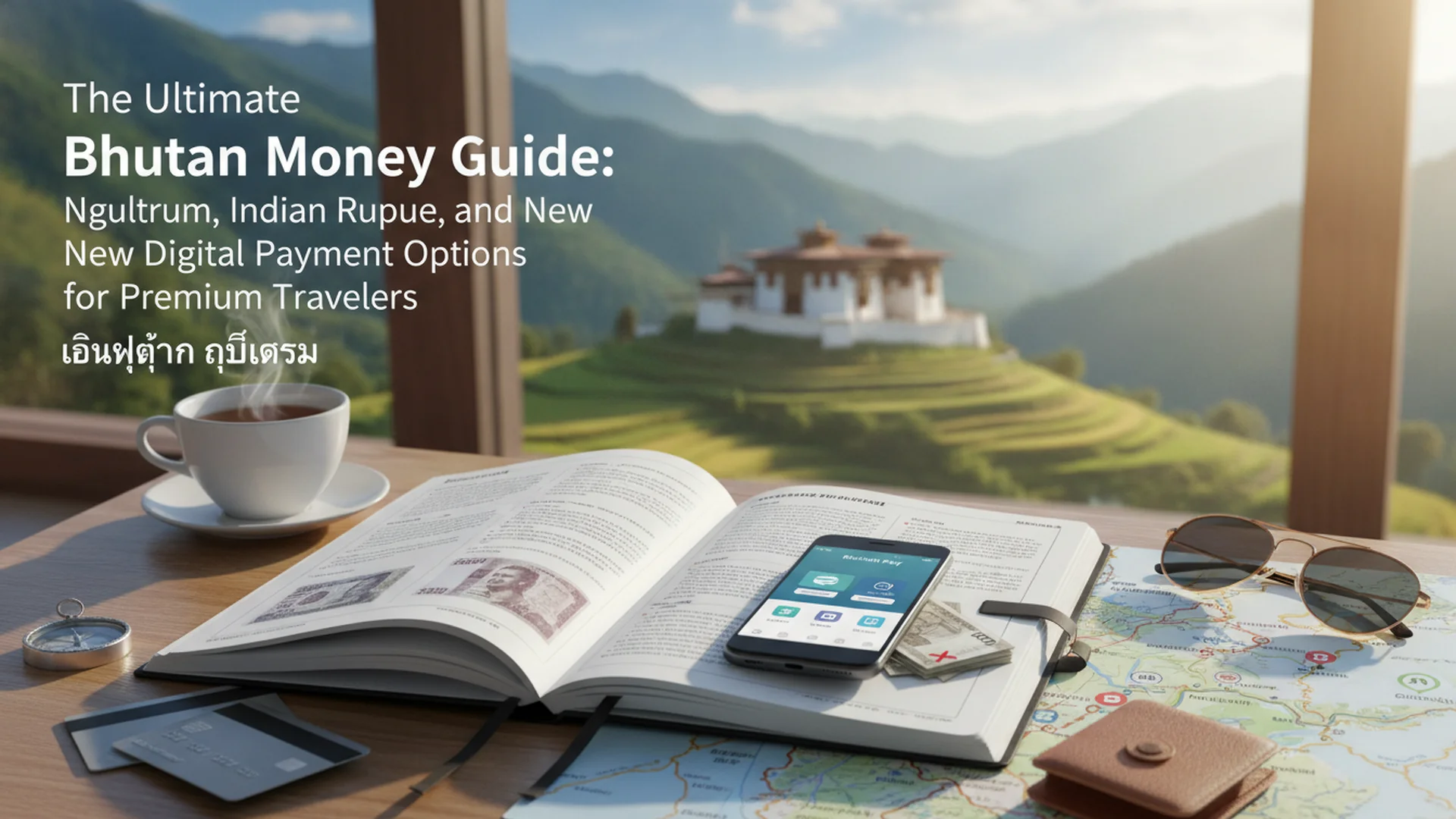
Amidst the labyrinthine Himalayan valleys and pristine pine forests, the art of mindful travel often intersects with the practical art of financial management. The Land of the Thunder Dragon is renowned not only for its profound philosophy of Gross National Happiness, but also for pioneering a refined approach to luxury travel that seamlessly bridges ancestral traditions with forward-thinking digital infrastructure. Journeying through contemporary Bhutan offers discerning travelers a frictionless experience, uniting the nuances of local currency with some of the most innovative national payment ecosystems in the world. This guide illuminates every facet of luxury spending in the kingdom, ensuring your passage through this sacred realm is as effortless as it is enlightened.
Decoding the 1:1 Equation: Ngultrum (BTN) and Indian Rupees (INR)
At the heart of financial navigation in Bhutan lies the Ngultrum (BTN), a currency permanently pegged at a 1:1 ratio with the Indian Rupee (INR). This unique monetary bond positions Indian banknotes as a reliable dual currency, accepted extensively for commerce and services throughout the kingdom. Travelers, however, must exercise discretion regarding banknote denominations: bills of 100, 200, or 500 Rupees are welcomed, while larger denominations such as 1,000 or 2,000 Rupee notes are frequently declined by smaller family-run establishments due to change limitations. Crucially, Bhutanese Ngultrum cannot be exchanged or spent outside the kingdom, necessitating careful financial reconciliation before your departure from the realm.
A Digital Vanguard: National QR Scanning and Cryptocurrency Integration
Bhutan has quietly established a global benchmark by becoming one of the first nations to fully integrate blockchain-driven digital payment systems into its national tourism framework. Through a historic collaboration between Binance Pay and DK Bank (Digital Kidu Bank), international visitors can utilize smartphone applications to scan QR codes for frictionless transactions across more than 3,700 establishments. This comprehensive network covers everything from domestic flight tickets and visa fees to luxury lodge stays, expert guiding services, heritage site admissions, and artisanal farm produce in remote settlements. The system bypasses exorbitant foreign exchange conversion fees while ensuring instantaneous, secure conversion of digital assets—including BTC, USDC, and BNB—into local Ngultrum within milliseconds.
Global Credit Cards and the Art of Physical Cash Reserves
While digital modernization continues to expand, traversing deep Himalayan valleys still demands a degree of physical flexibility. International credit and debit cards, such as Visa and Mastercard, operate smoothly within premier hotels, fine dining establishments, and prominent handicraft galleries in Thimphu and Paro. Travelers should, however, anticipate a standard surcharge of approximately 3.5 percent for card processing, alongside the occasional vulnerability of internet connectivity or banking networks in high-altitude terrains. Consequently, keeping a modest wallet reserve of small-denomination banknotes remains an indispensable strategy for making merit at ancient monastic sanctuaries, acquiring intimate keepsakes at local weekend markets, and extending customary gratuities to the dedicated personnel accompanying your journey.