When whispering the name of Bhutan, visions of pristine Himalayan forests, mist-shrouded cliffside monasteries, and a kingdom governed by Gross National Happiness immediately arise. Yet, a quiet culinary renaissance is unfolding across these sacred valleys. A profound gastronomy journey is taking shape, elevating traditional ingredients into transcendent works of art.
This refined expedition guides discerning global travelers through the tranquil valleys of Thimphu and Paro. Here, ancient rammed-earth architecture seamlessly embraces the exacting mastery of world-class chefs. The gentle, warming heat of local cheese and chilies is gracefully elevated for sophisticated palates, while artisanal brews are sipped alongside sweeping views of historic fortress-monasteries. This is a masterclass in Himalayan cuisine that will forever transform your relationship with the mountains.
Bukhari at COMO Uma Paro: A Sanctuary of Royal Fine Dining
nestled deep within the tranquil contours of the Paro Valley, Bukhari—the signature dining room of the iconic COMO Uma Paro—has redefined luxury gastronomy in the kingdom. Taking its name from the traditional cylindrical firewood stove that radiates warmth during alpine evenings, the restaurant’s architecture is defined by a dramatic glass rotunda that floods the space with natural light and frames uninterrupted vistas of emerald pine forests.
The culinary philosophy here is rooted in honoring the purest organic harvests of Bhutan while applying contemporary international techniques. Master chefs curate menus that whisper of the high Himalayas, pairing foraged mountain herbs with delicately smoked meats and seasonal plant-based creations. Dining here, enveloped in absolute silence and impeccable discretion, transcends mere nourishment to become a profoundly moving celebration of quiet luxury.
Stepping Back in Time at Babesa Heritage Restaurant
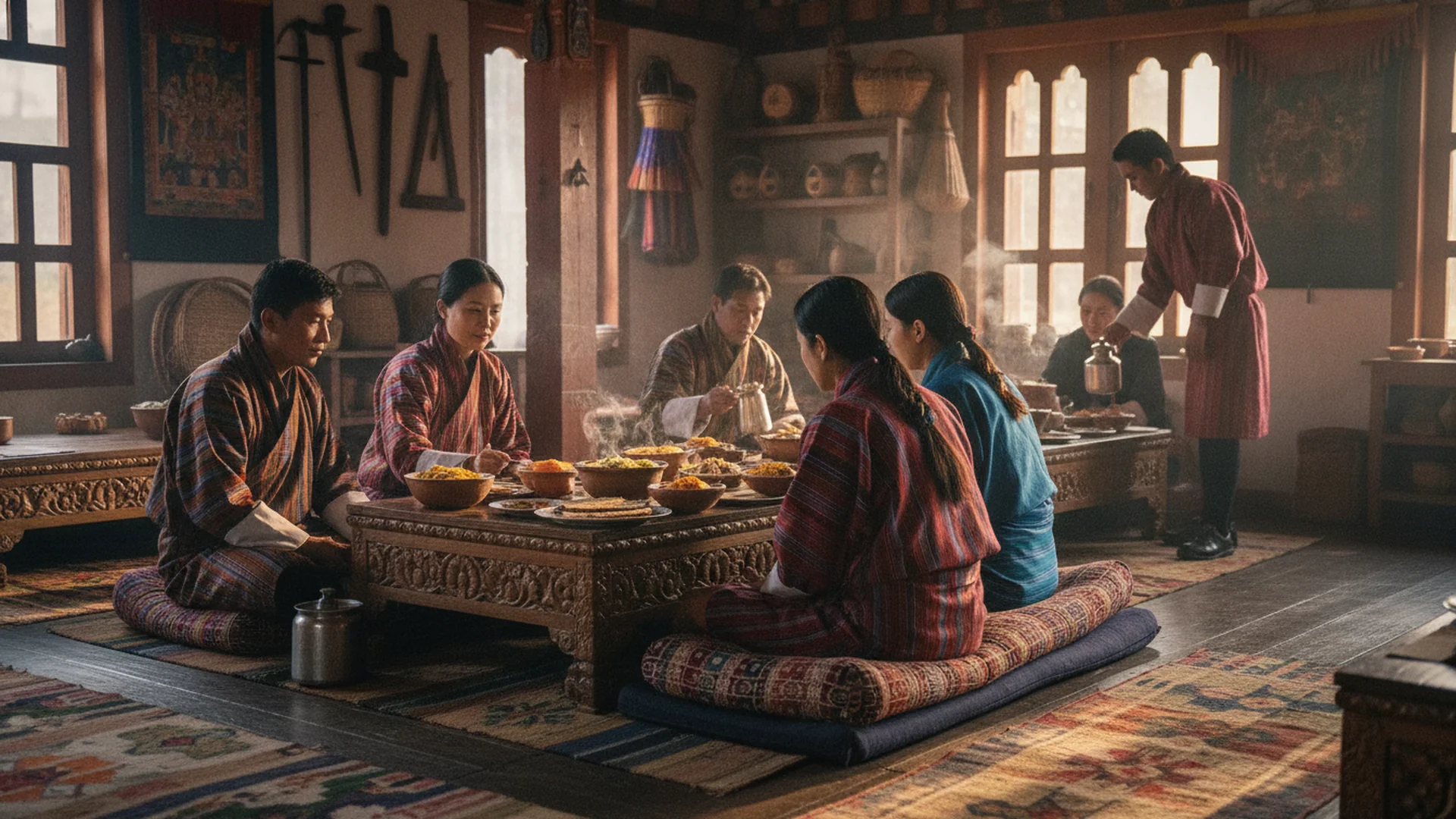
To truly understand the ancestral soul of Bhutanese cuisine, one must journey to Babesa Heritage Restaurant. Situated just off the arterial route toward Thimphu, this remarkable dining destination is housed within a genuine rammed-earth village home carefully restored after standing for more than a century and a half. Original timber beams, hand-carved window frames, and the comforting aroma of burning pinewood preserve the intimate atmosphere of a traditional rural household.
Crossing the threshold, guests are welcomed with the rich, earthy aromas of wild spices. Multi-course ancestral feasts are presented in antique brass vessels, featuring pork simmered in rich cheese sauce known as Pork Datshi, radish and dried chili stir-fries, and the iconic Ema Datshi. Paired with nutty, heirloom Bhutanese red rice by candlelight inside a heritage home, this is one of the most powerful culinary time-travel experiences imaginable.
Scenic Mountain Cafes and Architectural Masterpieces
A thriving cafe culture has quietly blossomed across the kingdom, offering contemplative spaces for artists, intellectuals, and mindful travelers. In the capital, Brusnika Russian Cafe occupies an enviable vantage point, offering sweeping elevated views of the majestic Tashichho Dzong, the seat of government and central monastic body. Here, freshly roasted specialty coffees accompany delicate house-baked pastries.
Meanwhile, in the Paro Valley, Neyphug Heritage offers a profoundly serene sanctuary. Housed within a tastefully restored ancestral mud-brick dwelling surrounded by terraced rice paddies, the cafe serves exceptional single-origin coffees while channeling a portion of its proceeds directly back into local monastic education—embodying the purest principles of compassionate, community-centric travel.
The Art of Himalayan Flavor Pairing in Luxury Dining
Bhutanese cuisine is legendary for its fiery profiles, anchored by the beloved chili-and-cheese preparation known as Ema Datshi. For high-net-worth travelers, understanding this cuisine involves appreciating its delicate flavor pairings. Leading executive chefs suggest complementing the gentle heat with Suja, traditional salted butter tea, or selecting a crisp, chilled white wine that cuts through the richness of native yak and cow milk cheeses.
The true wonder of Bhutanese food lies not in its heat, but in its supreme balance. Because locals treat the chili as a vegetable rather than a mere spice, and because every ingredient is harvested from uncontaminated organic soils, each mouthful delivers the pristine vitality of the world’s highest rooftop.