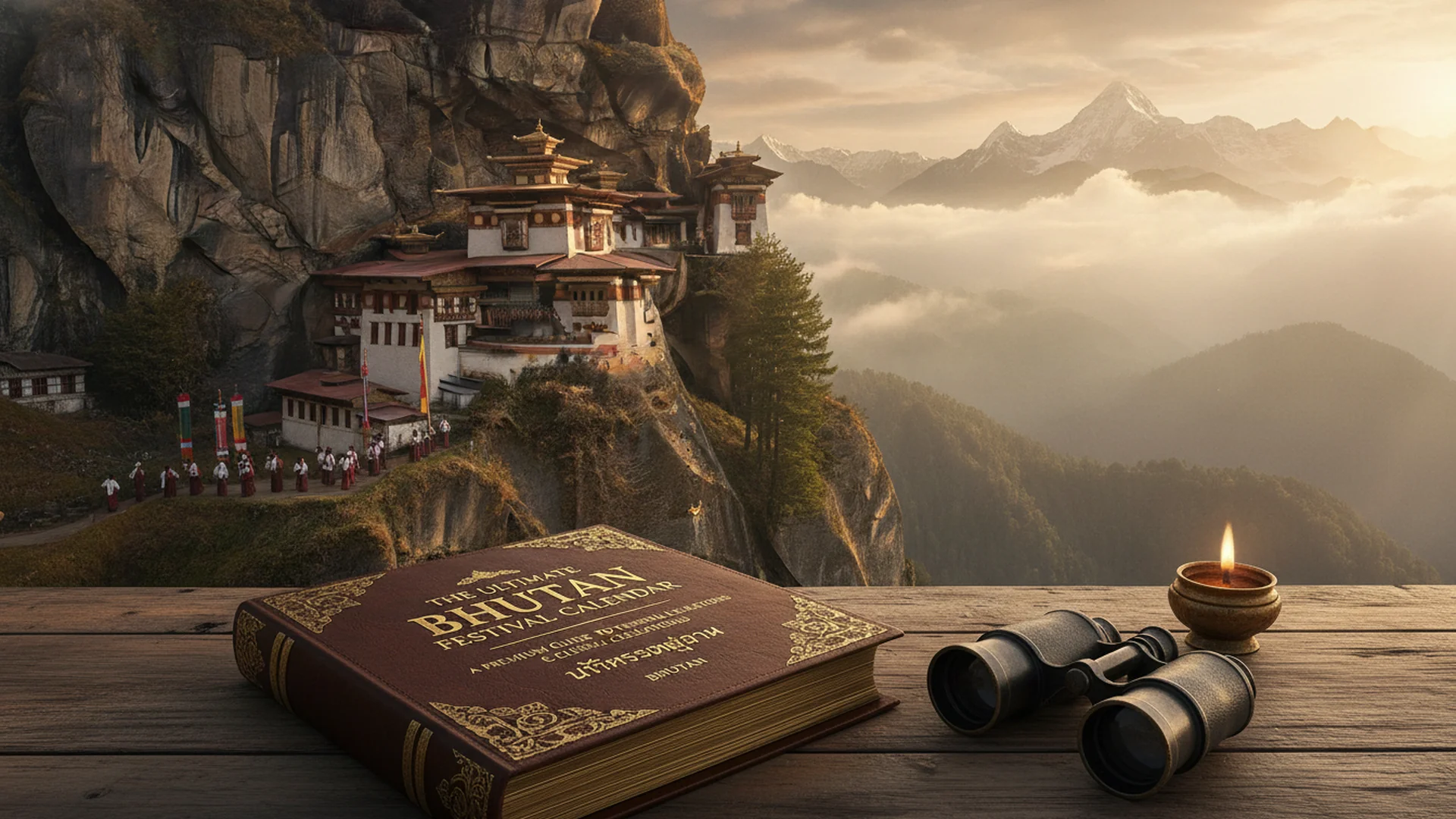
Step beyond standard calendars into a deeply contemplative exploration of Bhutanese sacred geography, where ancient festival dates intertwine seamlessly with ultra-luxury hospitality. Amidst Himalayan valleys where time appears to pause, the resonant thrum of ancient drums and the sonorous blast of brass horns echoing across granite fortress walls herald the opening of a sacred temporal dimension.
For the discerning traveler seeking profound meaning far beyond conventional tourism, the annual festivals of the Last Shangri-La serve as magnificent portals into ancient Vajrayana Buddhist philosophy. Here, the measured cadence of masked dances and the resplendent pigments of heritage textiles weave together cosmic narratives of compassion, liberation, and cyclical existence. Standing at this profound intersection of living faith and pristine wilderness defines the pinnacle of authentic, irreplaceable luxury travel.
The Heart of Devotion: Decoding Tshechu and the Esoteric Art of Cham
In Dzongkha, the national language, ‘Tshechu’ translates directly to ‘tenth day,’ marking the tenth day of a lunar month in the Bhutanese calendar, believed to commemorate the birth of Guru Rinpoche, or Padmasambhava, who introduced Vajrayana Buddhism to these valleys in the eighth century. The emotional and spiritual epicenter of these celebrations is the sacred masked dance, or ‘Cham,’ performed by monks and dedicated lay practitioners who undergo rigorous spiritual preparation. Exquisitely carved wooden masks depicting 108 distinct wrathful and peaceful deities, fierce protectors, mythological beasts, and revered ancestors are brought to life through intricate choreography backed by traditional cymbals, giant drums, and towering brass horns.
These movements are far from mere aesthetic performances; they are dynamic visualizations designed to subjugate inner delusions and ignorance. To stand within the ancient stone courtyards of a majestic dzong (monastery-fortress), attired in refined traditional garments while absorbing these ancient rites, is to experience a rare form of spiritual purification.
An Annual Tapestry: From Grand National Gatherings to Remote High-Altitude Rites
Navigating Bhutan’s festival calendar requires an understanding of its geographical and seasonal rhythms:
- Spring (March – April): The season opens with the renowned Paro Tshechu, celebrated globally for its scale and visual splendor. Its climax occurs at dawn on the final morning, when a colossal sacred Thongdrel (a towering appliqué religious scroll depicting Guru Rinpoche) is unveiled across the dzong walls, an ephemeral masterpiece believed to liberate anyone who beholds it.
- Autumn (September – November): This period brings the vibrant energy of the Thimphu Tshechu and the serene majesty of the Punakha Tshechu in its warm valley. Simultaneously, October plays host to the Royal Highland Festival in remote Laya, showcasing nomadic high-altitude traditions, indigenous equestrian games, and ancestral songs against a dramatic backdrop of snow-capped peaks.
- Winter and Summer: Eastern valleys such as Bumthang host intimate local tshechus, offering profound cultural immersion and quiet contemplation far removed from modern crowds.
The Art of Rest: Ultra-Luxury Hospitality Amidst Himalayan Sanctctuaries
Experiencing Bhutan’s festival season at the highest echelon is defined not by ostentation, but by absolute exclusivity and seamless harmony with the environment. Attending major celebrations requires meticulous logistical choreography, pairing expert-led itineraries with world-class sanctuaries such as Six Senses Bhutan, whose villas span multiple valleys with vernacular-inspired architecture, or Amankora, celebrated for its quiet, fireside contemplation and understated refinement. Privileges such as VIP viewing platforms, private aviation coordination via Drukair or Bhutan Airlines, and bespoke cultural introductions ensure that every second within the kingdom unfolds with effortless grace.