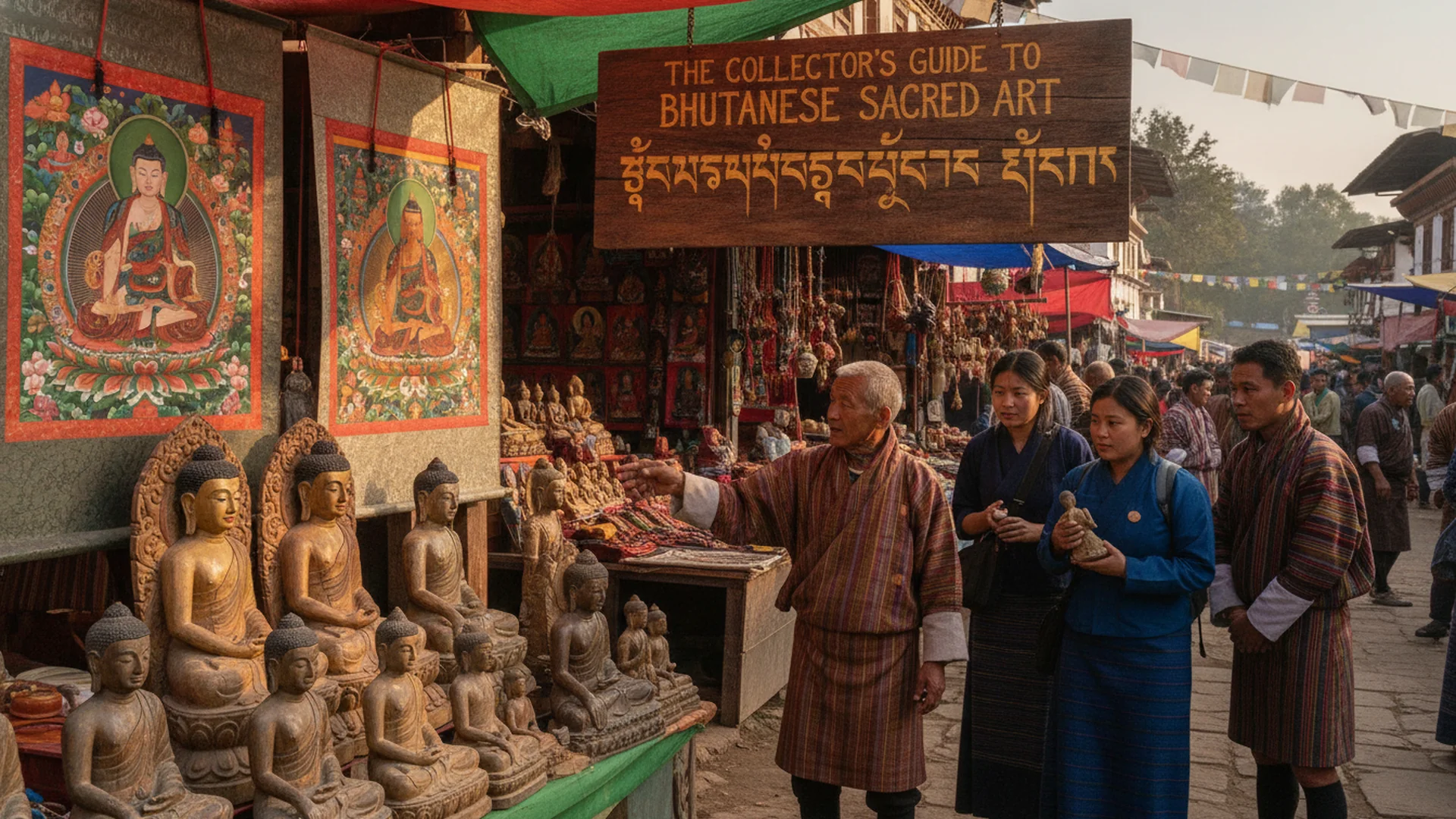
Amidst the mist-shrouded valleys of the Himalayas, art is never merely decorative; it serves as a vessel for meditation and immaculate spiritual focus. To acquire a piece of Buddhist craftsmanship from the Kingdom of Bhutan—whether a cast bronze deity or an intricate Thangka painting—is akin to harvesting a fraction of universal tranquility. Yet beneath this breathtaking aesthetic lies a complex tapestry of cultural governance, creative ethics, and legal frameworks that high-net-worth collectors must carefully navigate. Doing so ensures that every acquisition honors the artisan’s lineage while allowing these sacred treasures to cross borders with unassailable provenance and legal clarity.
The Heritage of Zorig Chusum: Spirit Woven Through Meditation and Brushstroke
Every brushstroke upon a canvas of a Thangka painting, and every intricate detail cast in clay or bronze across Bhutanese statuary, finds its genesis in the Zorig Chusum—the revered thirteen traditional arts established centuries ago. Master artisans, known as Lha Ripos, undergo rigorous apprenticeships that demand not only supreme physical dexterity but also deep meditative practice to preserve mental purity before their brushes touch natural mineral pigments ground from local earth and stone. The exact iconographic proportions of each Buddha, Bodhisattva, or protective deity are dictated by ancient scriptural canons. Owning these works transcends mere aesthetic appreciation; it is the stewardship of profound compassion and pristine Vajrayana wisdom.
The Boundary of Time: Distinguishing Contemporary Creation from Antique Heritage
For the global collector, the paramount rule is understanding the absolute divide between permissible contemporary creations and protected cultural properties under The Movable Cultural Property Act of Bhutan, 2005. The legislation explicitly designates any artistic, historical, religious, or archaeological object exceeding one century of age—alongside consecrated items containing sacred relics (Zhung)—as inalienable national heritage that cannot leave the kingdom under any circumstances. Consequently, high-end acquisitions must focus entirely on newly commissioned works by contemporary masters backed by verifiable provenance.
Navigating the Protocols for Legitimate Artefact Export Certification
Once a collector selects a revered piece of sacred art from authorized galleries in Thimphu or Paro, an indispensable final step awaits: securing the ‘Export Permit for Non-Antique Artefacts’ from the Department of Culture under the Ministry of Home Affairs. The application process is streamlined through an online non-antique export system, where accredited merchants and expert guides coordinate the documentation, high-resolution photography, and item descriptions. Cultural specialists verify that the piece in question is free of heritage restrictions. This official certificate must accompany the collector through customs checkpoints, ensuring a seamless, ethically sound journey home.