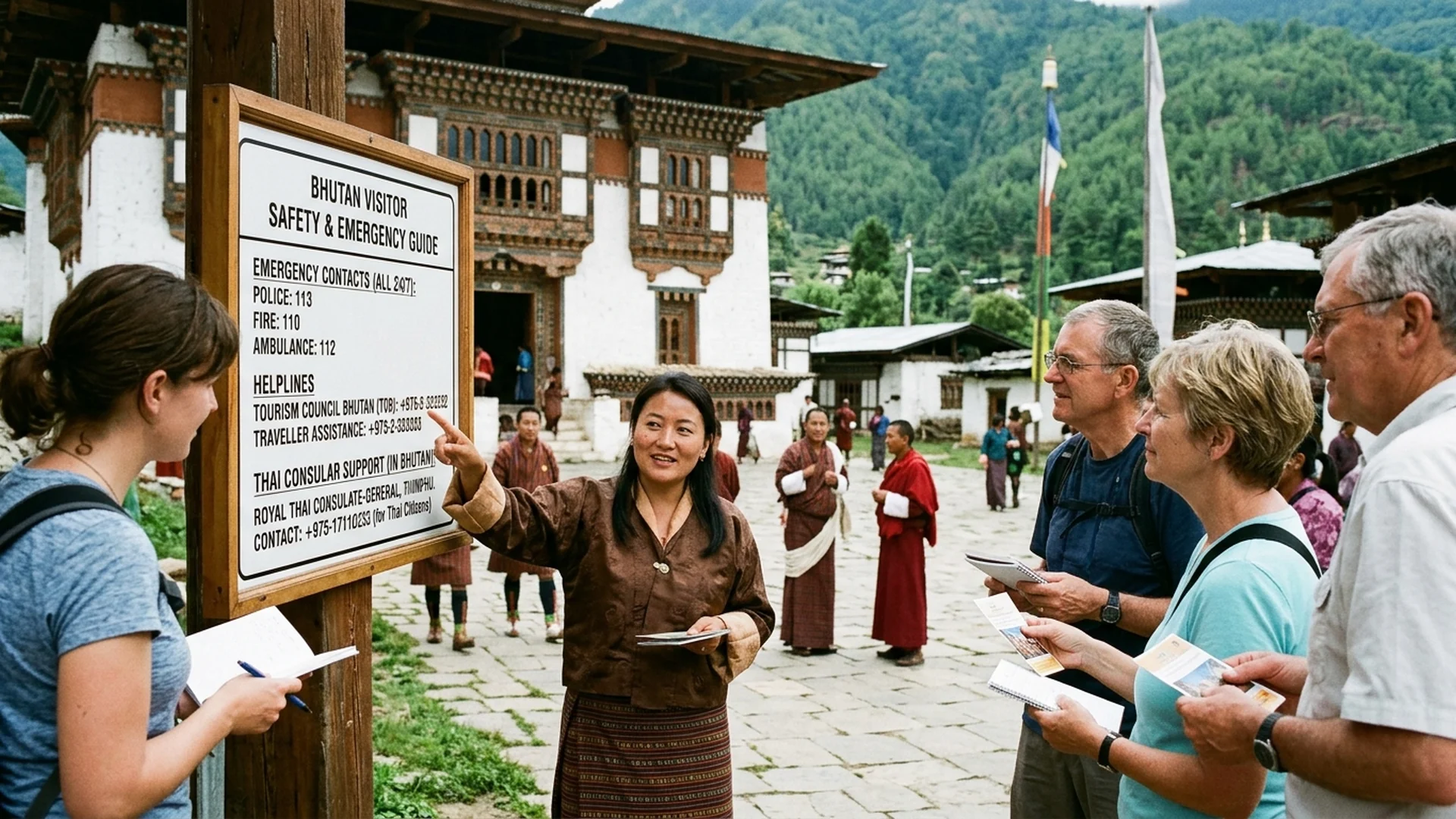
Amidst the pristine valleys and snow-crowned peaks piercing the horizon, Bhutan is a realm where time moves at a deliberate, spiritually resonant pace. Yet beneath this tranquil beauty and the warm smiles of the Bhutanese people, rugged terrain and swift meteorological shifts demand the attention of the discerning traveler. True luxury in remote exploration is never born of the complete absence of challenge, but rather from profound preparation, ensuring every step remains steadfast and serene.
Discerning travelers may note that the Kingdom of Bhutan does not host a permanent Royal Thai Embassy. Instead, diplomatic protection and citizen services are orchestrated through a robust network connecting the Royal Thai Honorary Consulate-General in Thimphu and the Royal Thai Embassy in Dhaka, Bangladesh, which holds consular jurisdiction over Bhutan. Understanding this intricate support network serves as an invaluable safeguard, allowing you to immerse yourself fully in the sublime valleys of the Thunder Dragon without a single lingering worry.
Diplomatic Networks and Consular Assistance in Bhutan
When unforeseen circumstances arise abroad—such as misplaced passports, critical accidents, or urgent repatriation needs—diplomatic channels are your primary lifeline. While Bhutan hosts no permanent Thai embassy, the Royal Thai Honorary Consulate-General in Thimphu acts as a vital conduit, working in close collaboration with local authorities.
In severe cases requiring national diplomatic or legal authority, the Royal Thai Embassy in Dhaka, Bangladesh, assumes direct operational command. Consequently, recording the emergency contacts and official email addresses of both offices in your mobile device and carrying physical paper copies remains an indispensable precaution for high-net-worth travelers.
Local Helplines and Bhutan’s Healthcare Infrastructure
Accessing emergency assistance within Bhutan is managed through highly efficient urban networks, anchored by memorable, central emergency numbers for rapid crisis response:
- Police and Crime Emergencies: Dial 113
- Fire Services: Dial 110
- Ambulance and Medical Services: Dial 112
The principal medical institution equipped to international standards for foreign visitors is the Jigme Dorji Wangchuck National Referral Hospital (JDWNRH) in Thimphu, boasting comprehensive diagnostics and specialized physicians. Additionally, key tourist hubs like Paro feature a 50-bed community hospital capable of delivering immediate first aid before transferring critical cases to Thimphu via winding mountain arterial roads.
Navigating High Altitudes and Luxury Air Rescue Technologies
Bhutan’s geography is embraced by soaring Himalayan ranges. Thimphu rests at approximately 2,330 meters above sea level, while trekking routes and high vantage points routinely surpass 3,000 to 4,000 meters. Altitude sickness thus presents a physiological challenge that requires profound respect. Early symptoms such as dizziness, nausea, or shortness of breath must never be ignored; maintaining proper hydration and steady acclimatization are paramount.
In critical alpine emergencies where vehicles cannot reach, coordinating helicopter evacuation is a vital life-saving recourse. Bhutan maintains structured protocols for aerial rescue through collaborations between government agencies and certified local tour operators. This underscores why selecting an international travel insurance policy that explicitly guarantees medical evacuation coverage is the ultimate expression of responsibility toward oneself and fellow travelers.