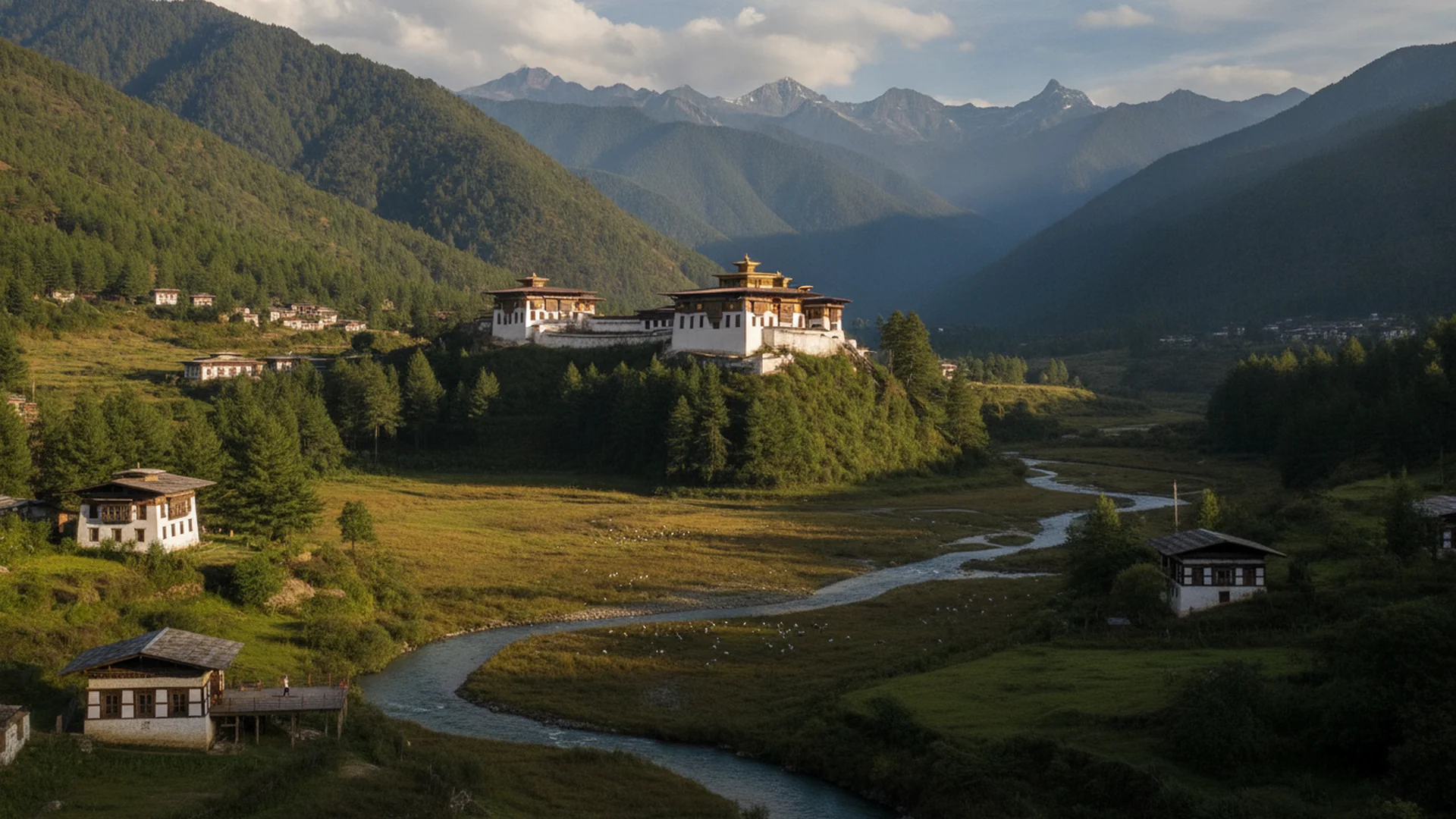
As the morning mist slowly unravels across the vast, undulating carpet of a U-shaped glacial basin, what strikes the senses is not the cluttered infrastructure of modern advancement, but an uncompromising, primeval purity. Here lies the Gangtey Valley—known traditionally as Phobjikha—a high-altitude haven where local environmental decree famously forbids overhead power lines to safeguard the wintering grounds of the sacred, endangered black-necked crane.
To arrive in Gangtey is to step across an unhurried threshold into a dimension where time breathes with measured intention. Here, luxury is stripped of superficial grandeur and rearticulated through pure high-mountain air, profound silence, and the unspoken spiritual weight of the surrounding sacred peaks.
A Sacred Horizon Unmarred by Wire: The Ethos of Conservation
The primary revelation of Gangtey is its absolute visual clarity. The vast, sweeping wetlands, framed by dark blue-pine forests, unfold beneath an unblemished alpine sky. In an extraordinary commitment to ecological reverence, the Bhutanese government and local communities buried the valley’s entire power grid underground. This deliberate sacrifice of infrastructural ease prevents black-necked cranes (Grus nigricollis) from striking power lines during heavy winter fog—a tangible expression of Gross National Happiness (GNH), where sentient life and natural heritage are granted value equal to human progress.
Monastic Heights and Ancient Trails: Gangtey Goempa and Beyond
Perched gracefully atop a gentle ridge overlooking the valley floor stands Gangtey Goempa, a 17th-century Nyingmapa monastery. Its intricate, hand-carved timberwork and the low resonance of afternoon monastic chants create a contemplative refuge for the soul. From this spiritual anchor, the Gangtey Nature Trail descends through blue-pine groves, terraced farmland, and quiet hamlets where villagers live by age-old agricultural rhythms, wrapped in traditional gho and kira attire.
The Art of Soulful High-Altitude Luxury
Gangtey elevates nature-centric travel through sanctuaries such as Gangtey Lodge and Six Senses Gangtey. Designed in quiet tribute to traditional Bhutanese farmhouses, these retreats feature floor-to-ceiling glass apertures framing grazing yaks and shifting mountain shadows. As crisp alpine dusk settles over the wetland, warmth emanates from crackling hearths and the ritual of a Dotsho—a traditional hot stone bath infused with river stones and wild Artemisia leaves to soothe body and mind.