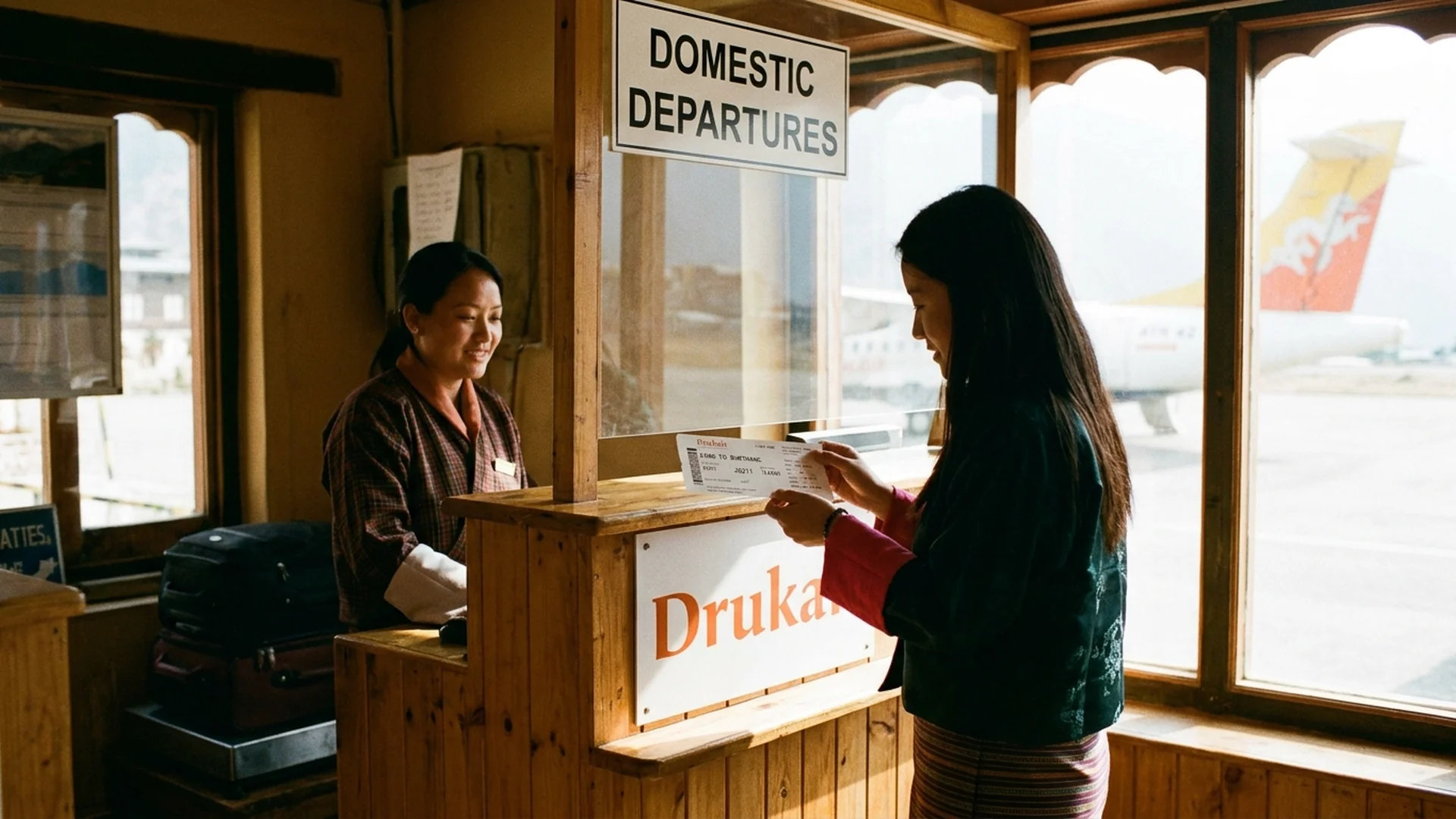
When the colossal horizon of the Himalayas unfolds before you, the breathtaking majesty of snow-draped crests contrasting against deep lapis lazuli skies serves as the ultimate reward for the discerning traveler. Yet, the labyrinthine topography of the Kingdom of Bhutan presents profound logistical challenges upon terra firma. Winding through thousands of punishing hairpin turns along the primary arteries for ten to twelve hours can unexpectedly deplete the vitality of travelers who prize effortless elegance. The peerless resolution favored by sophisticated connoisseurs is soaring above the valleys via domestic aviation, shrinking immense transit times into mere moments while revealing a cinematic perspective of Bhutan’s sacred geography accessible only from the heavens.
Navigating Bhutan’s domestic aviation network—whether bound for the ancient spiritual cradle of Bumthang, the clandestine eastern frontier of Yonphula, or the burgeoning economic threshold of Gelephu—testifies to the refined time-crafting practiced by global elites. This editorial examines the elevated dimension of trans-Himalayan flight, shedding light on critical infrastructure, natural meteorological variables, and seamless logistics.
A New Dimension of the Heavens: Decoding the Tri-City Aviation Matrix
Operated by the national carrier Drukair, Bhutan’s domestic aviation infrastructure acts as a vital aerial capillary system linking diverse geographical micro-climates and cultural enclaves. The journey originates at Paro International Airport, the kingdom’s primary portal, vectoring toward three distinct destinations with profoundly unique identities.
Bathpalathang Airport, nestled within the fertile valley of Bumthang, acts as an effortless portal to a storied past. Bumthang is a sacred sanctuary of archaic temples and ancestral spiritual governance; arriving by air preserves one’s energy, leaving travelers invigorated for tranquil strolls past ancient dzongs and organic apple orchards. Further east lies Yonphula Airport, perched dramatically along a razor-sharp ridge rising over 2,500 meters, serving as the threshold to the pristine and deeply isolated eastern provinces where ancient traditions remain uncompromised. Meanwhile, Gelephu Airport in the southern plains is rapidly rising into prominence under the visionary framework of the Gelephu Mindfulness City, an eco-intelligent urban masterplan fusing modernist design with the principles of Gross National Happiness.
Himalayan Aviation Engineering: The Performance and Paradox of Drukair
Launching and landing fixed-wing aircraft amidst plunging mountain corridors demands extraordinary technical mastery. Drukair’s fleet relies upon specialized turboprops such as the ATR 42-600, celebrated for exceptional maneuverability and short-field performance capable of negotiating restricted runways surrounded by granite peaks.
Nevertheless, such elite engineering demands strict adherence to operational realities that high-net-worth travelers must appreciate, specifically payload restrictions and modest seating capacities that directly dictate baggage quotas. Discerning voyagers are encouraged to pack discerningly, carrying only essentials while respecting the unyielding safety margins prioritized by the airline. Consequently, flight schedules are strictly anchored in the early morning hours, capitalising on stable barometric pressure and pristine visibility before thermal valley winds gather strength by midday.
The Art of Contingency: Why Besolute Luxury Itineraries Demand a Parallel Plan
The untamed beauty of the Himalayas is inextricably bound to meteorological unpredictability. Alpine weather can shift within minutes; sudden high-altitude fog or fierce downdrafts can prompt immediate rescheduling or cancellation of domestic sectors. While the casual traveler might view this as a disruption, bespoke planners treat it as an exercise in supreme logistical agility.
The cornerstone of flawless travel execution in Bhutan is never merely booking the premier ticket, but orchestrating parallel logistics—specifically, positioning a private luxury SUV with an elite driver and dedicated guide on standby. If atmospheric conditions ground the aviation fleet, the ground team transitions effortlessly into an overland itinerary without losing a single hour of contemplation. Melding airborne swiftness with unhurried terrestrial flexibility forms the definitive methodology for traversing the Land of the Thunder Dragon.