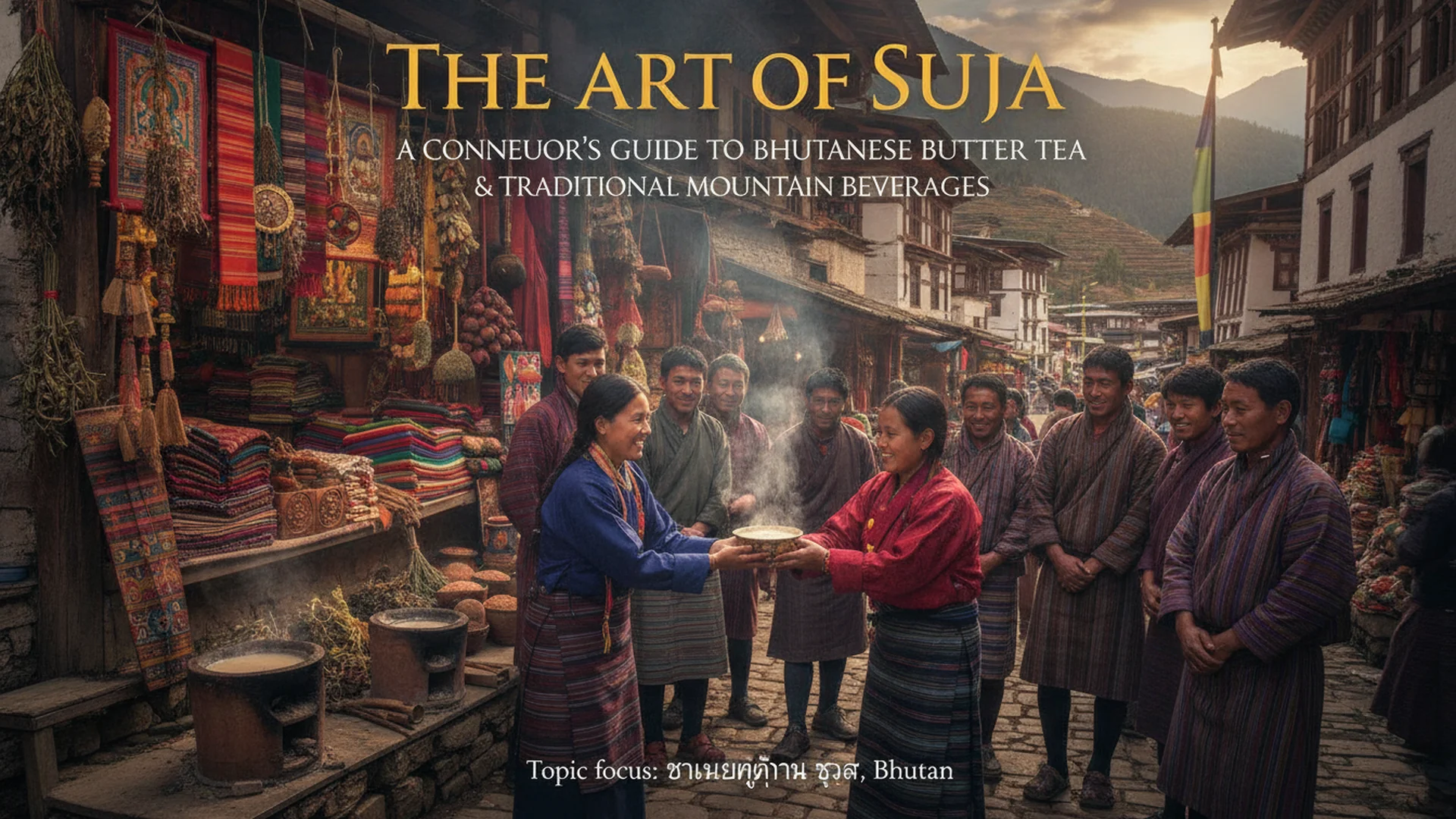
As the crisp alpine wind sweeps down the towering peaks of the Himalayas, a delicate, earthy fragrance of roasted tea leaves mingling with fresh butter and rock salt invariably drifts through traditional homesteads and ancient monasteries. For the uninitiated traveler accustomed to sweet, botanical infusions of the West, taking one’s first sip of Suja—traditional Bhutanese butter tea—is an arresting sensory revelation. It is not designed merely to quench thirst; rather, it functions as a nourishing, savory broth rich in vitality, fats, and restorative nutrients engineered specifically to withstand sub-zero temperatures across rugged, high-altitude terrain.
Beneath the polished surface of a silver-rimmed tea bowl or a carved wooden cup lies a centuries-old cultural legacy linking daily existence, spiritual devotion, and remarkable resilience amid pristine nature. Butter tea in the Land of the Thunder Dragon transcends a mere hot beverage; it is the beating heart of an ancient hospitality ritual passed down through generations.
A Savory Elixir: Flavor Profiles and Mountain Vitality
The initial impression on the palate is one of harmonious saltiness and velvety richness that delicately coats the mouth, diverging completely from conventional tea experiences. The core composition relies upon robust, oxidized tea leaves, mineral salt, and an essential addition: rich butter sourced from yaks or indigenous high-altitude cattle. These natural lipids act as a thermal shield, sealing warmth within the body and protecting skin against harsh winds and dry mountain air. For Bhutanese communities navigating steep valleys daily, every bowl provides invaluable sustenance.
The Ritual of Jasum: Ancient Mechanics of the Churn
The secret behind Suja’s micro-foamed, decadent texture lies in a meticulous ritual of preparation. Historically and within traditional households, dark brewed tea is transferred into a slender wooden cylinder adorned with ornate metal rings, known as a ‘Jasum’. Salt and a generous lump of butter are added before the maker rhythmically drives a plunger up and down. This kinetic force emulsifies the butterfat seamlessly into the dark brew, creating a rich emulsion. While modern blenders occasionally feature in contemporary kitchens, the traditional wooden vessel preserves the authentic spirit and inimitable mouthfeel.
A Symbol of Sacred Hospitality and Himalayan Rhythm
Within Bhutanese culture, declining a bowl of Suja is considered discourteous, as the offering embodies sincerity and open-hearted welcome. When guests arrive, hosts pour steaming amber tea into a polished vessel, accompanied by ‘Zhow’ (puffed rice) or toasted barley. Etiquette dictates taking a pinch of puffed rice, dropping it into the warm tea, and sipping mindfully—a deliberate slowing of pace that melts away the fatigue of long journeys and opens the door to unhurried fireside conversations.
A Contemporary Revival in Luxury Sanctuaries
As global travel evolves toward immersive slow tourism, Bhutanese tea culture finds refined expression within luxury sanctuaries such as Six Senses Bhutan. Here, guests experience Suja curated through a contemporary culinary lens, guided by local experts. Visitors trace the historical lineage of wild tea foraging, select artisanal butters, and master the traditional wooden churn firsthand, bridging centuries-old heritage with the discerning sensibilities of modern travelers.