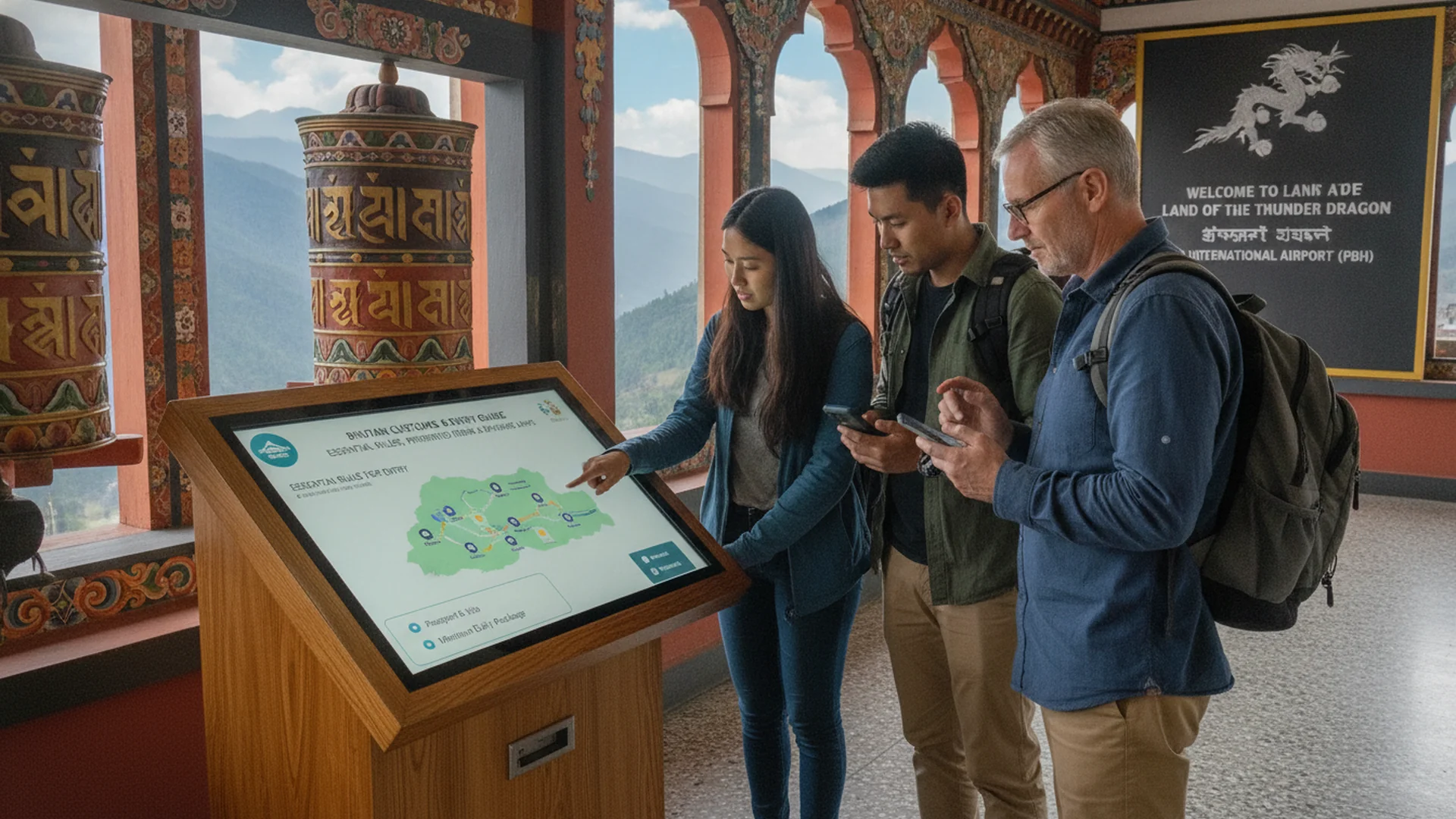
Behind the mist-shrouded peaks and serene valleys of Bhutan lies one of the world’s most deliberate and protective legal frameworks—crafted not to deter the traveler, but to safeguard an immaculate natural environment and a living ancient heritage. As your aircraft weaves through dramatic mountain passes to touch down at Paro International Airport, you step into more than just a sovereign nation; you enter a sacred realm governed by Gross National Happiness and deep-rooted environmental stewardship.
For the discerning journeyer who values seamlessness and quiet sophistication, understanding Bhutan’s customs protocols is essential. From strict tobacco levies to regulated aerial videography, the kingdom’s entry requirements reflect a profound national commitment to balance and cultural preservation. This editorial guide illuminates the nuances of Bhutanese customs, ensuring your arrival is marked by poise, clarity, and respect.
Deciphering Tobacco Regulations and Personal Import Declarations
Bhutan famously made history as one of the pioneers in stringent public health legislation under the Bhutan Tobacco Control Act. While modern administrative frameworks permit foreign travelers to bring in tobacco products strictly for personal consumption in limited allowances, these items remain subject to substantial customs duties and excise taxes upon entry.
Travelers must proactively declare all tobacco products at the Paro International Airport customs checkpoint. Customs officials will calculate the applicable duties, after which a formal tax receipt will be issued. It is essential to retain this receipt throughout your stay; local authorities may request proof of legal importation if you are utilizing designated smoking areas in urban centers such as Thimphu or Paro. Public smoking outside authorized zones remains illegal and incurs significant legal penalties.
Navigating Restricted Imports: Drones, Pharmaceuticals, and Fragile Ecosystems
The sublime landscape of Bhutan naturally tempts modern visual artists to capture sweeping aerial perspectives. However, bringing a drone into the kingdom requires careful pre-departure coordination. Drones are categorized as restricted dual-use equipment affecting aviation safety, domestic privacy, and environmental peace. Operating a drone without prior authorization from the Bhutan Civil Aviation Authority (BCAA) and relevant security ministries will lead to immediate confiscation at entry and substantial fines.
Regarding personal wellness, travelers bringing essential pharmaceuticals—particularly medications containing controlled substances or psychotropics—must carry an original medical prescription translated into clear English. Furthermore, to preserve Bhutan’s fragile Himalayan biome, bringing in live plants, seeds, fresh produce, and unpasteurized biological materials is prohibited without specialized phytosanitary clearance.
The Etiquette of Paro Arrival and Sacred Heritage Preservation
Descending into Paro Valley—renowned as one of commercial aviation’s most scenic approaches—is an inspiring prelude to Bhutan’s quiet grandeur. Upon arrival, customs officers carry out their duties with a characteristic blend of gentle courtesy and steadfast vigilance. Having your entry permits, visa documentation, and completed declaration forms arranged orderly expedites the arrival procedure gracefully.
Equally vital is adhering to Bhutan’s outward customs regulations when departing the country. The kingdom treats its spiritual and artistic legacy with utmost sanctity. Ancient religious artifacts, historic thangkas (devotional scroll paintings), and antique statuary are strictly forbidden from export. When acquiring contemporary handwoven textiles, traditional woodcarvings, or silver craftwork, ensure your merchant provides an official receipt and clearance certificate approved by the Department of Culture, confirming your heirlooms may legally leave the kingdom.