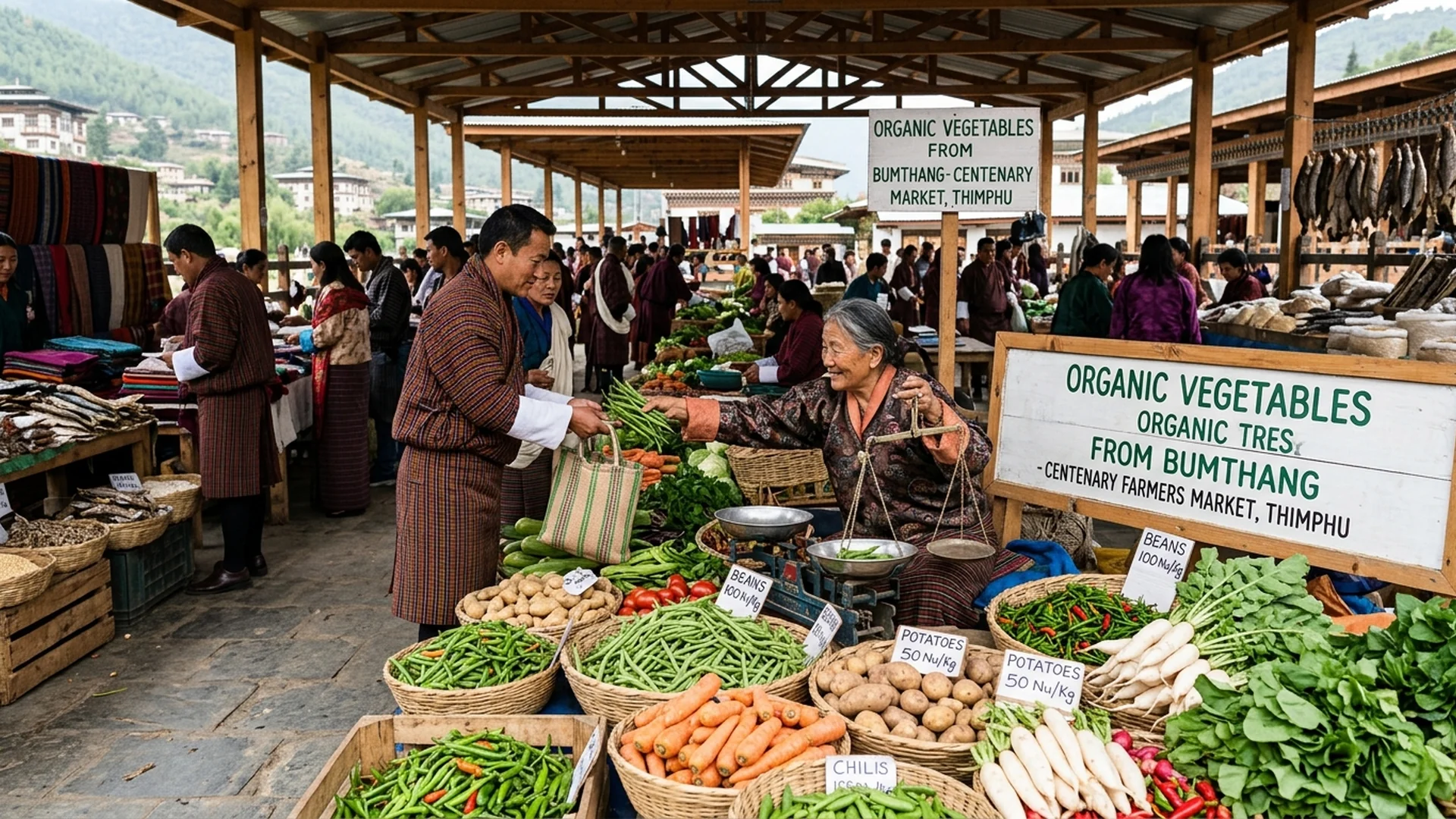
When the morning mist lifts along the banks of the Wang Chhu in Thimphu, carrying with it the earthy fragrance of damp soil and dried Himalayan spices, any conventional notion of a municipal produce market dissolves entirely. This is the Centenary Farmers Market, the largest and most vibrant commercial heartbeat of the Kingdom of Bhutan. More than a mere exchange of agrarian goods, the market serves as a grand living mirror of the nation’s guiding philosophy of Gross National Happiness (GNH). Here, radiant farmers, chemical-free harvests, and an unhurried cadence of existence weave a profound connection between humankind and the surrounding wilderness.
In a realm where material progress is consciously filtered through the lens of ecological sustainability, this market operates as a living museum. For discerning international travelers drawn to authentic cultural immersion, it offers an exquisite masterclass in the aesthetics of slow living. The pungent warmth of sun-dried crimson chilis, the rich, buttery aroma of Himalayan yak cheese, and the delicate, mineral-rich complexity of native red rice all whisper tales of arduous journeys from isolated high-altitude valleys to the capital’s heart. It invites the global wanderer into an intimate sensory journey that permanently alters one’s perspective on sustenance and pristine nature.
Architecture of Daily Life: The Wang Chhu and the Convergence of Valleys
Gracefully situated near the western footbridge of the Wang Chhu river, the market is meticulously organized across two distinct tiers. The ground level unfolds as a serene kingdom of indigenous root vegetables, seasonal orchard fruits, and foraged wild herbs, while the upper level hums with the comforting scents of dried Himalayan meats, cured river fish from neighboring regions, and artisanal cheeses of striking variety. What instantly startles the cosmopolitan visitor is the immaculate cleanliness and orderly grace—qualities rarely encountered in traditional South Asian marketplaces. Farmers, both men and women clad in their traditional national attire of the gho and kira, sit placidly behind woven bamboo stalls, greeting every passerby with tranquil, welcoming eyes. The ambient soundscape is a delicate symphony of whispered Dzongkha dialects, gentle laughter, and a profound, collective warmth that effortlessly dispels the crisp mountain chill.
A Treasury of Himalayan Terroir: Tracing Rare Culinary Heritage
For the devoted gastronome, the Centenary Farmers Market is an irreplaceable treasury of rare alpine terroir. The journey begins with Himalayan red rice, an indigenous heirloom grain cultivated on terraced paddies nourished by glacial mineral springs, yielding a delightfully nutty chew and an unmistakable, comforting fragrance. Next lies Chhurpi, or traditional yak cheese—the indispensable cornerstone of the national delicacy, ema datshi. Dense and richly savory, it is crafted from the milk of free-roaming yaks grazing high alpine meadows. Furthermore, Bhutanese chilis claim a revered status; rather than being treated merely as a fiery condiment, they are celebrated here as a vital vegetable essential to daily sustenance. Alongside these, wild honey harvested from indigenous cavity-nesting bees offers a deep, complex sweetness that mirrors the botanical diversity of Bhutan’s inviolate forest ecosystems.
The Renaissance of Heritage: From Traditional Stalls to the OGOP Initiative
Beyond the traditional agricultural market, the adjacent creative enclave of Kaja Throm bridges the old world with the visionary framework of the country’s One Gewog One Product (OGOP) initiative. This concerted effort elevates community-crafted goods to international standards while fiercely preserving their indigenous roots. Whether one examines artisanal wild herbal teas, sun-dried mountain orchard fruits, or pure botanical essential oils, every creation undergoes rigorous curation that prioritizes ecological sustainability and equitable economic distribution to remote farming communities.