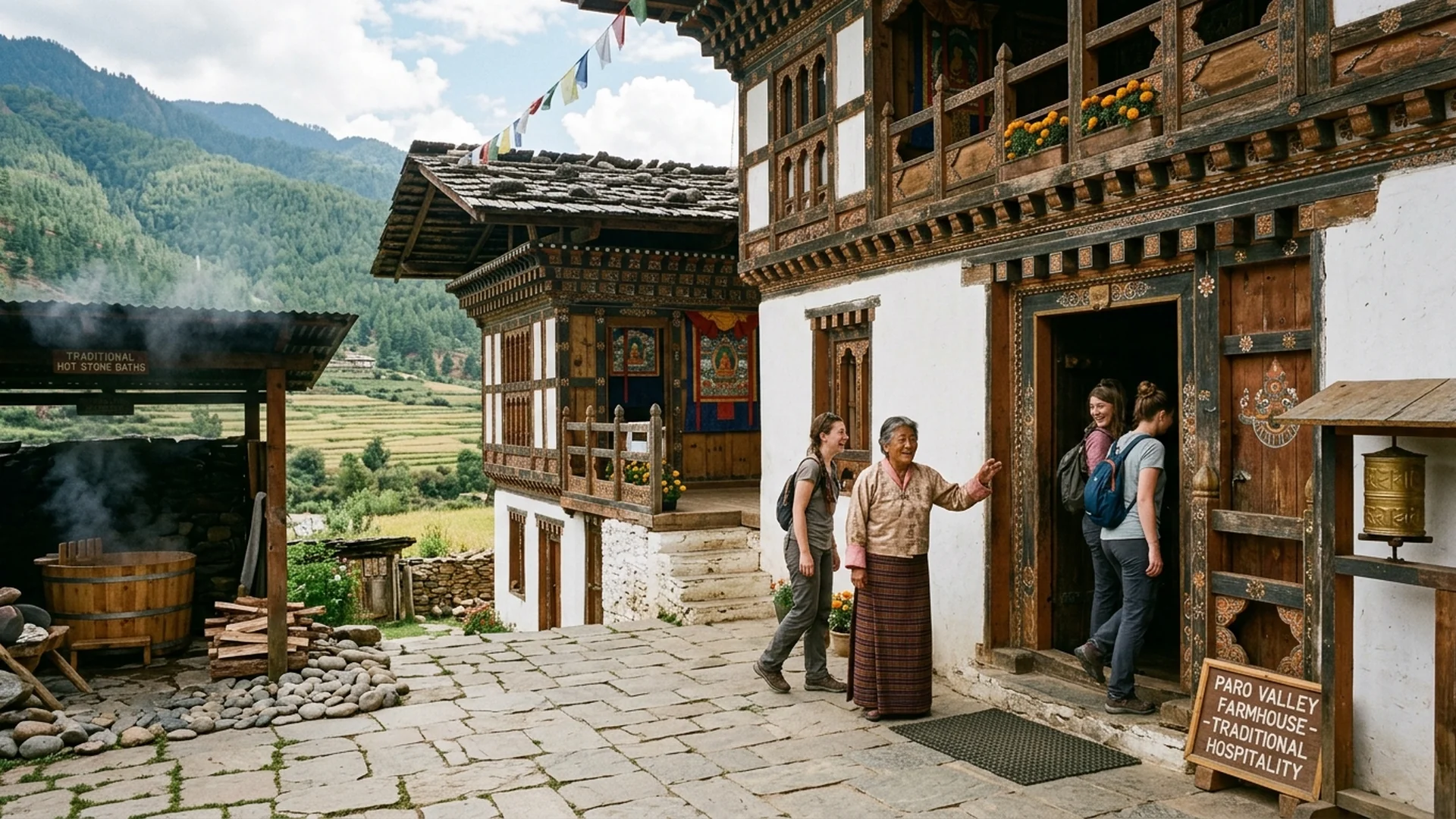
When true luxury is measured not by towering glass facades or pristine five-star international amenities, but by the quiet grace of hand-carved wooden lintels and centuries of living heritage, the Paro Valley reveals its most profound secrets. Crossing the threshold of a traditional Bhutanese farmhouse is akin to turning the clock back to an era where humanity, rugged topography, and deep-seated spiritual devotion existed in absolute harmony.
The gentle scent of burning pine and woodsmoke hanging in the crisp mountain air, mingled with the genuine smiles of a local Bhutanese family, dissolves the weariness of long-haul travel in an instant. Here, stripped of superficial pomp, lies a rich tapestry of culture that engages every sense: from the cool, reassuring density of rammed-earth walls to the soothing, mineral-rich embrace of an ancient herbal hot stone bath that gently guides both body and spirit toward profound stillness.
Rammed-Earth Architecture and the Soul of the Paro Valley
The architecture of a traditional Paro farmhouse embodies ingenious engineering passed down through generations. Typically standing three stories tall, the ground level is traditionally reserved for livestock and fodder storage, the second floor serves as the main living quarters, kitchen, and gathering space, while the uppermost attic is dedicated to family shrines and the drying of agricultural harvests. The walls are fashioned from heavily compacted mud, providing natural thermal mass that keeps the interiors snug during freezing mountain nights and pleasantly cool through midday warmth. Window frames and structural timber beams are adorned with auspicious Vajrayana symbols—such as endless knots, lotus blossoms, and mythical guardians—cast to protect the household and invite enduring peace.
Dotsho: Healing Body and Mind with River Stones and Sacred Herbs
The pinnacle of a farmhouse immersion in Paro is the ‘Dotsho,’ an ancient Bhutanese hot stone bath therapy. River stones rich in minerals are stoked in an open fire until they glow a fierce, incandescent red, then carefully lowered using iron tongs into a wooden trough filled with natural spring water and fresh ‘Khempu’ (Artemisia) artemisia leaves. As the water begins to simmer, plumes of aromatic steam rise, instantly opening pores and soothing weary muscles. Submerged in the wooden vat against the backdrop of chilly valley breezes and emerald paddy fields, this therapeutic ritual acts as an incomparable restorative after demanding high-altitude trekking excursions.
Tastes of the Highlands: Hearthside Feasts and Slow Conversations
As dusk settles over the valley, the hearth at the heart of the farmhouse becomes the sanctuary of warmth and communal life. The rich aroma of toasted chili and yak butter heralds a deeply intimate meal shared alongside the host family. Bhutanese farmhouse fare eschews elaborate culinary artifice in favor of rustic purity, utilizing organic ingredients harvested straight from surrounding homestead plots. The national favorite, Ema Datshi—a rich, warming melange of chilies and local cheese—is paired with nutty Bhutanese red rice, steaming seasonal vegetable broths, and a customary pour of ‘Ara,’ a traditional fermented spirit that gently stimulates the circulation amidst timeless evening conversations.