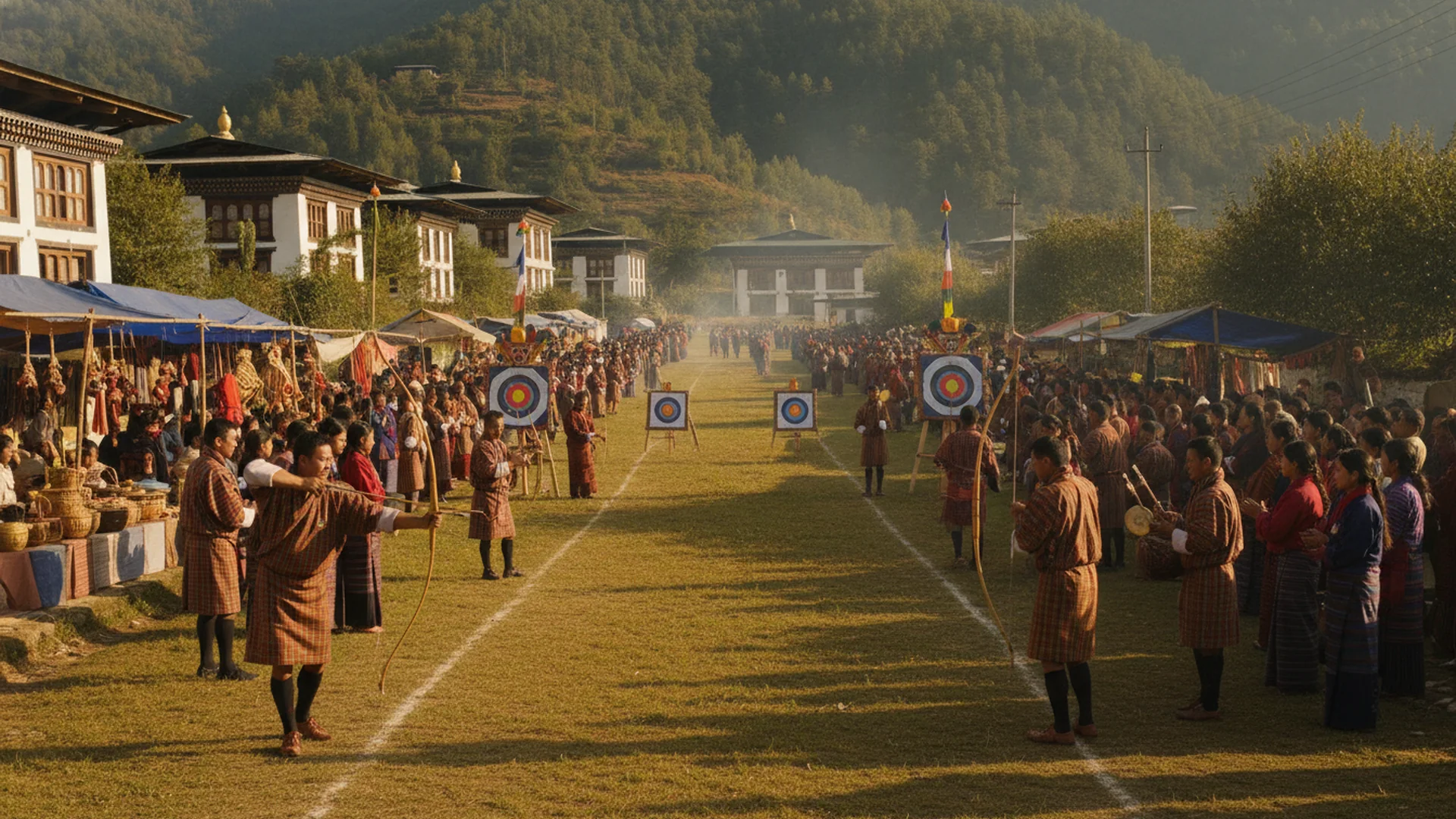
Should you measure archery by the hushed, breathless stillness of Olympic arenas—where athletes in pristine white focus intently upon targets seventy meters away—Bhutanese archery stands as its absolute, exuberant antithesis. The moment an arrow tears through the crisp Himalayan air across a staggering distance of 145 meters, folk melodies and thunderous drumbeats erupt. Teammates clad in traditional patterned Gho robes break into celebratory dances, swaying and cheering in jubilation each time an arrow strikes the diminutive wooden target.
Known simply as Dha in Dzongkha, archery has held the esteemed title of Bhutan’s national sport since 1971. Yet for the Bhutanese, it transcends mere athletic competition or a test of precision; it is a vital social festival, a sacred spiritual ritual, and a vibrant communal arena that effortlessly bridges all walks of life. The playful good-natured heckling of opponents, the laughter mingling with the aroma of local Ara rice wine, and the cool mountain wind combine to render Bhutan’s archery grounds some of the most culturally potent and alive spaces on earth.
For discerning global travelers seeking authentic cultural immersion, stepping onto the perimeter of a Bhutanese archery tournament is far more than observing a local pastime. It is an open doorway into the meditative philosophies of Mahayana Buddhism, the profound goodwill shared between human beings, and an inimitable art of living that balances rigorous focus with uninhibited joy.
The Spirit of ‘Dha’: From Defensive Weaponry to the Art of Buddhist Mindfulness
In centuries past, bamboo bows and iron-tipped arrows were the trusted companions of Drukpa warriors defending their mountain sanctuaries against external incursions. Yet as eras shifted, this martial discipline evolved from an instrument of warfare into a profound vehicle for Vajrayana Buddhist spirituality.
In Bhutanese philosophy, drawing a bowstring is regarded as an exercise in advanced mindfulness in action. Perfecting the shot demands absolute internal stillness, a seamless harmonization of breath, vision, and the ultimate release of attachment to the outcome. On the morning of a match, long before physical warm-ups commence, teams frequently present their bows and quivers to local lamas or spiritual masters for a sacred blessing known as Ritu. This ritual purifies obstacles and infuses the equipment with protective energy. Each arrow thus transcends its physical trajectory toward a wooden target, serving instead as a pure vector of focused intent and self-mastery.
The 145-Meter Range: A Symphony of Song, Banter, and Mountain Festivity
What sets Bhutanese archery apart from every other sport on the planet is the electrified atmosphere that blankets the field. The targets themselves are remarkably diminutive—carved from polished pine measuring roughly thirty centimeters wide and ninety centimeters high—and positioned across opposite ends of a canyon-like range spanning 145 meters.
When an archer draws their bow, opponents stationed near the opposing target do not maintain silence. Instead, they launch into witty, lighthearted lyrical heckling designed to playfully unnerve the shooter. Yet the instant an arrow pierces the air and strikes the target with a resounding thwack that echoes across the valley, the shooter’s teammates surge forward. They encircle the target, break into ancient folk choreography, sing praises of triumph, and drape vibrant silk sashes (Karey) around the successful archer’s waist as badges of honor. An archery match in the Kingdom is never solely about winning; it is an enduring celebration of community, communal sips of local rice wine, and shared smiles under vast Himalayan skies.
Master Craftsmanship: From Traditional Bamboo ‘Zhu’ to Modern Compound Innovation
The material artistry of Bhutanese archery is vividly demonstrated through its equipment. In the traditional realm, bows are meticulously crafted from specially selected, split-and-seasoned mountain bamboo known as Zhu. Bowstrings are spun from wild nettle fibers or durable natural bark, while arrows are fashioned from slender bamboo reeds and fletched with natural quail feathers to ensure aerodynamic stability.
Today, while bamboo bows remain deeply beloved in village celebrations and rural districts, official tournaments and prominent metropolitan clubs frequently utilize state-of-the-art compound bows engineered from carbon-fiber and mechanical pulley systems. These modern instruments command significant prestige and maximize arrow velocity against mountain gusts. Nevertheless, regardless of technological evolution, the etiquette, social customs, and jubilant victory songs governing the field remain steadfastly anchored in timeless heritage.
Curated Archery Encounters for the Discerning Cultural Traveler
For discerning travelers eager to engage with this living tradition beyond the spectator stands, the historic Changlimithang Stadium in Thimphu or the scenic ranges of Paro offer exceptional weekend club matches filled with vibrant banners and resonant song.
For a deeper, more intimate encounter, select luxury resorts and private travel curators across Bhutan arrange exclusive private archery workshops. Guests are invited to don traditional national dress—the Gho for gentlemen and the Kira for ladies—before handling traditional bamboo bows under the guidance of master instructors. Learning the nuanced stance, aiming against the valley breeze, and partaking in an intimate celebratory dance with local hosts offers an unforgettable gateway into the heart of Bhutanese hospitality.