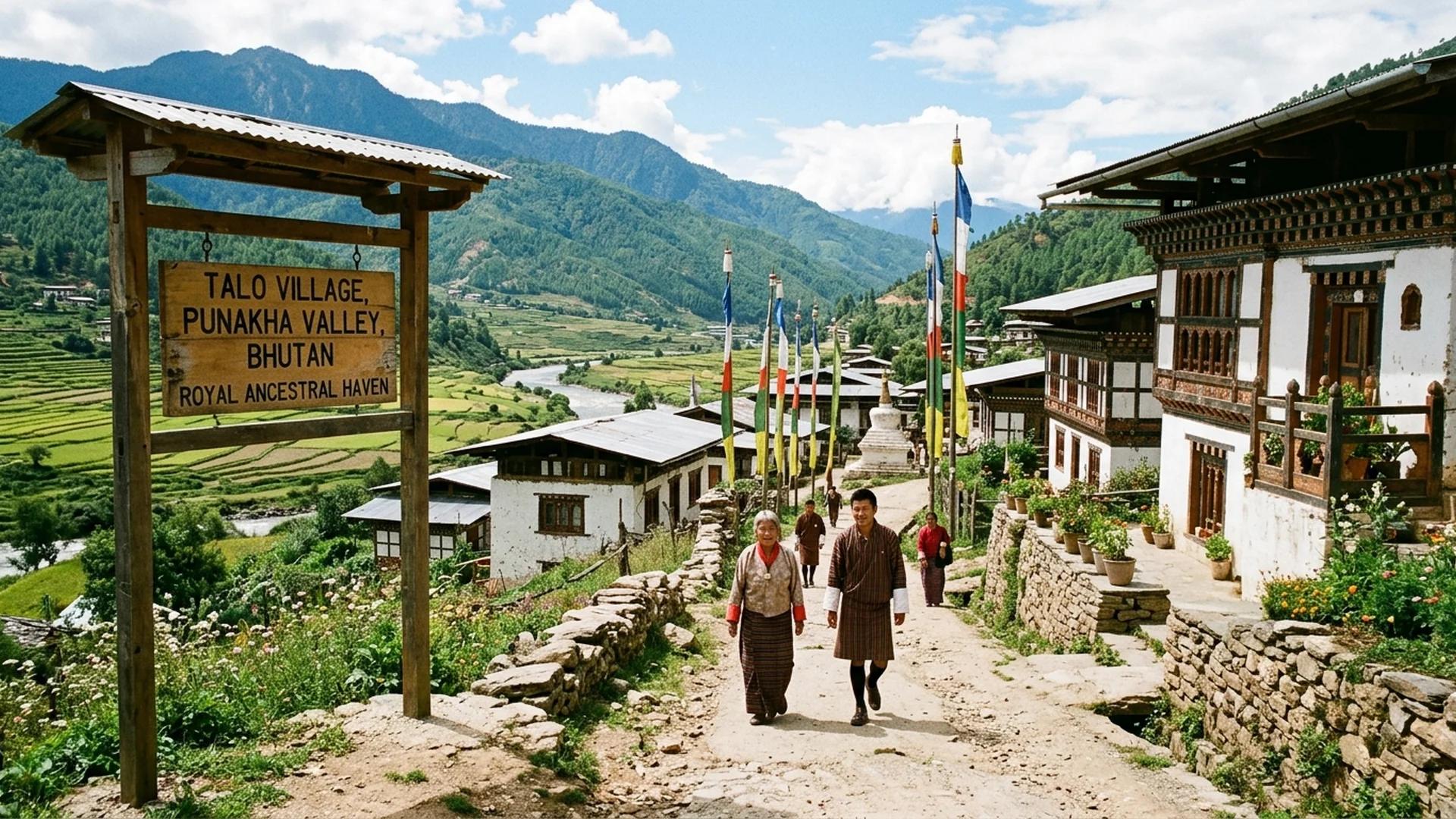
Rising far above the conventional tourist routes of the Punakha Valley, the journey winds through ancient pine forests and terraced agricultural slopes, ascending to a tranquil ridge at 2,800 meters. Here lies Talo Village, a highland community celebrated as one of the most meticulously maintained and pristine settlements in the Kingdom of Bhutan. More than merely a scenic vantage point, this historic enclave is steeped in noble legacy, serving as the ancestral homeland of the four Queen Mothers of the fourth King of Bhutan.
Upon entering the village, one is immediately struck by its distinctive aesthetic character. Traditional Bhutanese homesteads are crafted with exceptional precision, adorned with intricate woodwork executed by master royal artisans. Yet what truly sets Talo apart are the meticulously tended cottage gardens fronting every household. Vibrant dahlias, blooming rhododendrons, and diverse alpine flora flourish amidst drifting mountain mists, reflecting a deeply ingrained cultural commitment to beauty, purity, and the refined art of living.
Royal Roots: Tracing History at Talo Gung
The name Talo is inextricably linked to the esteemed annals of Bhutanese royalty, having served as the traditional domain of an aristocratic lineage from which the four Queen Mothers of His Majesty Jigme Singye Wangchuck descended. Echoes of this noble heritage endure within the historic noble estates and the unhurried lifestyle of the villagers, who steadfastly preserve their ancestral traditions. To wander through Talo is to turn the pages of living history, offering discerning travelers profound insight into the cultural and political foundations of modern Bhutan, far removed from the hurried rhythms of the contemporary world.
The Aesthetics of a Floral Haven: Beauty as Spiritual Discipline
The immaculate presentation and orderly grace of Talo are not merely incidental, but rather the collective expression of a harmonious community ethos. Every winding lane is maintained with utmost care, and each farmhouse is painted and detailed according to classical Bhutanese architectural canons. Carved wooden windows open to capture clear highland light, while the grounds surrounding each home are transformed into vibrant cold-weather gardens that blossom across the seasons. This landscape embodies a timeless philosophy: that outward beauty and cleanliness serve as mirrors reflecting the inner purity of the inhabitant’s heart and mind.
Talo Sangnacholing Monastery: Ridge-Top Sanctum of Master Artisans
At the highest crest of the village stands the sacred Talo Sangnacholing Monastery, an esteemed monastic sanctuary commanding breathtaking views across the valley. Within its hallowed halls rest sacred statues and intricate murals depicting Buddhist narratives, executed by the deft hands of royal master craftsmen. The sweeping courtyards outside offer a 360-degree panorama encompassing the terraced expanses of Punakha and distant snow-capped Himalayan peaks. Accompanied only by the gentle murmurs of monastic chanting and mountain winds rustling through prayer flags, this sanctuary imparts a rare and enduring stillness.