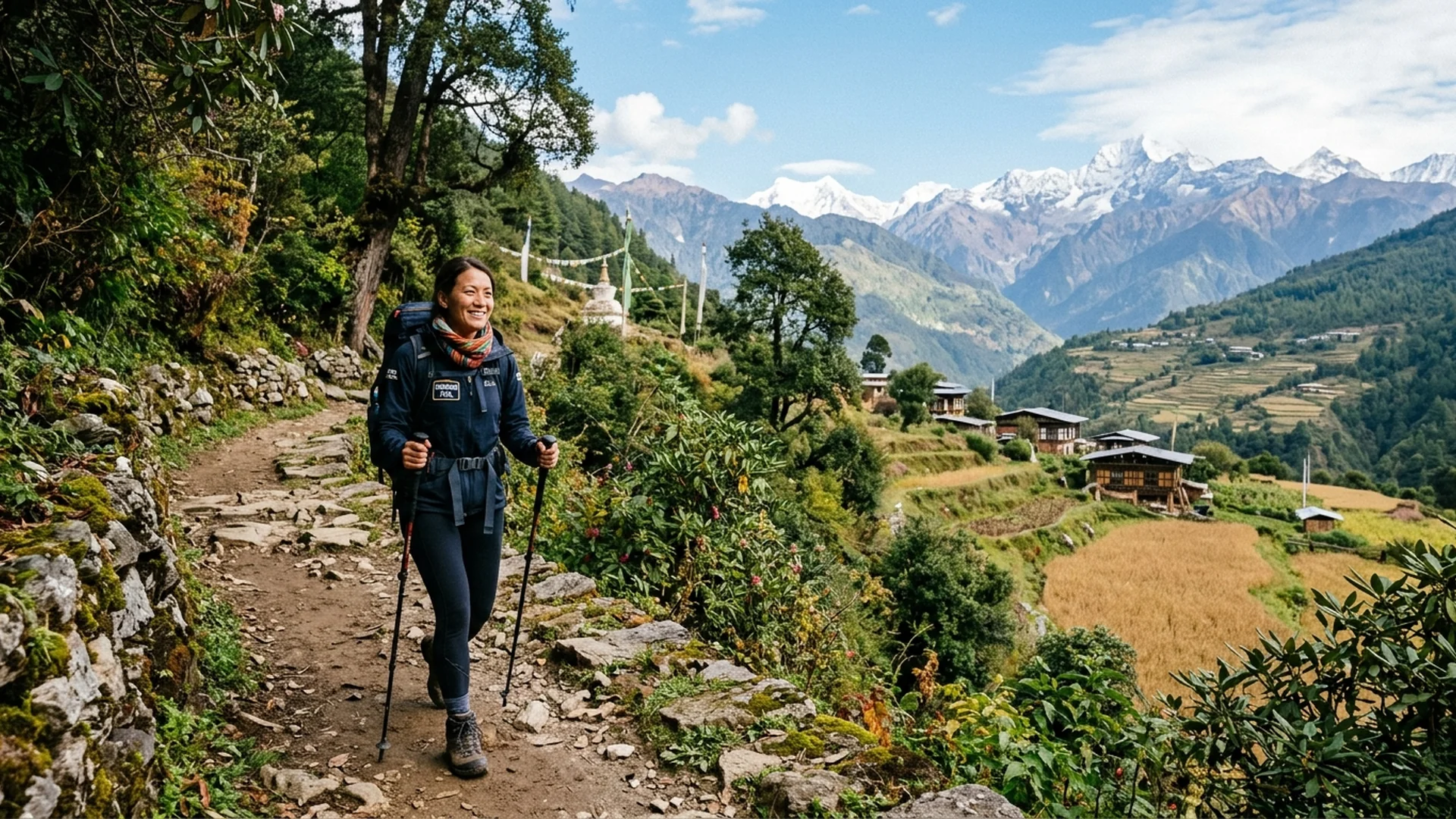
As the morning mist lifts over the fertile expanse of the Punakha Valley, what reveals itself is not merely an immaculate stretch of verdant wilderness, but a living archive woven into ancient footpaths. The Limbukha Nature Trail acts as a silent bridge between tranquil natural sanctuaries and the profound historical tapestry of the Kingdom of Happiness. This is far more than a recreational hike for panoramic vistas; it is a contemplative pilgrimage that guides the discerning traveler far beyond the clamor of the modern world and directly into the beating heart of traditional Bhutanese culture.
The journey begins with the crossing of the sweeping Punakha suspension bridge, suspended high above the turquoise waters of the Pho Chhu. The crisp mountain air carries the clean scent of blue pine resin mixed with damp earth, instantly awakening the senses. Surrounded by absolute quiet—untouched by the hum of contemporary life save for the rhythmic crunch of footfalls and distant birdsong—this soft-adventure experience is thoughtfully designed for travelers who seek intellectual resonance alongside pristine natural beauty.
Treading Through Pine and Paddy: The Anatomy of the Limbukha Ascent
Ranked among the most visually arresting and biologically diverse walking routes in the Punakha region, the Limbukha Nature Trail requires approximately three to four hours of measured walking. It is ideally suited for travelers seeking deep immersion in nature without the rigorous demands of high-altitude mountaineering. The trail gently ascends through dense stands of blue pine that filter the morning sunlight into painterly beams, their forest floors carpeted in thick mosses and wild ferns that speak to an undisturbed ecosystem. Emerging from the forest canopy, the landscape expands dramatically into terraced rice paddies sculpted into the steep contours of the hillside by generations of farmers. Whether vibrant green during the planting season or glowing with golden amber at harvest, these stepped fields create a striking contrast against deep azure skies and distant ridgelines—a timeless aesthetic unique to the Himalayan kingdom.
Village of Peace: The Spiritual Legacy and Legend of the ‘Limpus’
At the trail’s culmination lies Limbukha Village, a quiet settlement perched high upon a tranquil mountain ridge. The renown of this community stems less from its picturesque geography than from its remarkable historical legacy. During a medieval era often fractured by territorial disputes between rival valleys, the ancestors of Limbukha—known as the ‘Limpus’—served a vital role as diplomatic peacemakers. They traversed the mountains to broker truces and resolve hostilities through dialogue rather than arms. A treasured vestige of this heritage is the annual Serda festival, during which villagers process proudly carrying pristine white flags instead of weapons to honor their forebears’ commitment to harmony. Engaging with the quiet, gracious lifestyle of the villagers offers a rare opportunity to recalibrate one’s perspective through the lens of living history.
Elixir of the Highlands: The Secrets of Heirloom Red Rice and Pure Springs
Another precious treasure sheltered within the Limbukha terroir is the cultivation of Bhutanese red rice, a medium-grain indigenous crop characterized by its rosy pink-and-red hue and deep historical roots as both nourishment and restorative medicine. The distinctiveness of this grain lies entirely in its traditional, chemical-free cultivation methods and, most crucially, its irrigation by pristine natural spring water cascading down from high-altitude peaks, rich in dissolved minerals. This pure mountain hydration yields a grain with a nutty flavor profile and an abundance of antioxidants, zinc, and B-vitamins. Long prized in traditional Himalayan wellness practices for its restorative properties, enjoying a steaming bowl of freshly harvested red rice alongside delicate local dishes amidst the crisp mountain air is an unforgettable culinary revelation.