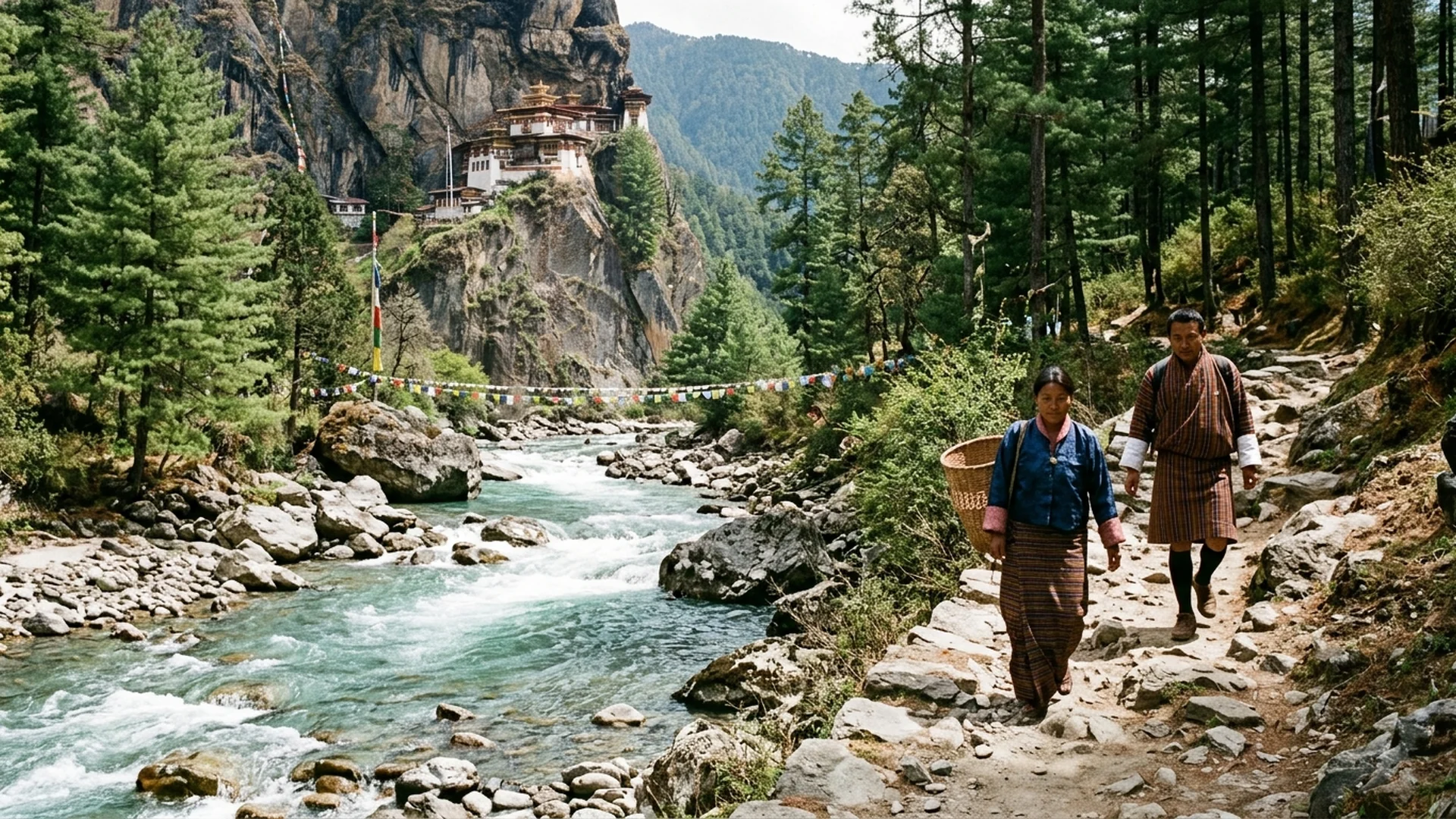
When a river transcends mere geography to become the living pulse of a kingdom’s soul, every ripple tells a story of ancient faith and unhurried grace. The Paro Chhu—fed by the pristine glacial melt of sacred Mount Jomolhari—is not simply a waterway to be crossed, but a mirror reflecting the glorious heritage and ethereal breath of the Himalayan valleys. Its crystalline currents weave together centuries of sacred architecture, monastic legacy, and pristine wilderness.
Journeying along the serpentine banks of the Paro Chhu transports the discerning traveler far beyond conventional itineraries into the realm of silent aesthetics. Here, every footfall is accompanied by the gentle roar of water colliding against weathered riverstones, mingling with the crisp scent of Himalayan pine and drifting juniper incense from cliffside sanctuaries. This is a contemplative dimension of travel designed for those seeking deep inner stillness amidst untouched landscapes preserved from the passage of time.
Currents of Devotion: The Source and Spiritual Resonance of Paro Chhu
Every droplet of the Paro Chhu begins its profound journey from the formidable heights of Mount Jomolhari, the sacred guardian peak towering over northwestern Bhutan. Pure snowmelt carves through deep alpine gorges, transforming into mesmerizing shades of emerald green and turquoise blue depending on the season. To the Bhutanese, this river is far more than a natural resource; it is an embodiment of purity and spiritual cleansing, a tangible conduit linking the mortal realm with the heavens. Rooted in ancient animist and Buddhist traditions, rivers across the kingdom are revered as the abodes of protective deities. Standing quietly beside the Paro Chhu as it glides past terraced paddy fields and pastoral hamlets offers profound insight into the philosophy of Gross National Happiness—a state of being sustained by an enduring, unblemished harmony with nature.
Timeless Architecture: Ancient Bridges and Riverside Fortresses
As the Paro Chhu winds gracefully through the valley, it serves as an aquatic guardian to some of Bhutan’s most treasured monuments. The journey begins near Tachog Lhakhang, where a remarkable iron-chain bridge sways gently above the rushing torrent—a marvel of medieval engineering crafted by the legendary saint Thangtong Gyalpo. Crossing this rhythmic, historical span connects the modern traveler directly with centuries of craftsmanship. Further downstream, the river sweeps past the majestic threshold of Rinpung Dzong, the fortress of the heap of jewels, connected by a traditional cantilevered wooden bridge known as Neyzam. The sublime reflection of this monumental fortress mirrored on the glass-like surface of the Paro Chhu at dawn remains one of the most transcendent visual emblems of Bhutanese artistry.
The Aesthetics of Leisure: Gentle Rafting and Riverside Wellness
For the traveler seeking refined experiential luxury, the Paro Chhu unveils its charms through thoughtfully curated pursuits designed for absolute serenity. Gentle scenic river rafting excursions along tranquil stretches offer a fresh vantage point from the water’s edge, allowing guests to absorb the valley’s majesty while observing rare avian species darting through riverside canopies. Following outdoor exploration, indulgence reaches its zenith through traditional Bhutanese hot stone baths (Dotsho) at secluded luxury lodges nestled along the banks. Soaking in mineral-rich waters warmed by river-heated stones while sipping local herbal tea to the natural lullaby of the flowing current defines an irreplaceable standard of restorative travel.