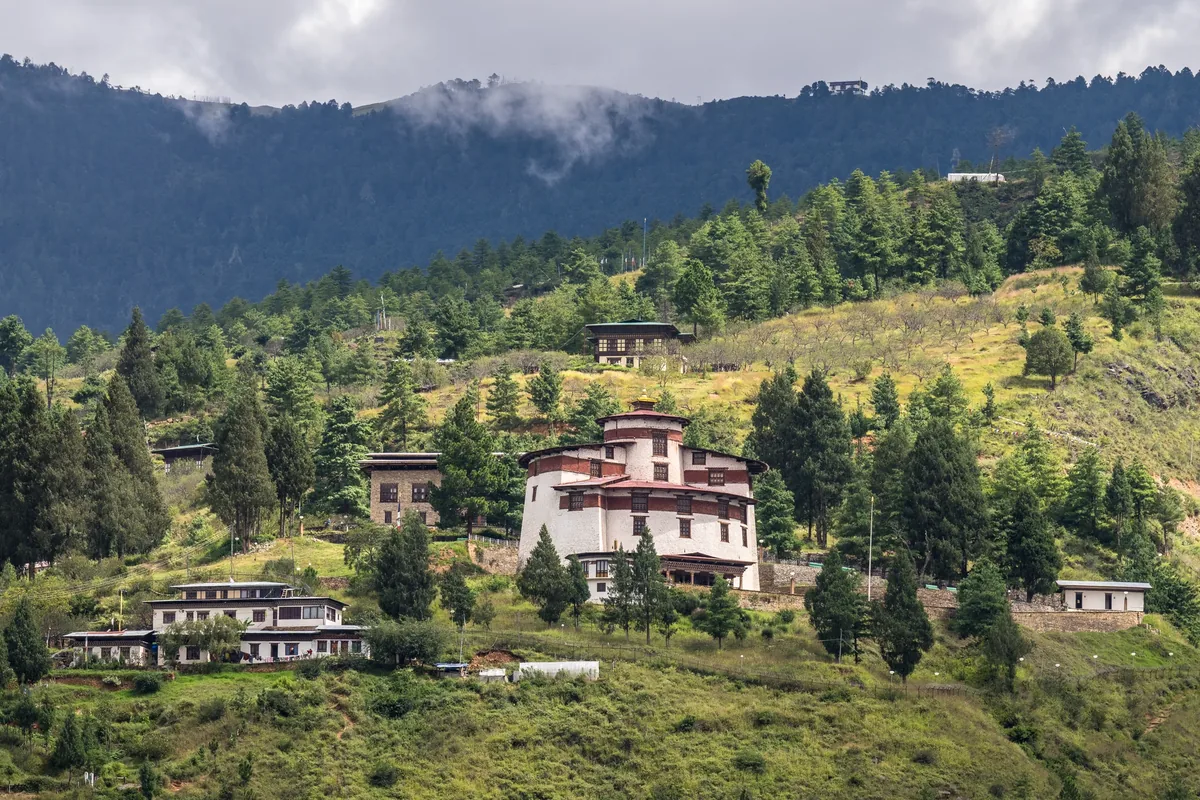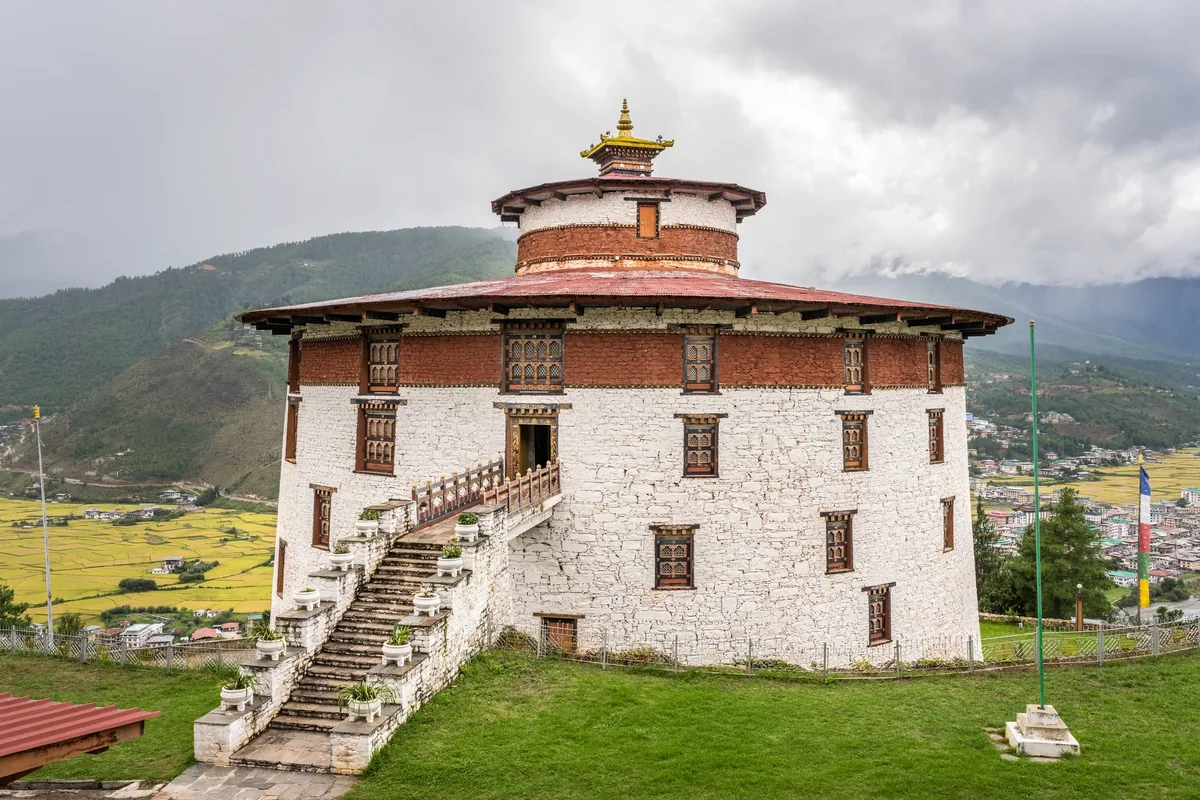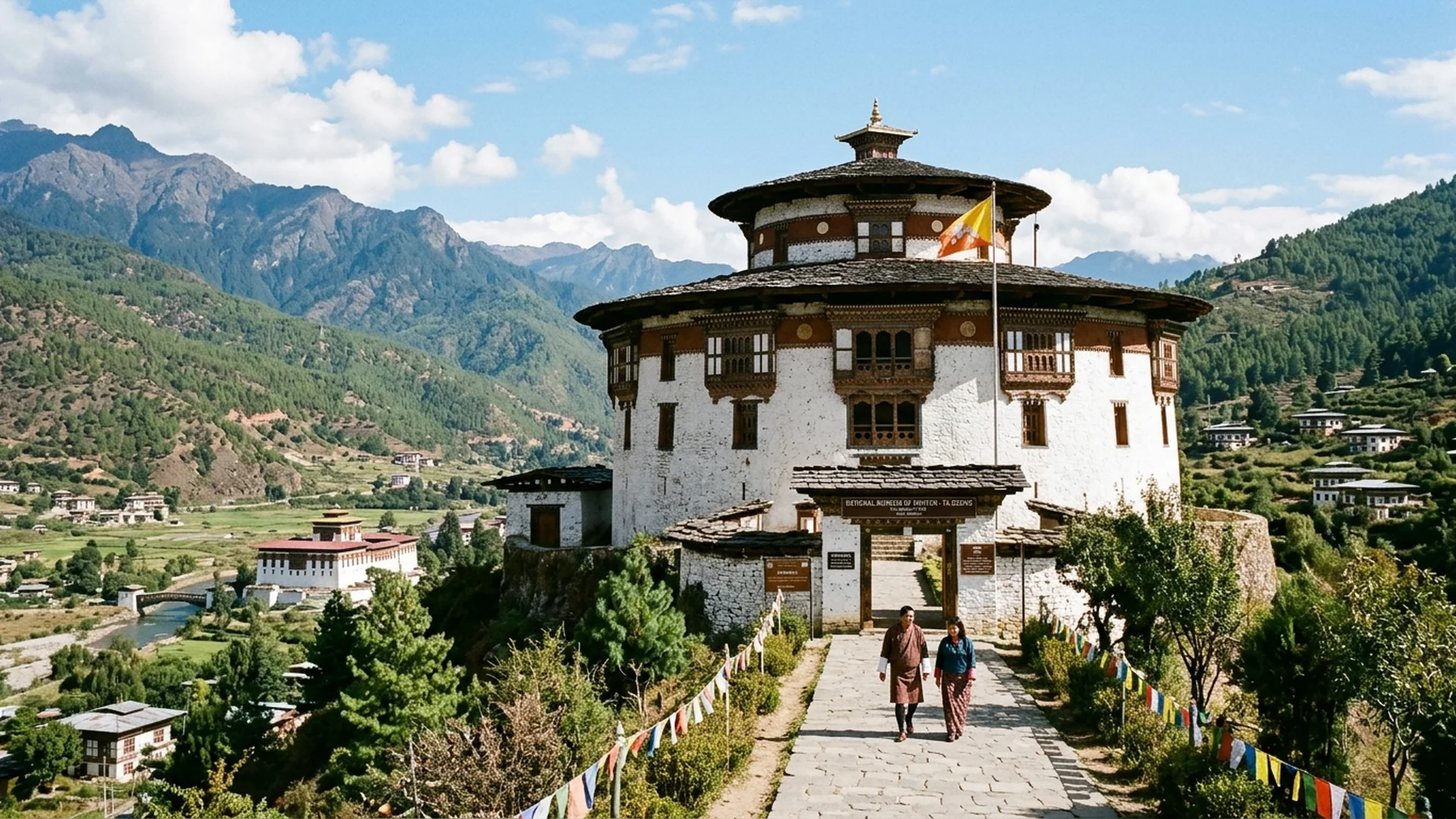
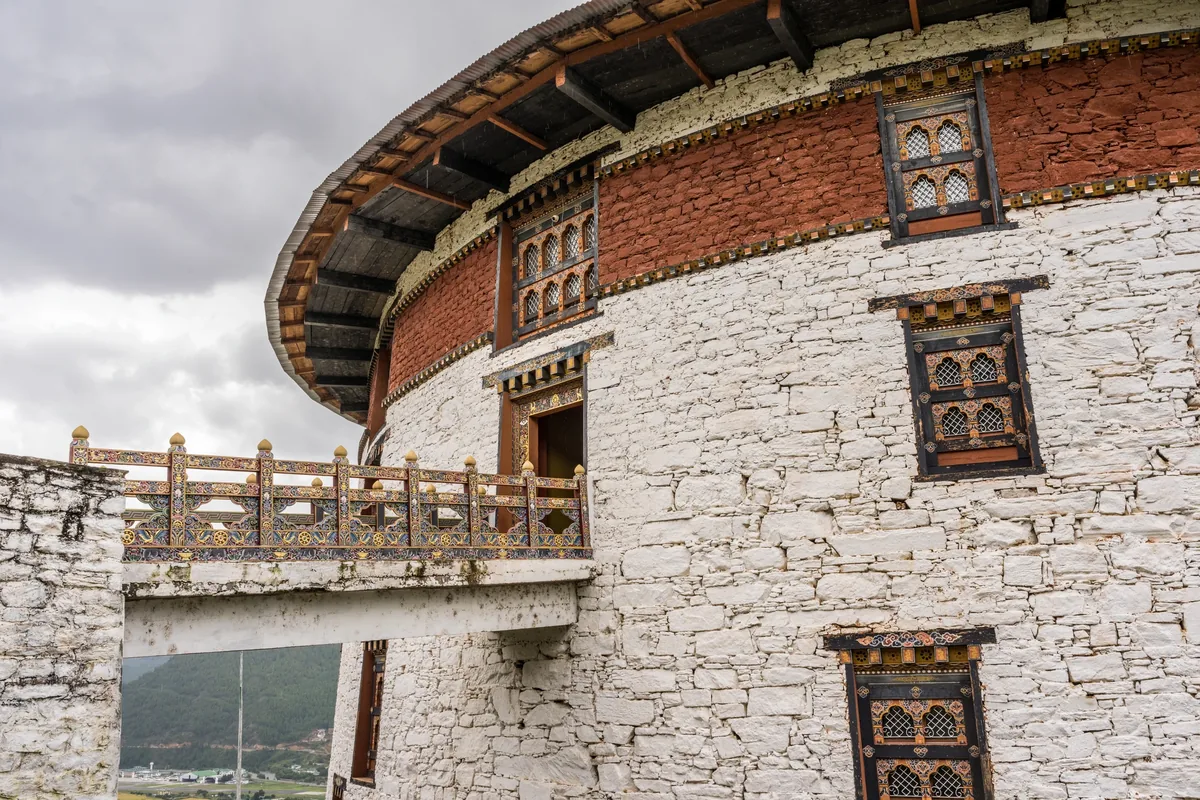
As the morning mist gradually dissolves above the Paro Valley, the imposing silhouette of an ancient stone fortress shaped remarkably like a conch shell emerges crisply against the ridge. Three hundred and seventy years have elapsed, yet Ta Dzong no longer serves merely as a watchtower guarding the frontier. Today, it stands as the beating heart that preserves the pristine spiritual essence of the Kingdom of Bhutan. Crossing the threshold of the National Museum of Bhutan is far more than browsing antiquities behind glass; it is a profound journey backward through strata of stone, earth, and unwavering faith to comprehend why this sequestered sanctuary continues to nurture inner joy amidst a restless, rapidly accelerating world.
Behind walls measuring over 2.5 meters in thickness—constructed entirely without a single iron nail—the traditional Dzong architecture reveals the brilliant foresight of Bhutanese forebears, harmonizing defensive engineering with refined aesthetic grace. Passing through ancient carved wooden doors, the heavy, comforting scent of burning yak butter and Himalayan herbal incense immediately draws the senses into another realm. Here, art, religion, and history merge seamlessly across a priceless collection of over three thousand artifacts narrating the quiet, majestic evolution of Himalayan civilization.
The Conch Architecture and Ta Dzong: A Fortress Across Time
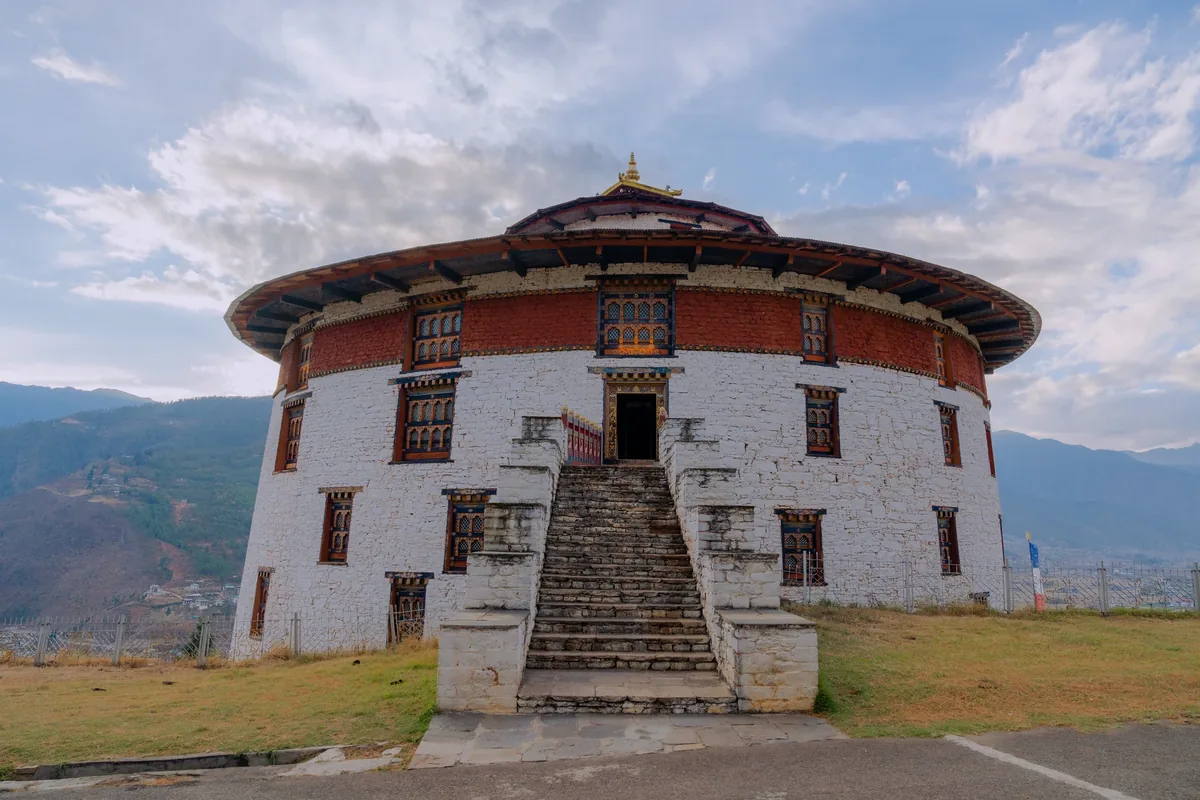
Constructed in 1649 as a strategic watchtower to shield Rinpung Dzong from external incursions, Ta Dzong was intentionally designed in the shape of a right-turning conch shell—one of the eight auspicious symbols in Vajrayana Buddhism. Its formidable, extra-thick granite walls were engineered to withstand cannon fire and seismic tremors alike. Within, the interior ascends through six levels connected by spiraling timber staircases, offering an ascent that feels akin to a spiritual pilgrimage. Every footstep upon the ancient, creaking pine floorboards evokes a deep reverence, echoing the footsteps of those who walked these exact corridors centuries ago.
Vajrayana Masterpieces and Sacred Murals
Navigating the museum’s interior is akin to reading a living scripture of the Drukpa Kagyu lineage. The galleries dedicated to antique Thangkas showcase breathtaking intricacy achieved through fine silk embroidery and natural mineral pigments. Depictions of Buddhas, Bodhisattvas, and fierce Dharmapalas (protective deities) were never conceived purely for decorative appeal; rather, they serve as intricate navigational maps for the practitioner’s mind. Furthermore, the sacred carved wooden masks utilized during traditional Tshechu festivals powerfully symbolize the triumph of spiritual wisdom over ignorance and malevolence.
Royal Heritage and Ethnographic Tapestry
Beyond its profound religious dimensions, the museum serves as an invaluable archival vault chronicling the nation’s political evolution. The royal heritage wing presents significant artifacts, including ceremonial attire, royal decorations, and a replica of the distinctive Raven Crown worn by Bhutan’s monarchs. Transitioning to the Ethnographic Gallery, visitors encounter indigenous implements, traditional pottery, ancient weaponry, and regional textiles that illustrate the rich cultural mosaic thriving beneath the peaceful shadow of the Himalayan peaks.