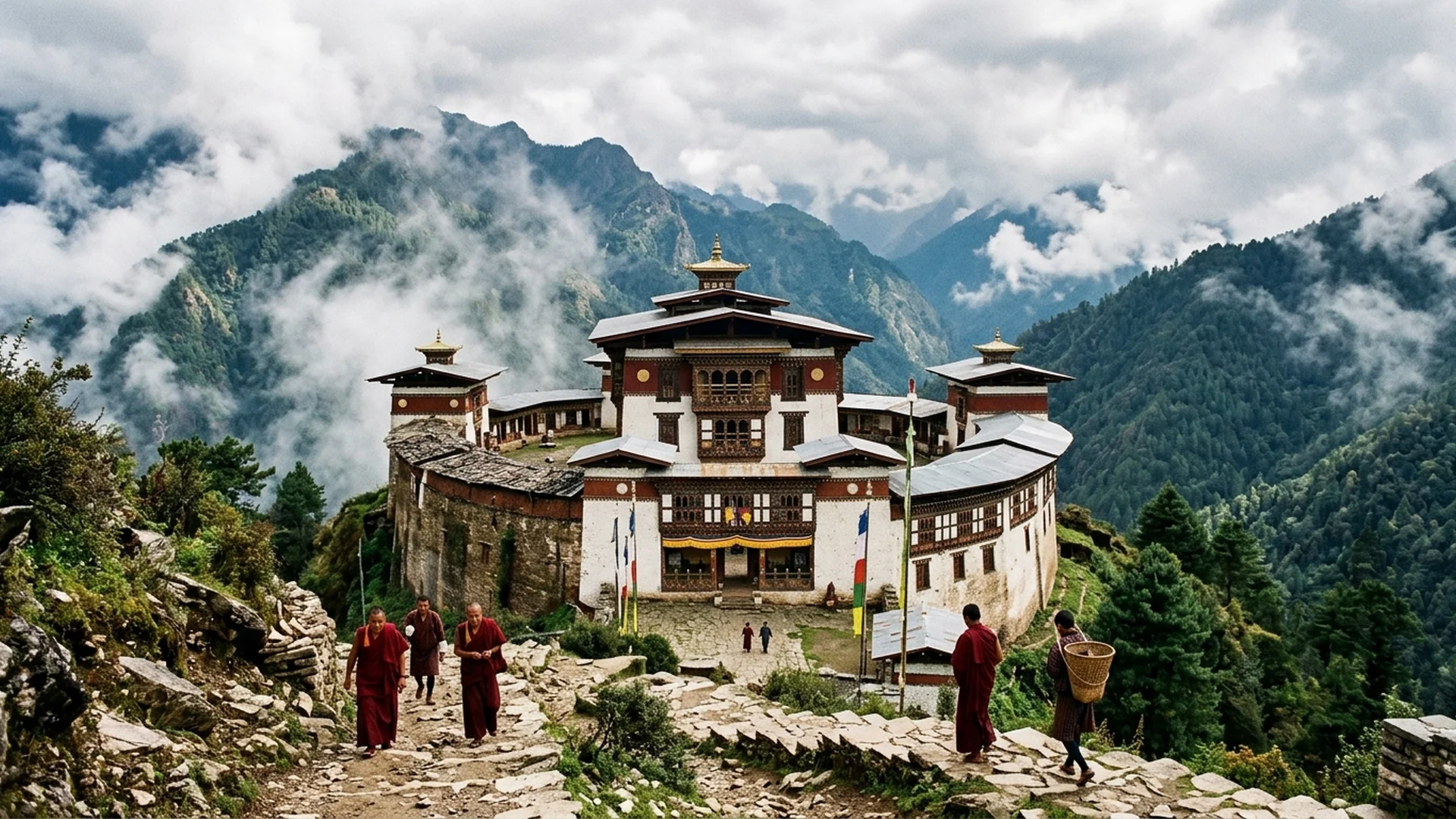
When the sweeping horizon where snow-capped Himalayan ridges meet deep emerald valleys surrenders to an absolute, reverent stillness, the northernmost reaches of the Kingdom of Bhutan begin to whisper their ancient secrets. Ascending toward the rugged heights of Gasa is far more than a physical transit through winding mountain passes; it is an unhurried passage across centuries and thick veils of mountain mist, leading the discerning traveler to one of the rarest and most striking architectural marvels in the Himalayas.
Framed by the majestic backdrop of Mount Pumori and perpetually snow-crowned summits, Gasa Dzong—officially named Gasa Tashi Thongmön Dzong—stands resolute against the eroding currents of time. Its rare circular configuration diverges completely from the rigid rectangular geometries of dzongs found elsewhere across the kingdom. This formidable bastion serves as a living chronicle of ancestral defense, profound Buddhist devotion, and the unyielding purity of high-altitude indigenous life.
The Circular Architecture: Strategic Defense and Sacred Geometry
While conventional dzongs across Bhutan project unyielding authority through massive, battered stone walls arranged in strict rectangular footprints, Gasa Dzong breaks with orthodoxy by unfurling in a sweeping circular embrace that contours gracefully to the crest of the ridge. Founded in the seventeenth century by Zhabdrung Ngawang Namgyal, the visionary spiritual leader who unified the realm, this stronghold was erected to repel incursions descending from the northern Himalayan passes. The curvilinear design not only deflects the ferocious gales sweeping across the high-altitude pass but also provides watchtowers with an uninterrupted three-dimensional field of vision. Within its venerable walls, sacred chapels, meditative alcoves, and administrative quarters exude the tranquil aromas of aged pine timber and drifting juniper incense, accompanied by the low, resonant chant of monks echoing down ancient timber corridors.
The Way of the Layap: Nomads of the Roof of the World
Venturing deep into Gasa grants rare access to the homeland of the Layaps, an indigenous high-altitude pastoral community inhabiting the steep, wind-swept pastures near the Tibetan border. Their lives are intimately tethered to herds of sure-footed yaks and the seasonal harvest of prized Himalayan cordyceps. Visually striking, Layap women are easily recognized by their distinctive conical bamboo hats adorned with strings of turquoise and cowrie shells, complemented by vibrant wool garments. Renowned for their genuine warmth and hospitality, the Layaps have safeguarded their distinct dialect, ancestral customs, and a worldview deeply rooted in tantric Buddhism and harmonious coexistence with nature. Engaging in quiet dialogue through gentle smiles amidst the crisp mountain air yields an intellectual richness no volume can replicate.
Gasa Tsachhu: Rejuvenation at the Sacred Thermal Springs
Nestled in the river valley far beneath the icy precipices lies Gasa Tsachhu, a treasured thermal sanctuary gifted by the earth to soothe weary travelers. Divided into tiered pools varying in temperature and mineral concentration, these natural waters are celebrated throughout the kingdom for easing joint fatigue, restoring vitality, and purifying the spirit. Submerging oneself in the mineral-rich warmth while wisps of steam rise into the cool air—with the surrounding snow-dusted peaks catching the golden amber hues of twilight—delivers an unhurried, transcendent wellness experience that bridges body, mind, and wild landscape.