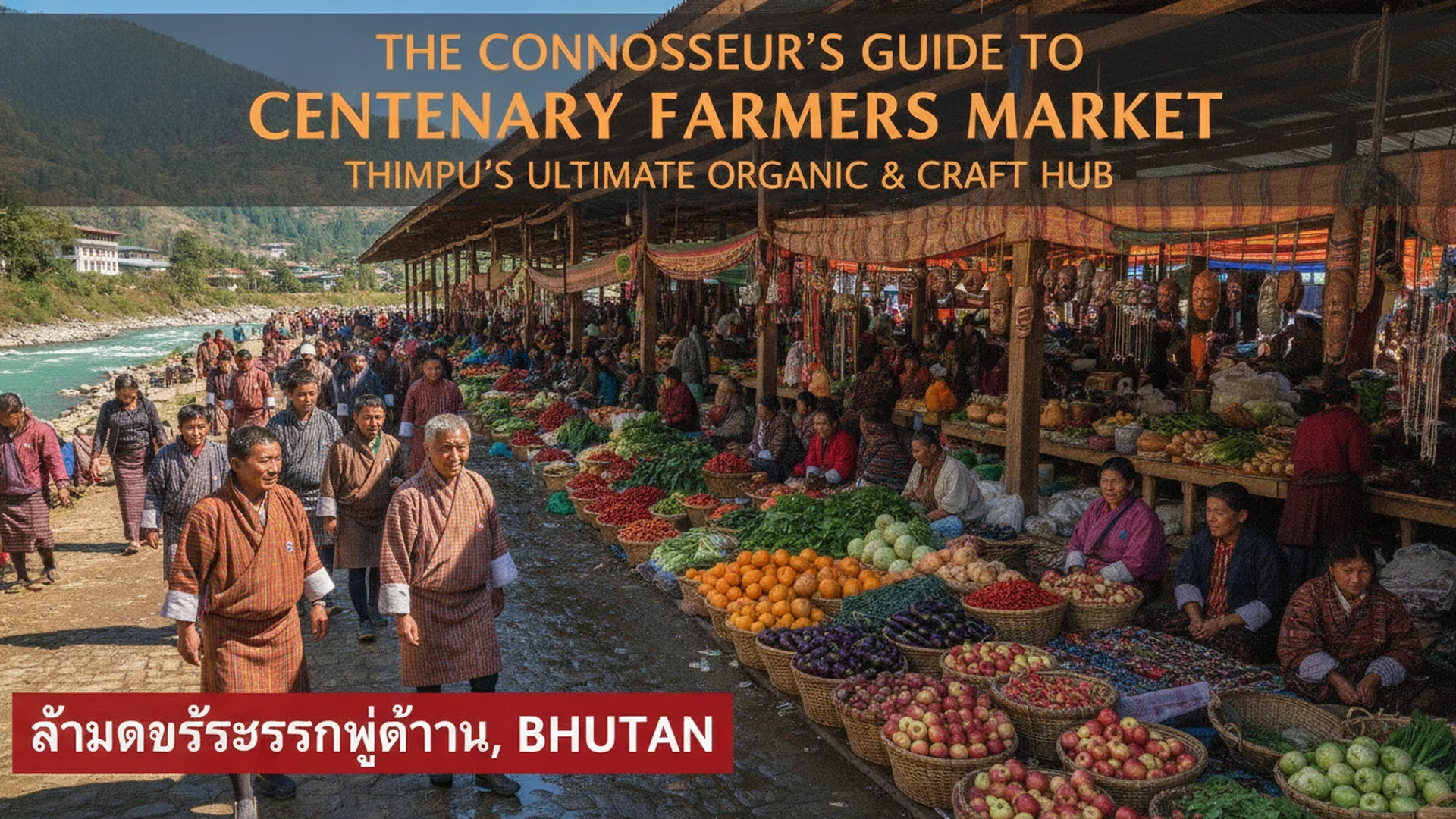
As the morning mist lifts quietly above the Thimphu Valley, the soft rustle of footsteps and gentle murmurs in Dzongkha begin to harmonize along the banks of the Wang Chhu river. Here, the Centenary Farmers Market (CFM) stands as more than a mere provisioning ground for daily life; it is an expansive mirror reflecting the soul, agricultural bounty, and Gross National Happiness (GNH) philosophy of the Bhutanese people.
The sharp, warming aroma of indigenous spices, the earthy scent of damp soil after an alpine rain, and the vivid splash of sun-dried crimson chillies against traditional gho and kira robes compose a living tableau reminiscent of a fine documentary film. For the discerning traveler seeking profound cultural resonance, entering this sanctuary is an unhurried return to foundational simplicity, where every square meter hums with quiet narratives from the Himalayan highlands.
Decoding the Two-Tiered Marvel: From Organic Earth to Himalayan Spice Treasuries
The traditional timber architecture of the Centenary Farmers Market is meticulously arranged across two levels. The ground floor serves as a vibrant realm of absolute freshness, sourced directly from small-scale growers across the kingdom. Bhutan’s strict adherence to chemical-free farming yields crisp-stemmed greens, naturally sweet sweetpotatoes, and an astonishing variety of chillies—the literal heartbeat of Bhutanese gastronomy—curated with immaculate precision.
Ascending to the upper level introduces an air of quiet discovery. Pungent aromas of cumin, coriander seed, and Sichuan pepper intermingle with the sweet, raw nectar of deep-forest Himalayan honey. This floor preserves age-old preservation wisdom, where time slows down and traditional culinary lineages endure without compromise.
Curating Rare Luxury Finds: The Hidden Treasures of Thimphu
For the culinary connoisseur and experiential collector, the market conceals elusive, high-value items worthy of international travel collections. Foremost among them is ‘Chhurpi,’ an exceptionally dense, sun-dried yak cheese requiring patient appreciation as its deep, savory complexity slowly releases upon the palate—a brilliant alpine survival innovation.
Additionally, wild forest honey from Bhutan’s temperate broadleaf zones carries an unmistakable alpine floral profile unavailable anywhere else on earth. Alongside seasonal wild-harvested cordyceps and vitality-restoring indigenous teas, every curated acquisition represents an authentic testament to ecological reverence.
Crossing the Ancient Bridge into a World of High Textile Artistry
No exploration of Thimphu’s trading heritage is complete without traversing the Kuendeyling Bazaam, a traditional cantilever wooden footbridge gracefully spanning the Wang Chhu. Draped in fluttering multi-colored prayer flags, the bridge serves as a threshold between the physical nourishment of the lower market and the aesthetic devotion of the upper arts.
The western riverbank gathers master craftspeople and purveyors of fine heritage wares. Here lie meticulously loomed fabrics intended for women’s kiras and men’s ghos, requiring months or years of intensive labor to complete their intricate geometric motifs. Visitors will also encounter authentic hand-forged silver ornaments, fragrant sandalwood carvings, and sacred thangka paintings executed with meditative precision by monastic artists.