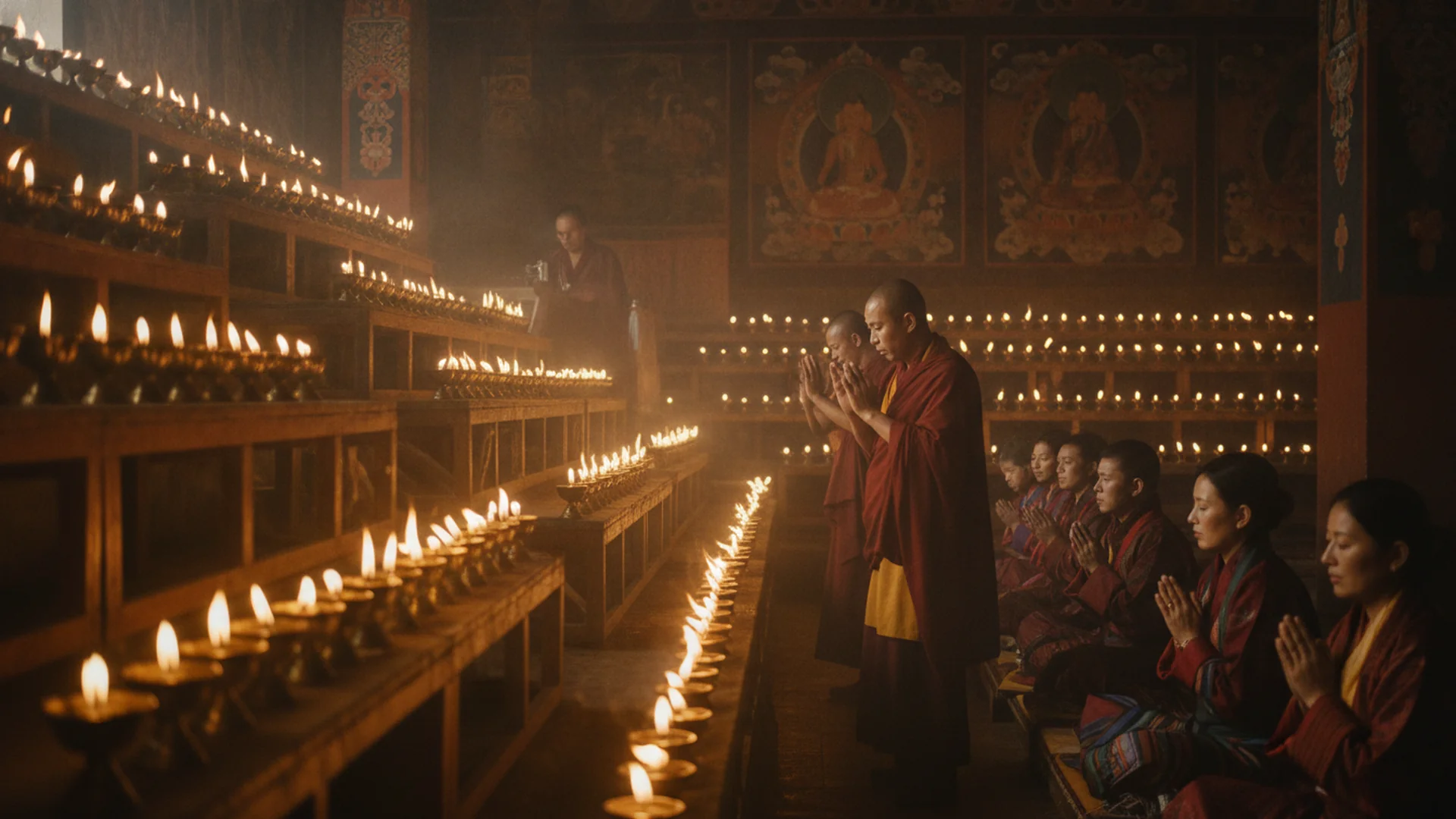
Amidst the tranquil hush of an ancient Himalayan prayer hall, the warm, comforting scent of yak butter mingles delicately with the drifting smoke of juniper incense. As the first wick flickers to life, golden light dances across timeworn statues of the Buddha and centuries-old murals. This is far more than a picturesque cultural tableau; it is the threshold of spiritual healing through the Karme, or sacred butter lamp ceremony of the Kingdom of Bhutan.
An elevated journey to Bhutan remains incomplete without transcending superficial tourism to touch the profound essence of Mahayana and Vajrayana Buddhism. Lighting a single butter lamp is never done to petition for personal fortune; rather, it establishes a focused aspiration to dispel the profound darkness of avidya—ignorance—which serves as the root of all suffering in the human realm, replacing it with the radiant illumination of wisdom and boundless compassion.
Sitting quietly beside a high-ranking monk or Tulku (a revered reincarnate lama) within a secluded sanctuary cradled by silent mountains, attuned to every breath and inner realization, offers one of the most deeply intimate and transcendent spiritual experiences available. For discerning cultural travelers seeking true inner stillness and profound personal renewal, this moment becomes unforgettable.
Decoding the Philosophy of ‘Karme’: Illumination Against Inner Darkness
Within the Mahayana and Vajrayana Buddhist traditions deeply rooted in Bhutan, all human suffering originates from a singular source: avidya, or spiritual ignorance—the fundamental inability to perceive reality as it truly is, akin to a dense shadow veiling the mind. The butter lamp, or Karme (Marmey), is therefore far more than a standard devotional offering; it stands as a potent symbol of the “Wisdom Light” that rescues humanity from inner blindness.
The alchemical transformation of inert yak butter or vegetable oil into a luminous, dancing flame mirrors the transformation of mental defilements and passions into profound transcendental wisdom. Furthermore, the flame of the butter lamp teaches the timeless principle of interdependence. Without the chalice, there is no vessel to cradle the butter; without the butter, the cotton wick cannot ignite; and as we use the flame of the first lamp to kindle the second and third, light expands infinitely—much like the boundless compassion we extend to all sentient beings across the cosmos.
The Mindful Path: Ritual Purity and Sacred Etiquette
Engaging in a butter lamp ceremony within a Bhutanese sanctuary demands a profound sense of reverence and acute mindfulness in every physical movement. The journey begins with the ritual washing of hands to purify the physical form. Traditionally, participants wear face coverings or respectfully shield their breath to ensure that human respiration, potentially tinged with worldly distractions, never tusts the immaculate purity of the chalice.
Practitioners gently polish brass or silver chalices with clean cloths, meticulously rolling pure cotton into delicate wicks before pouring warm, clarified butter. As the flame is ignited in absolute silence, the mind is anchored firmly in the present moment. The rhythm of the breath, harmonized with the flickering flame, evolves into an exquisite meditative practice, concluding with the recitation of the Marmey Moenlam—a traditional aspiration dedicating the accumulated merit to the welfare of all living beings.
Exclusive Ancient Sanctuaries: Awakening to Elevated Spiritual Energy
For the discerning traveler seeking a spiritual encounter steeped in mysticism and absolute privacy, Bhutan offers several ancient sanctuaries imbued with extraordinary atmosphere:
-
Gangtey Goempa: Perched majestically on a ridge overlooking the sweeping expanse of the Phobjikha Valley, this venerated monastery is the primary seat of the Peling tradition. Here, travelers may partake in private prayer ceremonies and early morning butter lamp lighting alongside a high-ranking Tulku, receiving personal teachings and blessings in profound, uninterrupted solitude.
-
Kyichu Lhakhang: Erected in the 7th century by Tibetan Emperor Songtsen Gampo, this stands as one of Bhutan’s most ancient and sacred temples. Within its circular butter lamp sanctum, visitors may join a ritual of lighting 108 lamps, inviting supreme auspiciousness and deep meditative concentration.
-
Paro Taktsang (Tiger’s Nest): Clinging dramatically to a sheer cliff face high above the valley floor, this legendary cliffside monastery marks the spot where Guru Rinpoche once meditated. Lighting a butter lamp within the uppermost shrine after the contemplative trek serves as an exquisite release of physical exertion, opening the heart to immense spiritual currents.
Weaving Mindfulness into Luxury Wellness
The butter lamp ritual does not conclude within the stone walls of a temple; rather, it extends seamlessly into a holistic spiritual wellness lifestyle throughout one’s sojourn in the kingdom. Amidst ultra-luxury retreats nestled discreetly within natural landscapes—whether in the valleys of Paro or Gangtey—the twilight hours, framed by crisp mountain air, invite quiet moments of self-reflection before the serene glow of a personal butter lamp while sipping warm butter tea.
The gentle dance of the flame imparts the profound truth of impermanence: all conditions, whether joyful or sorrowful, naturally arise, abide, and pass away. Shedding external distractions and allowing the golden radiance of the butter lamp to guide one’s contemplation helps reset emotional states, dissolve accumulated tension, and replenish the spirit with timeless serenity.