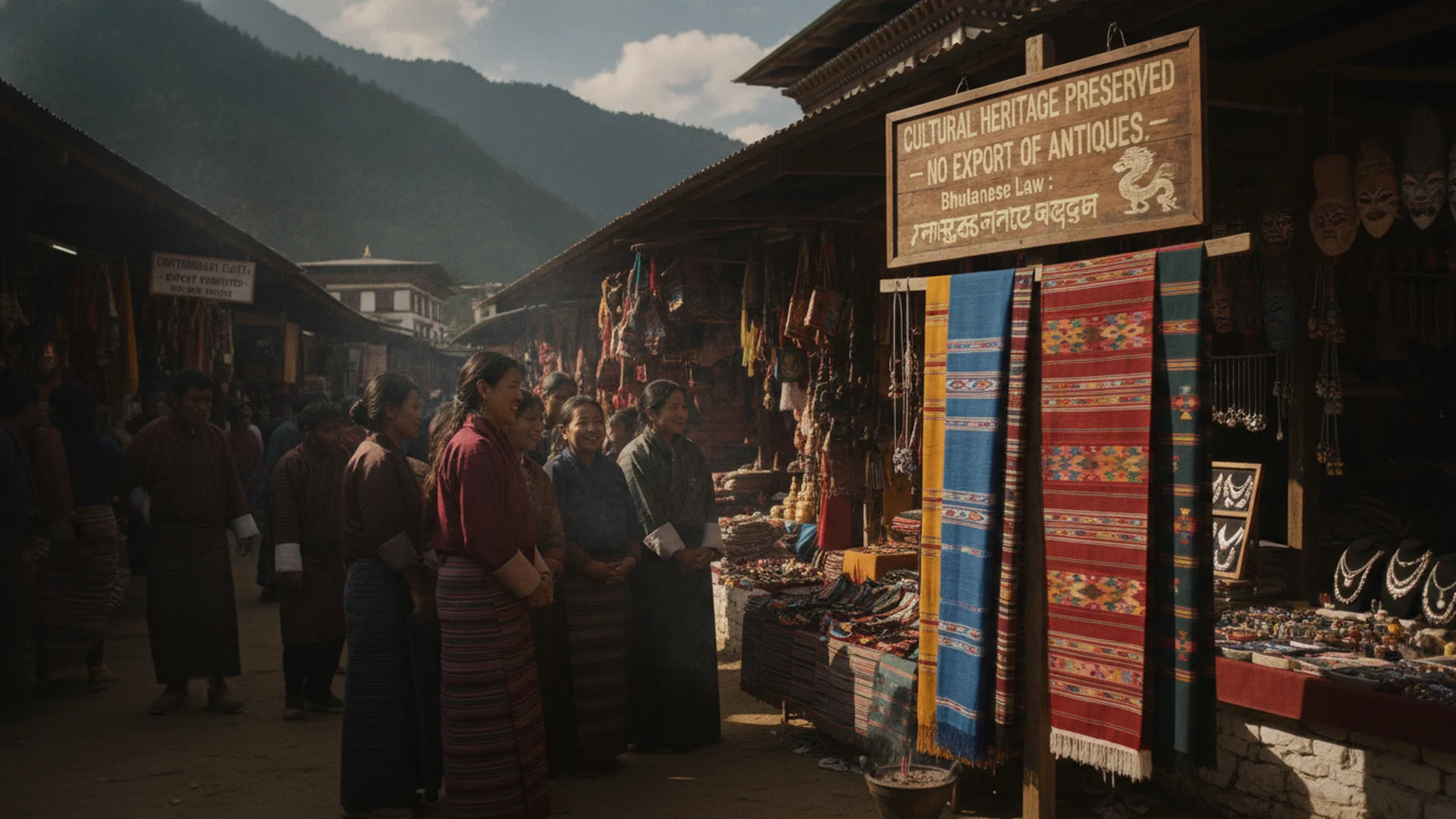
Amidst the mist-shrouded Himalayan peaks, the Land of the Thunder Dragon is celebrated not only as a beacon of Gross National Happiness, but as a living treasury of profound spiritual devotion and master artistry that global connoisseurs deeply yearn to possess. Yet, the alluring appeal of hand-woven antique textiles and intricate thangkas—sacred religious scroll paintings—comes hand-in-hand with a delicate boundary: the line dividing the irreplaceable cultural heritage that must be fiercely protected and contemporary masterworks destined to travel the world alongside discerning travelers. Understanding Bhutan’s legal framework is far from a mere administrative chore; it is the inaugural gesture of a respectful global citizen who chooses to honor the breath and roots of their hosts while celebrating timeless beauty.
The Heart of the Law: Understanding the Movable Cultural Property Act of Bhutan 2005
Bhutan approaches the safeguarding of its intangible and tangible cultural legacy with unwavering dedication through the Movable Cultural Property Act of 2005. This landmark legislation establishes a definitive threshold: any authentic artifact exceeding a century in age, alongside consecrated religious objects utilized within temple rituals or majestic dzongs (fortified monastery-fortresses), remains the inviolable property of the state and cannot be commercialized or removed from the kingdom. For the sophisticated collector, grasping this statutory boundary mitigates the risk of customs confiscation while gracefully shifting the paradigm from acquiring restricted antiquities to championing equally breathtaking contemporary craftsmanship.
The Ritual of Transparency: Securing the Non-Antique Export Permit
Once a profound textile or masterwork of art has been thoughtfully selected, the indispensable prelude to departure involves obtaining an official Export Permit for Non-Antique Artefacts via digital channels linked directly to the Department of Culture. Accredited high-end galleries within Thimphu and Paro seamlessly coordinate the physical appraisal of the piece by certified heritage specialists. This official government-stamped documentation functions as an authentic passport for the artwork, providing absolute assurance to international customs authorities that the item has been thoroughly vetted and legally cleared for export.
Tracing Authenticity: Antique Textiles, Thangkas, and Dzi Beads
The primary nuance in curating high-value souvenirs in Bhutan lies in discerning genuine antique masterworks from contemporary craftsmanship styled with historical resonance. Women’s kira dresses, men’s gho robes, and thangka paintings executed in crushed mineral pigments and genuine gold leaf demand an educated eye and guidance from experienced gallery curators. Patronizing contemporary artists who perpetuate ancestral royal workshop techniques not only ensures absolute compliance with cultural preservation laws, but also infuses vital life into living traditions so they may endure within the modern world.