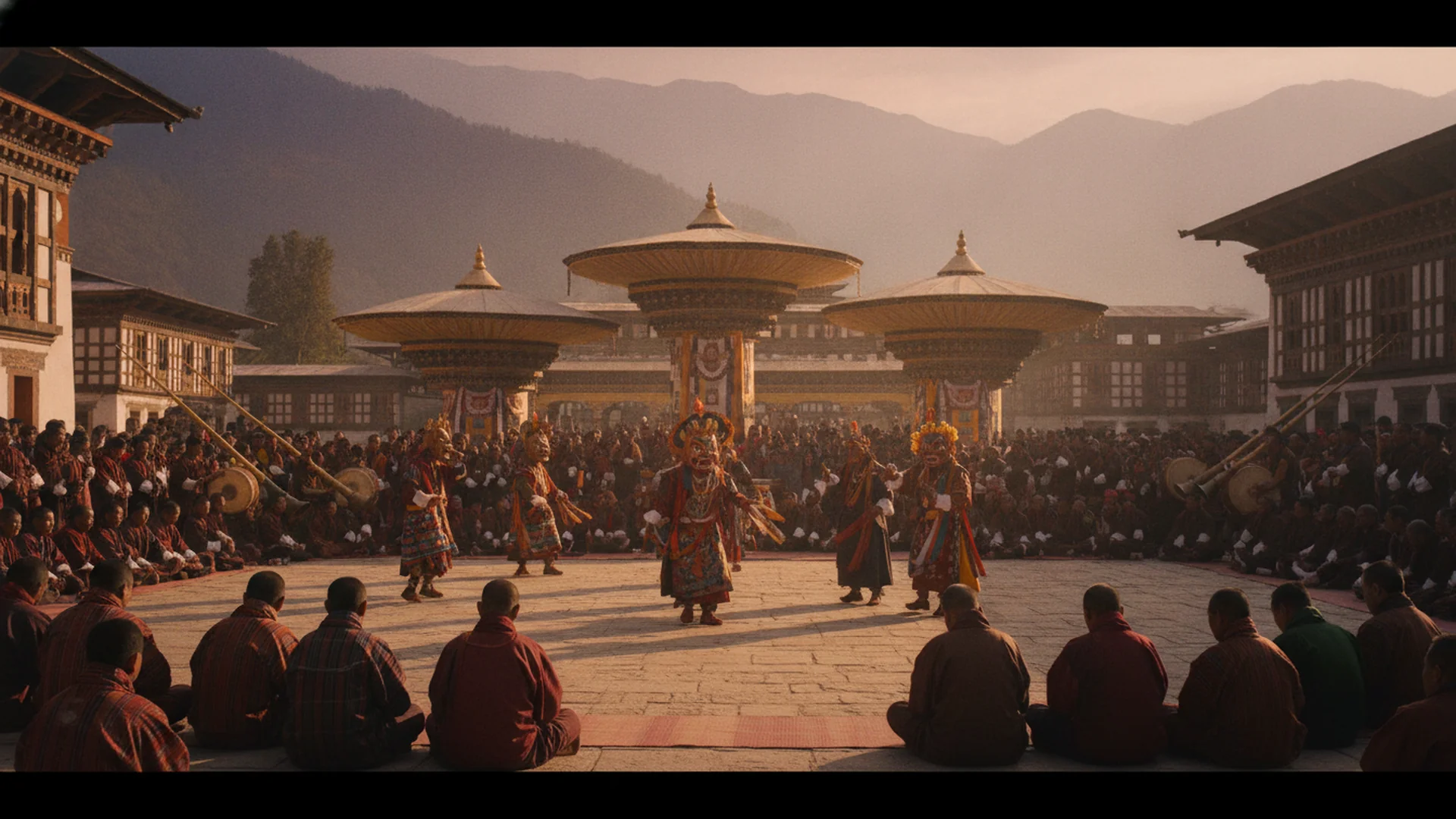
When the resonant blast of the gyaliling—the traditional long horn—echoes through the crisp mountain air, harmonizing with the profound thrum of monastic drums at Tashichho Dzong, the great fortress-monastery of religion and government in the Valley of Avalokiteshvara, the threshold between the mundane world and the esoteric realm of Vajrayana Buddhism swings open. The Thimphu Tshechu is far more than a cultural celebration; it is the kingdom’s grandest spiritual pageant, where the boundaries between earthly existence and divine sanctum dissolve entirely. Transcending ordinary tourism, this is an invitation to attune your senses to an inner stillness, wrapped in the scent of burning incense, ancient silk brocades, and sacred mantras.
Amid the gentle autumn mists, golden sunlight spills across the Tendrel Thang courtyard, catching the iridescent threads of ceremonial robes worn by monks and citizens alike who don their finest national attire with immense pride. Here, profound silence and soaring jubilation coexist in absolute harmony. Journey deep into the mystical dimensions and timeless elegance of the Thimphu Tshechu through an editorial lens designed for the discerning global traveler.
Architecture of Faith at Tashichho Dzong: The Grand Stage of Devotion
Tashichho Dzong, the Fortress of the Glorious Religion, serves not merely as the administrative and monastic epicenter of Bhutan, but as a majestic open-air amphitheatre for three days of sacred mask dances. Built entirely without iron nails in the classic architectural tradition, its soaring whitewashed walls and crimson-bordered windows imbue the festival with an aura of profound solemnity. Every square inch of this 13th-century bastion breathes centuries of inherited history. Entering its sacred courtyards during the Tshechu feels akin to stepping backward into an epoch where humanity lived in unbroken reverence for the natural and spiritual worlds.
Decoding the Cham Dances and the Grace of Liberation
At the core of the Thimphu Tshechu are the Cham dances, performed by initiated monks and devout laymen. The intricately carved wooden masks representing deities, celestial beings, protective wrathful spirits, and mythical beasts are crafted with meticulous precision and consecrated through strict ritual protocols. Far from mere performance, every choreographed movement is a symbolic subjugation of inner demons and spiritual impurities. According to ancient texts, those who witness these sacred dances with a focused, reverent mind receive spiritual cleansing and invite enduring peace into their lives.
The Miraculous Dawn: Unveiling the Sacred Thongdrel Tapestry
The most arresting and emotionally stirring moment for the Bhutanese people arrives at first light on the final morning of the festival. A colossal appliquéd silk tapestry known as the Thongdrel, bearing the likeness of Guru Rinpoche, is slowly unfurled down the towering exterior wall of the Dzong. As the first rays of morning sun strike the intricate textiles and clouds of juniper incense billow across the courtyard, the atmosphere transforms. Rooted in the profound belief that mere sight of the Thongdrel cleanses a lifetime of accumulated misdeeds, the vast crowd settles into a hush so complete it feels as though time itself has paused—an unforgettable epiphany for the discerning traveler.