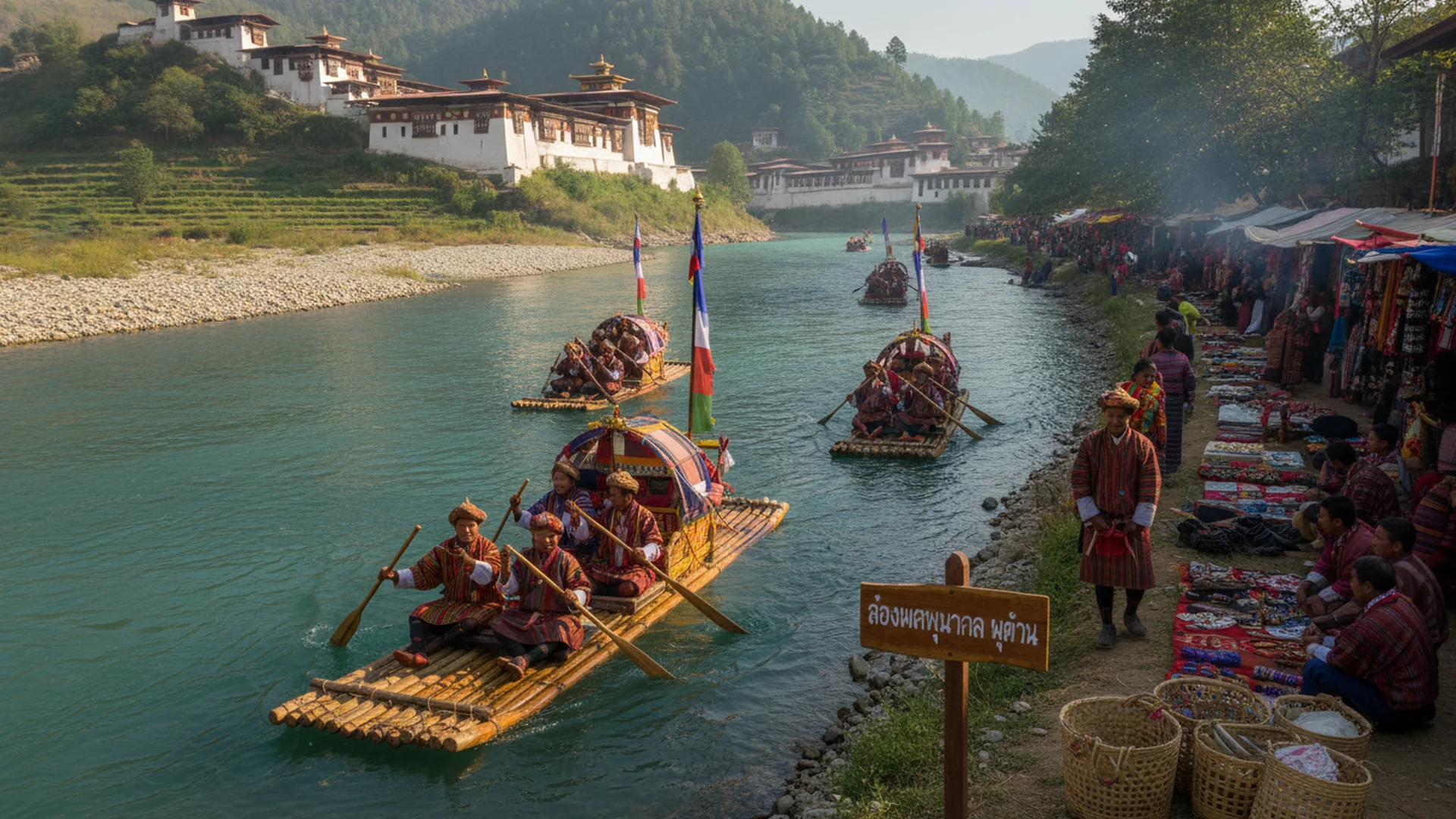
Amidst the warm, emerald-draped valleys of Punakha—Bhutan’s tranquil former capital—nature’s philosophy of balance is written across the water. Here, two rivers born from the glacial crown of the Himalayas converge, embodying a timeless dance of cosmic duality: one surging with masculine vigor, the other flowing with feminine grace, reflecting the eternal harmony of yin and yang.
The Pho Chhu, known as the Father River, charts an assertive course that beckons seekers of exhilaration through Class III and IV rapids that awaken the senses. Conversely, the Mo Chhu, the Mother River, drifts with gentle composure, carrying rubber rafts along Class I and II currents. It is an idyllic passage for couples and families wishing to absorb the verdant valleyscapes, cascading rice terraces, and quiet riverside homesteads.
Anchoring this aquatic convergence is the magnificent Punakha Dzong, a masterpiece of sacred architecture standing sentinel at the confluence. Rafting these waters transcends mere adventure; it is an intimate pilgrimage through the living landscapes of the last Himalayan kingdom, viewed from the pristine perspective of crystal-clear currents where river stones glint far below.
Pho Chhu and Mo Chhu: The Himalayan Dialectic of Water
In the sacred geography and folklore of Bhutan, the Pho Chhu and Mo Chhu represent a profound cosmic pairing. The Pho Chhu, tracing a sixteen-kilometer descent through more than fifteen spirited rapids, begins near Wangthangkha. Its glacial waters pack an invigorating punch, inviting adventurous travelers to test their resolve against churning white water against a backdrop of pristine pine forests.
In stark contrast, the Mo Chhu unfurls over a ten-kilometer stretch of serene tranquility. Gliding past the Khamsum Yulley Namgyal Chorten and ancient agrarian hamlets, floating down the Mother River feels akin to moving through a living watercolor. Here, travelers are invited to quiet their minds, listening to the murmurs of the valley and surrendering entirely to the unhurried rhythm of the highlands.
Reflections on the Water: Architectural Grandeur and Rare Wildlife
The pinnacle of any Punakha river journey occurs as the waters draw near their confluence, revealing the towering silhouette of Punakha Dzong—historically known as Pungthang Dewachenphodrang Gongpa, the Palace of Great Happiness. Erected over 380 years ago entirely without the use of a single iron nail, the fortress appears from the water like a magnificent monastic ship permanently at anchor.
Beyond this architectural marvel, these untouched riparian corridors serve as critical sanctuaries for the White-bellied Heron. With fewer than sixty individuals remaining worldwide, catching a glimpse of this majestic bird perched quietly upon a river boulder is an unforgettable privilege. Accompanied by darting kingfishers and freshwater otters, these encounters underscore the uncompromised purity of Bhutan’s ecological stewardship.
A New Paradigm of Luxury: Riverside Glamping and Twilight Floats
The art of rafting in Punakha extends far beyond the riverbanks into bespoke, high-end wilderness living. Along the Zomlingthang meadows beside the Pho Chhu, travelers can experience refined riverside glamping featuring exquisitely appointed canvas pavilions and seamless hospitality.
As dusk descends, these encampments transform into private open-air dining venues warmed by crackling firepits. Guests savor contemporary Bhutanese gastronomy paired with fine wines, serenaded by the gentle rush of water beneath a pristine, starlit Himalayan sky. For an even more ethereal experience, private sunset floating tours allow travelers to drift quietly as the final golden light illuminates the tiered white towers of the dzong.