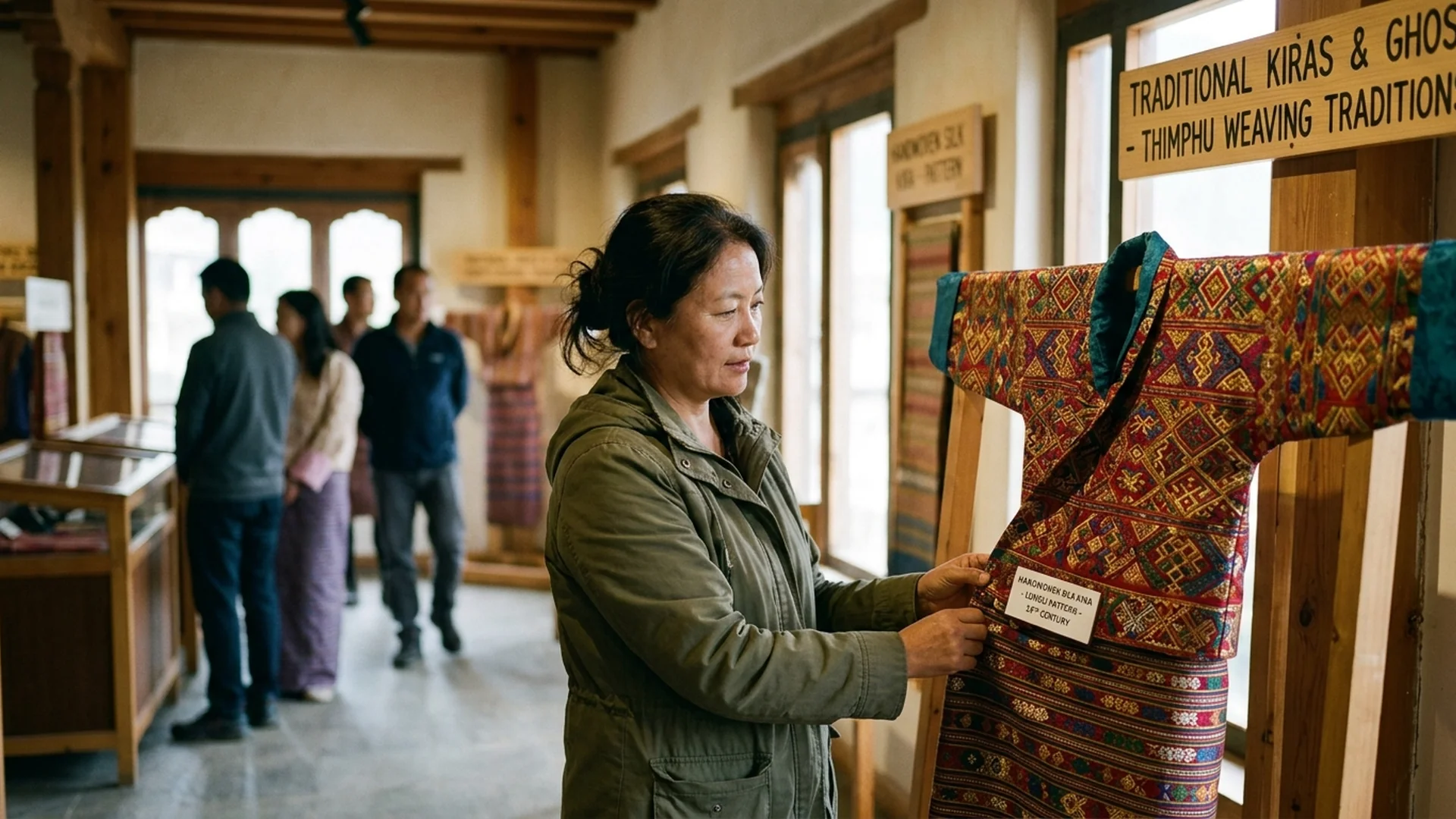
Amidst the towering, pine-clad ridges of the Himalayas that cradle Thimphu, the kingdom’s capital, tranquility is found not merely in ancient monasteries or pristine forests, but woven intricately into vibrant textiles. Here, every filament of silk and every precise geometric motif serves far more than a utilitarian purpose against the mountain chill; they are living historical chronicles and profound spiritual mirrors of the Bhutanese soul.
At the National Textile Museum, operating under the esteemed auspices of the Royal Textile Academy and under the royal patronage of Her Majesty the Queen Mother Sangay Choden Wangchuck, each fabric narrates a timeless odyssey. This architectural sanctuary functions as a high-art gallery, inviting discerning travelers to transcend temporal boundaries, appreciate sacred aesthetics passed down through generations, and understand why the art of weaving remains the beating heart of this Gross National Happiness sanctuary.
Thagzo: The Living Language and Sacred Spirit of Himalayan Weaving
In Bhutanese culture, the art of weaving—known as ‘Thagzo’—stands proudly among the thirteen traditional arts of Zorig Chusum. Every textile transcends mere apparel, operating as a sophisticated cultural lexicon that communicates social standing, regional provenance, and profound spiritual devotion. The mesmerizing geometric patterns formed through astonishing thread-counting techniques reflect the boundless patience and meditative focus passed down from mothers to daughters through generations. Wandering through the museum’s galleries feels akin to reading a chronicle penned in wild silk and natural cotton, dyed with indigenous mountain flora that retains its pristine, earthy brilliance.
The Wonder of Kishuthara and Royal Court Refinement
A magnetic focal point for global connoisseurs of master craft is the exhibition of ‘Kishuthara’ silk, the ultimate aspiration of textile collectors. This pinnacle of supplementary-weft complexity demands months, sometimes years, of meticulous dedication from master weavers to achieve flawless execution. Delicate floral motifs and auspicious symbols interlace seamlessly across shimmering silk grounds, embodying an aristocratic aesthetic once reserved exclusively for royalty and nobility. Adjacent galleries trace the enduring evolution of Bhutanese national dress—the women’s ‘Kira’ and men’s ‘Gho’—which remain remarkably dynamic, elegant staples of modern daily life.
The Wangchuck Dynasty Wardrobe: Relics of Regal History
Another profoundly moving section houses the ceremonial attire and historical vestments of Bhutan’s monarchs and royal family members. Gazing upon authentic garments tailored from the finest indigenous weaves, alongside replicas of the iconic Raven Crown symbolizing supreme sovereignty, reveals the unbroken synergy between the crown and indigenous culture. The reigning monarchs have steadfastly championed these arts, ensuring they breathe and evolve amidst global modernization. To study the refined stitches of these royal robes is to touch the very heartbeat of Bhutanese heritage.