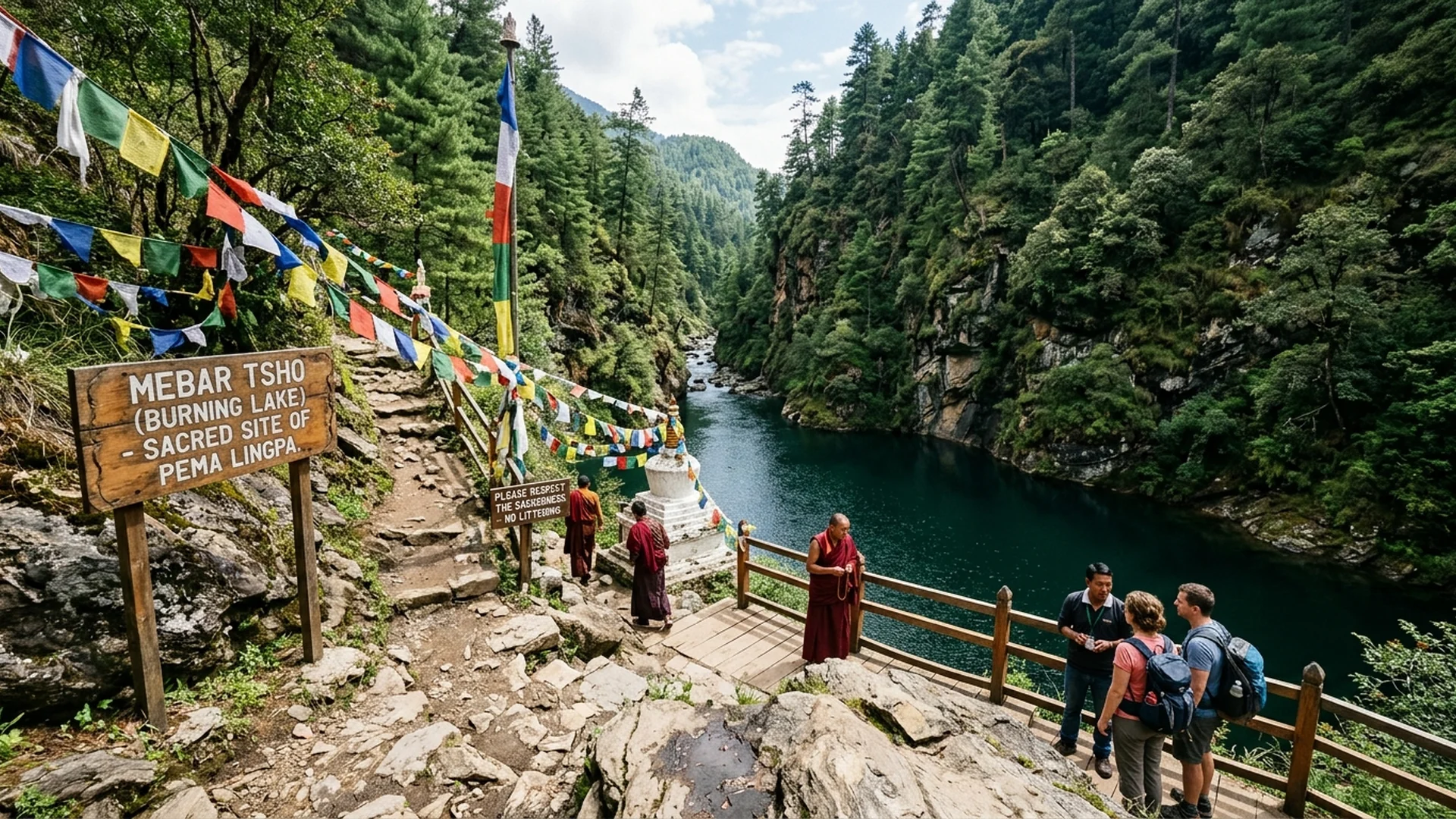
When morning mists softly embrace the verdant pine forests of the tranquil Tang Valley in Bumthang, a low, resonant murmur rises from the dark sandstone gorge below. This is Mebar Tsho—the Burning Lake—a sacred pool that transcends geographical beauty to exist as a Ney, a high spiritual power place intimately woven into the soul and ancestry of Bhutan. To visit this revered sanctuary is not merely to sightsee, but to cross a threshold into a timeless dimension where modern haste dissolves and travelers are invited to commune with an undying flame of devotion.
Beneath the dark emerald waters, which swirl with a solemn, hypnotic grace, lies a profound chapter of Vajrayana Buddhist history. In the 15th century, Mebar Tsho served as the dramatic stage for the revelation of terma—sacred spiritual treasures concealed by Terton Pema Lingpa, the visionary master and revered forebear of the Bhutanese royal lineage. Today, the echoes of rushing water and the gentle drift of butter lamps offered by modern pilgrims continue to narrate a story of pure faith, linking past, present, and the ultimate truth of liberation.
Geography of Faith: Where River and Gorge Converge
Geographically speaking, Mebar Tsho is not a sprawling alpine lake in the conventional sense. Rather, it is a dramatic contraction where the Tang Chhu (Tang River) forces its way through a steep, rocky mountain cleft, plunging into a wide, obsidian-dark pool whipped by swift, hidden currents. The water’s coloration shifts hypnotically, turning from translucent crystal to an intense, ink-like emerald where the sunlight fails to reach. The surrounding sheer rock walls are draped in velvety mosses, delicate ferns, and vibrant ribbons alongside fluttering prayer flags left by devoted pilgrims. The ceaseless roar of water against stone creates an atmosphere that is simultaneously awe-inspiring and deeply serene, perfectly embodying the Bhutanese aesthetic where nature and the sacred are indivisible.
The Legend of Pema Lingpa and the Submerged Flame
The historical heart of Mebar Tsho beats to the rhythm of Pema Lingpa, the revered 15th-century saint and master treasure revealer. According to oral tradition, amidst the skepticism of onlookers and local nobility, Pema Lingpa ignited a butter lamp, cradled it in his hands, and plunged fearlessly into the dark abyss of the lake. As anxious crowds watched in breathless silence, the master vanished into the depths for an agonizingly long duration before resurfacing with both arms laden with sacred texts and ancient chests—the butter lamp in his grasp still burning brightly beneath the water. This profound miracle earned the site the name Mebar Tsho, or Burning Lake, establishing it as an eternal pilgrimage destination for those seeking spiritual alignment.
The Tradition of Butter Lamps and Nuns’ Sanctuary
Engaging with Mebar Tsho today remains an intimate, quiet affair. Travelers often begin by meandering along the forested cliffside trails before pausing on the wooden footbridge or rocky outcrop to offer small butter lamps (mame). Igniting the wicks and watching the tiny flames drift across the emerald eddies serves as a potent meditation on the light of wisdom illuminating the three realms. Cultural context from the nearby Pema Tekchok Choling nunnery underscores the living lineage of prayer and stewardship that guards this valley, enveloping the entire sanctuary in an authentic aura of boundless compassion and inner stillness.