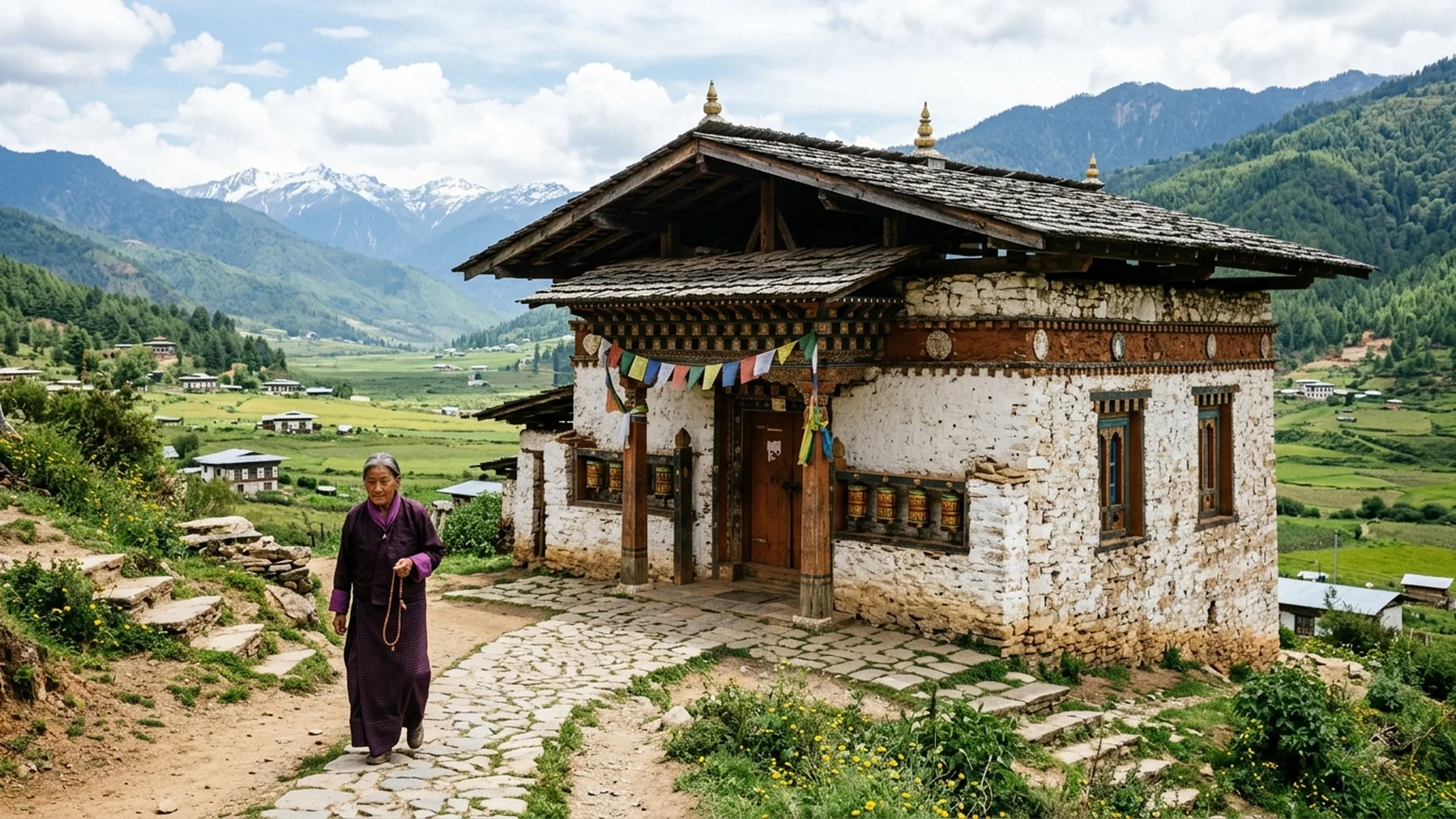
Step beyond the well-worn paths of standard Himalayan itineraries and into the serene, storied embrace of Khewa Lhakhang, a fifteenth-century sanctuary quietly anchoring the glacial expanses of the Phobjikha Valley. Here, far from the hurried clamor of modern tourism, travelers are invited into a profound aesthetic of stillness, where ancient rammed-earth architecture, towering dual-tier sacred art, and enduring indigenous myth weave a tapestry of pure Himalayan devotion. As morning mist slowly unfurls across alpine meadows and encircling pine forests, Khewa Lhakhang emerges not merely as a historical monument, but as a living nexus of human reverence and untamed wilderness. This is a landscape where time unspools at a contemplative pace, offering the discerning visitor a rare sanctuary for inward reflection amid the whispered acoustics of ancient winds.
Fifteenth-Century Roots: The Legend of the Rammed-Earth Sanctuary
The Phobjikha Valley stands among the most sublime and ecologically vital glacial valleys in the Kingdom of Bhutan. Deep within its sweeping tranquility lies Khewa Lhakhang, an archaic temple established during the vibrant cultural flowering of the fifteenth century. Its enduring structural framework employs traditional rammed-earth techniques—a foundational pillar of Bhutanese vernacular architecture that has bravely withstood harsh Himalayan winters and centuries of shifting mountain weather. Conceived in its infancy as a spiritual bulwark to dispel malevolent energies, epidemics, and agricultural hardships threatening the farming settlements below, the temple’s unassuming exterior guards a profound inner sanctity. Passed down through generations by oral tradition, this holy site remains an indispensable pilgrimage for travelers seeking authentic spiritual resonance.
Sacred Interiors: The Vajrayana Artistry of Dual-Tiered Deities
Crossing the intricately carved wooden threshold immediately recalibrates the senses, as the soothing aroma of sacred juniper incense and melted butter invites unhurried respiration. At the heart of the sanctuary stands the remarkable triadic configuration of Dusum Sangay—the Buddhas of the past, present, and future—housed within a rare dual-tiered architectural arrangement. This vertical layering of sacred imagery is exceptionally uncommon in the region, creating an intimate yet imposing vertical axis of devotion. Surrounding walls are adorned with ancient thangka murals depicting jataka tales and Himalayan pantheons, their natural mineral pigments softened by centuries into muted, earthy patinas that elevate the room’s meditative atmosphere and celebrate the profound aesthetics of Vajrayana sacred art.
Black-Winged Faith: The Mystical Alliance with Migratory Cranes
Perhaps the most enchanting phenomenon binding Khewa Lhakhang to the natural world is its mystical relationship with the black-necked cranes. These endangered avian visitors migrate southward from the high Tibetan plateau to winter within the sanctuary of the Phobjikha Valley. Local belief holds that these elegant birds are sacred emanations and guardian spirits. Every autumn, upon reaching the valley floor, arriving flocks traditionally circle the sacred eaves of Khewa Lhakhang three times before landing; in spring, they repeat this reverent circumambulation prior to their northward journey. This enduring natural ritual underscores the deep sanctity of the valley, blurring the boundary between sacred architecture and the wild realm.