Amidst the tranquil waters of the Mo Chhu river meandering through the Punakha valley, rising atop the Nyizergang ridge, stands a architectural marvel unlike any other sanctuary in the Kingdom of Bhutan—the Khamsum Yulley Namgyal Chorten. This radiant, gold-crested structure was not erected as a monastic college or residential temple, but rather serves as a sacred magical tool born from ancient scriptures to dispel negative energies, subdue malevolent forces, and safeguard universal peace across the three realms of existence.
Reaching this protector stupa is a quintessential slow hike that harmoniously weaves untouched wilderness and profound devotion. Discerning travelers begin their ascent by crossing a suspension bridge adorned with fluttering prayer flags, winding past the emerald terraced rice paddies of Yepaisa village before entering a fragrant pine forest and encountering the formidable tantric Buddhist art hidden within.
For those seeking a deeply reflective and tranquil travel experience, the pilgrimage up to the stupa is far more than a physical ascent; it is an elevation of the spirit, offering sweeping panoramas over the lush Punakha valley that reveal the beauty of the Thunder Dragon Kingdom from its most enchanting perspective.
A Royal Vision: The Spiritual Fortress Crafted Without Blueprints
The Khamsum Yulley Namgyal Chorten was born from the profound devotion of Her Majesty the Queen Mother Ashi Tshering Yangdon Wangchuck, dedicated to the wellbeing of the monarch and the enduring peace of all sentient beings. The name itself holds cosmic significance: ‘Khamsum’ refers to the three realms of desire, form, and formlessness; ‘Yulley’ denotes a celestial domain; and ‘Namgyal’ signifies triumphant victory.
The true wonder of this grand stupa lies in its construction. Hundreds of local woodcarvers, master builders, and traditional painters labored for nine full years to complete the thirty-meter structure. Remarkably, not a single modern engineering blueprint was used. Instead, every phase of creation followed strict oral traditions and sacred geometric guidelines found within ancient Buddhist scriptures, led by high-ranking spiritual masters. Every carved stone, polished timber, and brushstroke resonates with intense meditative concentration and artisanal mastery.
Entering the Vajrayana Cosmos: From Wrathful Deities to Supreme Wisdom
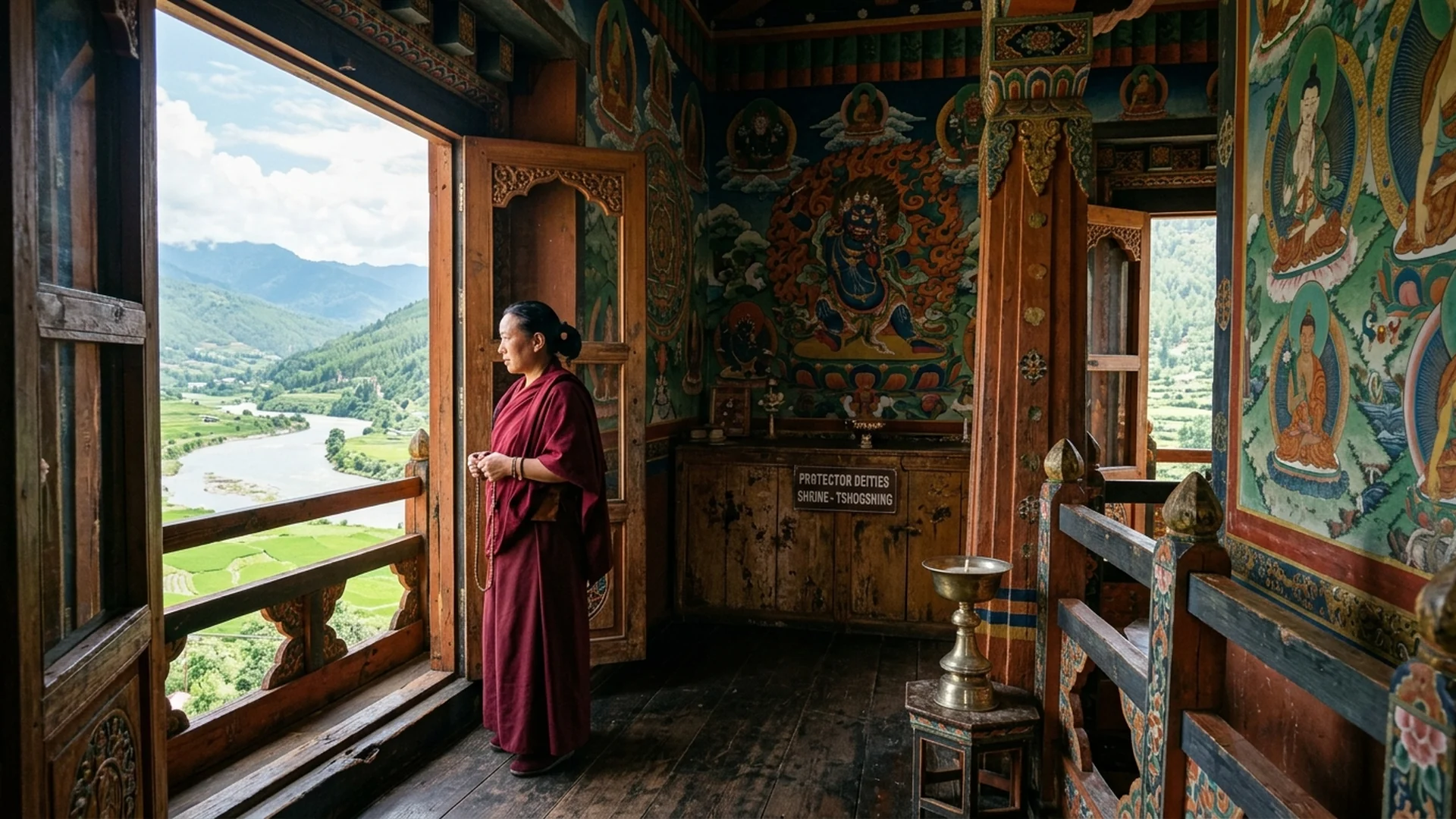
Crossing the threshold shifts the atmosphere from the airy tranquility of the outdoors into the mysterious, charged sacredness of the Nyingma Vajrayana tradition. The ground floor enshrines a monumental fifteen-foot bronze sculpture of Vajrakilaya, a wrathful deity tasked with severing ignorance and overcoming spiritual obstacles. Flanked by over a hundred distinct emanations radiating outward, the intricate details command absolute awe.
As one ascends the polished wooden staircases through the higher tiers, the intense expressions of the wrathful protectors soften, giving way to delicate murals depicting the Yab-Yum union of compassionate deities—symbolizing the ultimate integration of wisdom and compassion. The journey culminates on the topmost floor, where a serene, radiant golden Shakyamuni Buddha sits in quiet meditation, beautifully balancing fierce protective energy with absolute inner peace.
A Slow Hike Across Suspension Bridges and Yepaisa Terraces
The enduring charm that elevates the pilgrimage to Khamsum Yulley Namgyal Chorten into a premier cultural and soft-adventure experience is the gentle 45 to 60-minute walking trail. The journey begins with crossing a gentle suspension bridge over the crystal-clear Mo Chhu river, serving as a symbolic transition from worldly clamor into a sanctuary of stillness.
The path meanders along the ridges of the terraced farming fields of Yepaisa village. In spring, vibrant green shoots ripple softly in mountain breezes, while autumn transforms the landscape into a sea of shimmering gold against deep blue skies. Local farmers still practice time-honored agrarian traditions here, and the welcoming smiles, the murmur of irrigation channels, and the crisp scent of pine infuse every uphill step with vitality rather than fatigue.
Panoramic Splendor: The Rooftop Reward Above the Punakha Valley
The supreme reward for completing the trail awaits on the open rooftop terrace of the chorten. Stepping through the uppermost doorway, crisp mountain air greets the traveler alongside an uninterrupted 360-degree panorama framing the entire Punakha valley below.
From this elevated vantage point, the gaze follows the sweeping curves of the Mo Chhu river as it cuts through broad agrarian plains, past scattered traditional Bhutanese homesteads and folding blue ridges. Whether kissed by morning mist or warmed by afternoon sunlight striking the golden spire overhead, the setting offers an incomparable space for quiet contemplation and inner stillness.