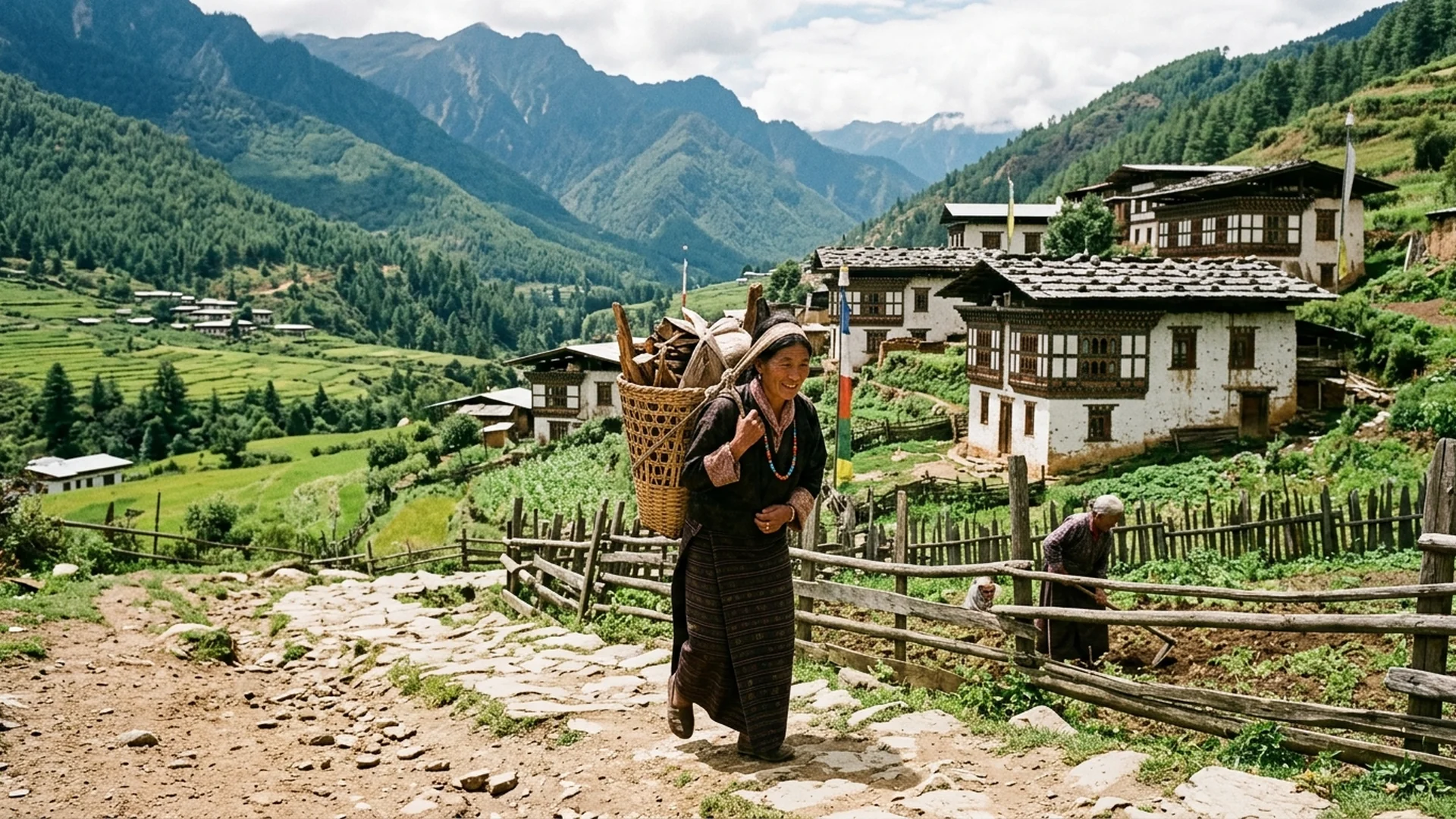
Amidst the low-hanging mists that drift across the snow-capped peaks of Gasa District, in Bhutan’s most northern reaches, lies Gabichu Village—a secluded enclave resting quietly in the embrace of the high Himalayas. Here, the cadence of daily life remains deeply wedded to the rhythms of nature and the changing seasons, entirely untouched by the frantic pace of the modern world.
Journeying to Gabichu is not merely a shift in geographical coordinates; it is an entry into an elevated highland civilization framed by the pristine wilderness of Jigme Dorji National Park. Soft vapors rise from sacred healing hot springs, while the distant chime of yak bells echoes across the valleys. For discerning travelers seeking the profound rewards of purposeful travel, this remote sanctuary reveals the unadorned essence of Bhutanese serenity.
Mountain Rhythms and the Timeless Yak Civilization
In Gasa, one of Bhutan’s most sparsely populated and elevated regions, life in Gabichu Village thrives upon a foundation of quiet harmony with the highland environment. The villagers and pastoralists of this rugged terrain regard their yaks not merely as livestock, but as essential members of the community. These hardy animals provide thick, resilient wool woven into heavy textiles designed to withstand bitter mountain gales, as well as rich milk traditionally transformed into ‘Chhurpi,’ a distinctively cured, dried cheese.
Awakening with the first rays of dawn over the snowcaps, the gentle murmur of morning prayers, and the faint, sweet scent of woodsmoke curling from traditional timber homes all reflect a philosophy centered on simplicity and ecological coexistence. Conversations with the residents of Gabichu unveil a remarkable resilience, a profound generosity, and an unyielding spirit forged at the very edge of the Himalayan frontier.
Mists and Thermal Waters: The Natural Legacy of Gasa Tshachu
One of the profound natural and cultural treasures situated near Gabichu Village is the legendary Gasa Tshachu, a series of natural hot springs resting alongside the rushing waters of the Mo Chhu (river). Revered throughout Bhutan, these mineral springs are celebrated for their curative properties, traditionally sought to alleviate joint ailments, soothe weary muscles, and restore vitality after long mountain treks.
The terraced pools, thoughtfully arranged amidst verdant valley slopes, offer an intensely restorative immersion. Basking in the mineral-rich thermal waters amid the crisp, invigorating air of the highlands creates a seamless union of physical rejuvenation and traditional spiritual healing.
Architecture and Citadels of Faith: The Shadow of Gasa Dzong
No exploration of Gabichu and the wider Gasa District is complete without encountering the imposing silhouette of Gasa Tashi Thongmon Dzong (fortified monastery-fortress). Perched distinctively upon a sweeping ridge, this circular fortress was established in the 17th century by Zhabdrung Ngawang Namgyal to commemorate victories and safeguard the northern approaches against Tibetan incursions.
With its serene architectural lines commanding sweeping views over emerald forests and deep gorges, the dzong serves not only as the administrative and monastic heart of the region, but also as an invaluable repository of sacred heritage. It stands as a profound historical anchor, enriching one’s comprehension of this remote northern realm.