When morning mist lingers softly among pine-clad slopes and snow-dusted Himalayan peaks catch the first golden rays of dawn, Bhutan offers a profound stillness that speaks directly to the soul. Yet beneath this pristine beauty lies a challenging geography defined by lofty elevations, hundreds of hairpin turns, and thin mountain air that tests even the resilient traveler. Journeying to the Land of the Thunder Dragon requires far more than expertly packed woolens; it calls for thoughtful, meticulous health preparation to ensure every stride across this sacred realm unfolds with absolute grace.
Curating a medical kit and wellness regimen for Bhutan demands specialized foresight. Remedies effective at sea level often fall short against acute mountain sickness (AMS) or prolonged motion sickness along winding Himalayan roads. This guide examines the essential pharmaceuticals, personal prescriptions, and strict customs regulations required for a seamless, worry-free journey into the kingdom’s magnificent heights.
Decoding the Topography: Navigating High Altitudes and Himalayan Hairpin Curves
Bhutan’s topography is overwhelmingly steep and mountainous. The capital of Thimphu rests at approximately 2,300 meters, while crossings over mountain passes like Dochula, or journeys toward Paro and Punakha, frequently scale elevations between 3,000 and 4,000 meters. The resulting thinner atmosphere directly impacts blood oxygen saturation.
Acute mountain sickness (AMS) typically manifests as headaches, dizziness, nausea, and insomnia. Carrying Acetazolamide—commonly known by the trade name Diamox—is often necessary under medical supervision. Furthermore, every roadway in Bhutan weaves endlessly across steep hillsides. Reliable motion sickness medication and long-acting transdermal patches ensure you remain fully immersed in the sweeping panoramas without distraction.
The Pharmacist’s Arsenal: Essential Medical Supplies for Your Travel Case
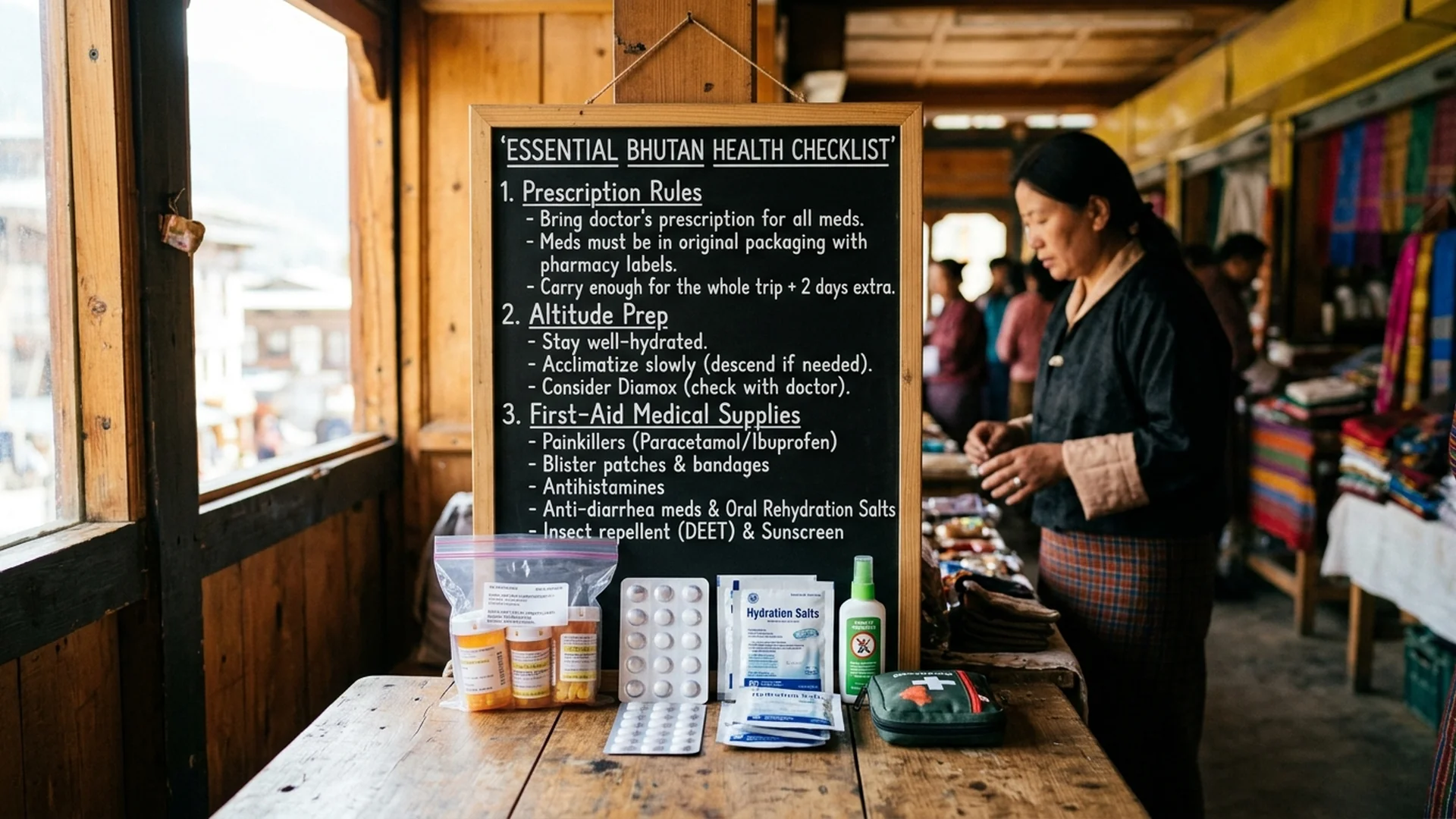
Your premier travel case should feature a meticulously curated first-aid kit divided into key categories:
- Altitude Sickness Protection: Diamox (prescribed by a physician) and immune-boosting Vitamin C.
- Motion Sickness and Vertigo Relief: Advanced motion sickness tablets, herbal aromatic inhalers, and long-acting patches.
- Gastrointestinal Care: Traditional herbal stomach tonics, oral rehydration salts (ORS), probiotics, and anti-diarrheal agents to manage dietary transitions.
- General Household Remedies: Paracetamol, antihistamines, lubricating eye drops for dry mountain air, adhesive bandages, and hand sanitizing gel.
Customs Protocols and Medical Compliance: Bringing Medications into Bhutan
Bhutan maintains rigorous controls over chemical substances and pharmaceuticals. Bringing medications into the kingdom involves precise protocols that discerning travelers must observe. Standard over-the-counter medications in reasonable quantities for personal use pass through customs without issue.
However, travelers carrying specialized prescription drugs, psychiatric medications, or controlled substances must carry an official Medical Certificate written in English. This document should clearly state the diagnosis, medication name, and prescribed dosage for presentation to customs officers at Paro International Airport. Transparency ensures an unhindered arrival.